Family Governance Workshops
Learning Through Real Governance Decisions
Built around real family governance case studies, our workshops create a structured environment for exploring complex decisions before facing them in practice.
Dr Nicholas Schwarz
Founder and CEO
of The Cecily Group
Our Approach
The workshop methodology was developed through Dr Nicholas Schwarz‘s research and advisory work in family governance and succession. It combines three complementary elements:
The approach combines three elements.
- First, participants analyse real governance decisions made by family businesses facing succession, ownership, and leadership challenges.
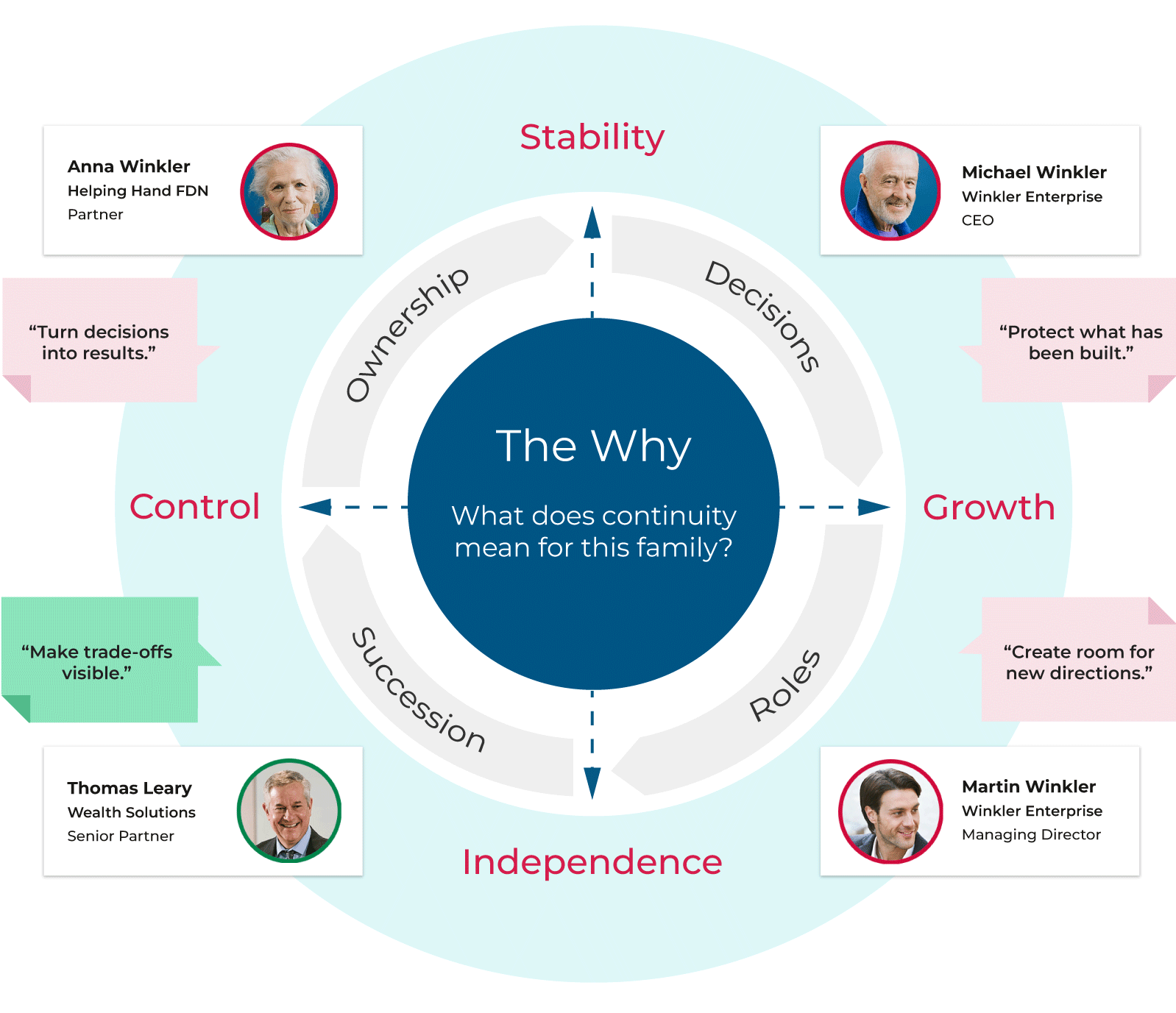
- Second, these discussions are connected to practical governance frameworks developed by The Cecily Group, including the Four Abundances and the Family Council Canvas.
- Finally, participants return to their own family or organisation through structured reflection exercises that connect the case studies to their current governance questions.
The objective is to understand which structure protects which priorities, and what compromises every governance decision inevitably creates.
Why Case Studies?
Governance frameworks can explain how different structures work. They cannot, however, determine which structure is right for a particular family.
Every governance system reflects a series of choices about priorities, values, relationships and long-term objectives. Case studies make those choices visible by showing how different families responded to similar challenges.
Case studies provide something that few governance discussions can: the benefit of hindsight. Participants see how decisions about ownership, leadership, succession, and stewardship unfolded over years or even decades. They examine not only what worked, but also the opportunities that were sacrificed and the tensions that remained unresolved.
Participants begin to evaluate which trade-offs best reflect their own family’s circumstances. Only afterwards do they return to their own situation.
This progression — from observation to comparison to reflection — creates a different type of conversation. Participants begin asking: What is our current structure protecting, and is that still what we want?
The Case Study Series
The featured case studies examine governance decisions that influenced continuity, ownership, leadership, and stewardship. They illustrate how different families responded to similar governance questions, the priorities they chose to protect, and the long-term consequences of those choices.
Recent case studies include:

A Case Study: The Wilson Succession
The Lululemon story shows how a founder can leave management while remaining economically and strategically connected to the company he created.

A Case Study: The Fleming Succession
What happens to family ownership as professional executives assume greater responsibility for the business? Our latest case study follows the Fleming family across five generations, from Robert Fleming’s first investment trust to international banking, dispersed family ownership, the sale to Chase Manhattan, and the development of a family office into an international wealth management business.

A Case Study: The Rong Succession
The Rong family's history reveals an unusual form of continuity. Through three generations of family leadership, the basis of family authority repeatedly changed: from private industrial ownership, to political and institutional influence, to substantial minority ownership combined with managerial autonomy, and eventually to private family wealth outside the enterprise.

A Case Study: The Dyson Succession
Most family businesses prepare successors to preserve what the founder built. The Dyson family pursued a more ambitious objective. As the enterprise expanded from a single engineering company into a global technology business, agricultural holdings and educational institutions, the central question became how an entrepreneurial culture could outlive its founder.

A Case Study: The Kwok Succession
From a trading business, Kwok Tak-seng built Sun Hung Kai Properties into one of Hong Kong's largest property developers, combining long-term ownership with developments that became closely linked to the city's expanding transport infrastructure and urban growth.
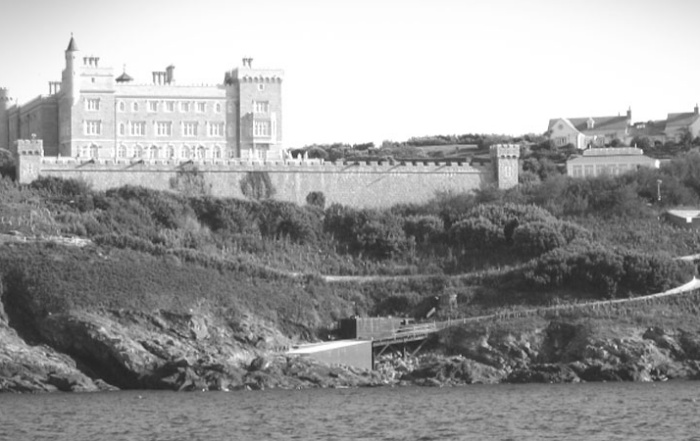
A Case Study: The Barclay Twins’ Succession
Despite sharing the famous surname, Sir David and Sir Frederick Barclay were unrelated to the Barclays banking family. They built their fortune independently, beginning with a small building and decorating business in London. Over the following five decades, they transformed it into one of Britain’s largest privately owned business empires, spanning premium media, retail, luxury hospitality and real estate. Their portfolio eventually included Telegraph Media Group, The Very Group, The Ritz London, and a network of holding companies and offshore trusts.
What Families Can Learn
Throughout the workshop, the discussion remains centred on the featured family. Participants are supported by structured reflection frameworks, derived from our Family Council Canvas methodology, which help them explore their own governance questions privately.
By the end of the session, participants have usually identified the governance conversation their family needs to have next and gained a clearer understanding of why it matters.
Participants are never expected to disclose confidential family matters. Reflection takes place through structured frameworks that can be completed privately.

Upcoming Workshops
Our signature workshops bring together family business owners, family office professionals, advisers, lawyers, trustees, and members of the next generation.
Each workshop begins with carefully selected case studies that illustrate some of the most important governance questions families encounter. Participants analyse these questions through our governance framework before exploring practical tools such as the Family Council Canvas, placing governance structures within the context of family values, priorities, and long-term stewardship.

Bespoke Workshops
Many organisations face governance questions that require more than a standard workshop.
We design private programmes around the governance challenges identified by the participating family or organisation. We select historical examples that address comparable tensions and analyse them alongside contemporary governance approaches.
Bespoke workshops allow participants to evaluate governance solutions that are relevant to their own circumstances, understand their long-term consequences, and assess which approaches are most appropriate for their organisation with the benefit of hindsight.
Start the Conversation
Every governance structure tells a story about what a family chose to protect. Our workshops help families understand those stories before writing their own. Whether you would like to join one of our signature workshops or discuss a bespoke programme, we would be pleased to explore the governance questions most relevant to your family or organisation.
If you would like to take part, please let us know by completing the form below or contacting us directly at nicholas@thececilygroup.com.