From Hyatt Hotels and the industrial conglomerate Marmon Group to real estate and financial services, the Pritzker family’s business empire spanned industries and continents. Yet authority over this vast fortune remained concentrated in the hands of two brothers, Jay and Robert Pritzker.
Their partnership guided the enterprise’s expansion for much of the twentieth century. Combining ambitious acquisitions and long-term capital preservation, they built on a family tradition of centralised leadership, supported by an extensive network of domestic and offshore trusts.
As the fourth generation came of age, however, the question became who should exercise that authority. The family had grown into several branches, with different levels of involvement in the businesses and different expectations of their rights as beneficiaries. Jay had identified his successors, but their appointment exposed disagreements over the distribution of power, accountability and the future of the enterprise.
The Pritzker story raises two fundamental succession questions: how can authority over a family’s collective wealth be transferred to selected successors? And what happens when other beneficiaries have little influence over who governs their assets or how decisions are made?
The Origins of the Pritzker Enterprise
The Pritzker family’s business and wealth-management practices developed over three generations before Hyatt became an international hotel brand. The enterprise grew from a Chicago law practice into a portfolio of industrial, hospitality, property and financial interests, with family wealth increasingly administered through trusts.
Nicholas Pritzker arrived in Chicago from Kyiv with his family in November 1881, aged ten. He sold newspapers, worked as a tailor’s assistant and became a pharmacist while learning English. After studying law at night, he opened his legal practice on 5 June 1902, establishing the foundation of the family’s business interests.
Nicholas placed considerable importance on family solidarity and continuity. He encouraged his sons to enter the legal profession and work within the family practice. His son Abram Nicholas Pritzker, known as A.N., studied at the University of Chicago and Harvard Law School before joining the firm.
During the Great Depression, A.N. recognised opportunities in distressed mortgages, property and businesses. The family began acquiring assets besides collecting legal fees. These investments established a pattern that would continue for decades: identifying undervalued businesses, acquiring them with structured financing and retaining ownership over long periods.
A.N. also developed the family’s approach to wealth ownership. Through domestic and offshore trusts, established with specialist legal and tax advisers, he sought to preserve capital long-term while retaining central control over its management and distribution. Family members could benefit from the wealth without necessarily having authority over the underlying assets.
Three Brothers, Distinct Responsibilities
A.N.’s three sons would turn the family’s investment activities into a major business enterprise. Jay Pritzker, born in 1922, studied at Northwestern University and served as an aviator during the Second World War before completing his legal education. He developed a reputation for recognising commercial opportunities, negotiating directly with business owners and closing transactions through personal relationships.
Despite his considerable wealth, Jay maintained a relatively modest public profile. Accounts of his business dealings describe a reserved, pragmatic individual who valued commercial judgement and personal competence. He believed that leadership responsibilities should be entrusted to family members who had demonstrated the ability to manage them.
His younger brother Robert, known as Bob, followed a different professional path. Trained in industrial engineering at the Illinois Institute of Technology, Robert was closely involved in factory operations and manufacturing businesses. Where Jay concentrated on acquisitions and financing, Robert developed the operating structures that made those investments productive.
Their partnership became particularly important in 1953, when the family acquired Colson Corporation, an Ohio manufacturer of industrial products, including casters and wheelchairs. Jay structured the acquisition, while Robert took responsibility for its operations. Colson became the foundation of the Marmon Group, which eventually encompassed dozens of manufacturing and service businesses.
Marmon’s operating philosophy relied on decentralisation. Individual companies retained substantial responsibility for their operations, while capital allocation and strategic oversight remained concentrated at group level. This allowed the enterprise to expand across different industrial sectors without requiring every business to operate under a single management structure.
The youngest brother, Donald Pritzker, played an equally significant role in developing the family’s hospitality business. After studying law at the University of Chicago, Donald became closely involved in Hyatt’s operations, expansion and public identity.
The Rise of Hyatt
In 1957, Jay acquired the Hyatt House hotel near Los Angeles International Airport for approximately $2.2 million. The property offered a promising concept for a growing market of business travellers arriving by air.
Under Donald’s leadership, Hyatt developed into a national hotel chain. Its expansion combined attention to guest experience with distinctive architecture and a growing reputation for upscale business hospitality.
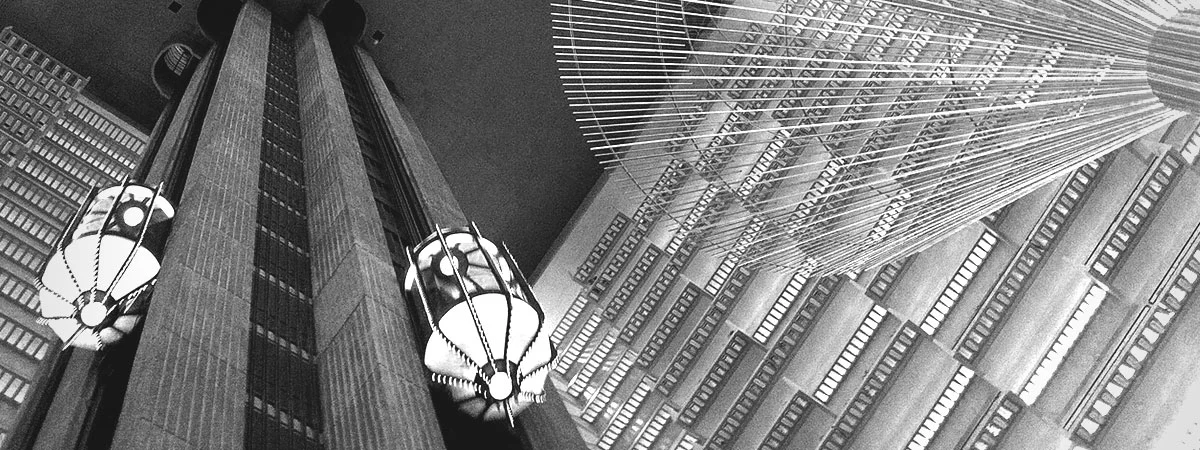
A defining development came in 1967 with the opening of the Hyatt Regency Atlanta, designed by architect John Portman. Its dramatic, multi-storey interior atrium created a recognisable architectural experience and became an influential feature of subsequent hotel design.
Hyatt’s development demonstrated the complementary roles of the brothers. Jay provided capital, acquisitions expertise and strategic direction; Donald built the hospitality operation and its identity; and Robert concentrated on the family’s expanding industrial interests.
Donald’s sudden death in 1972, aged 39, interrupted this division of responsibilities. Jay assumed greater oversight of Hyatt, while Donald’s children, Penny, J.B. and Anthony, would eventually become important figures in the wider family enterprise.
By the late twentieth century, the Pritzkers had developed substantial interests in hospitality, manufacturing, real estate and financial services, including TransUnion. Their wealth was held through an extensive network of trusts, with investment decisions and strategic authority concentrated among senior family leaders.
The trust arrangements enabled long-term ownership while placing decisions about capital and distributions in the hands of trustees and senior family leaders. Their distinct legal and business responsibilities would later become central to the succession dispute.
The Limits of Inherited Authority
The family’s trust-based ownership system was developed under A.N. Pritzker and expanded during the leadership of Jay and Robert. Its legal and operational responsibilities were not identical: trustees administered assets for beneficiaries, senior family members influenced investment policy, and executives managed the operating companies.
The trusts held interests for beneficiaries under their governing instruments. Trustees had fiduciary responsibilities; family investment leaders made or influenced capital-allocation decisions; and executives such as Robert at Marmon and Donald at Hyatt ran operating businesses. Personal authority often connected these roles, although it did not make them legally interchangeable.
A.N. developed trusts in the United States and the Bahamas with specialist advisers. Published accounts describe the senior family leaders’ influence over investment strategy, but the powers of individual trustees depended on separate trust instruments. Those instruments should not be treated as one uniform family constitution.
This approach had served the family through several decades of expansion. As the number of beneficiaries increased, however, the distance between economic interests and decision-making authority became increasingly significant.
The 1995 Succession Plan
In June 1995, Jay and Robert Pritzker circulated a memorandum describing the continuation of the family enterprise and the leadership responsibilities of selected relatives. The arrangements were intended to preserve coordinated leadership and collective investment across the family branches.
The plan designated Tom Pritzker, Jay’s son, as the principal successor, supported by Penny Pritzker, daughter of their late brother Donald, and Nicholas (Nick) Pritzker, a first cousin of Jay and Robert.
Accounts of the succession arrangements identify Tom as the principal successor and describe an intended leadership group with Penny and Nick. The three were selected for commercial responsibilities; that designation did not, by itself, give them identical trustee powers or board positions. Each had substantial business experience.
Tom had studied at Claremont McKenna College and earned graduate degrees in business and law from the University of Chicago. He had worked within the family enterprise for years and was closely involved in its investment and management activities. He was positioned to assume responsibility for the family’s central business interests, including Hyatt.
Penny, educated at Harvard and Stanford, had developed her own career in real estate investment and hospitality-related businesses. Her work included the development of senior living operations through Classic Residence by Hyatt. She brought operating experience and represented Donald’s branch of the family.
Nick, the son of Jack Pritzker and a first cousin of Jay and Robert, had worked extensively in Hyatt’s property development and investment activities. His inclusion extended the designated leadership group beyond A.N.’s direct descendants.
The selection reflected Jay’s preference for entrusting authority to individuals with demonstrated business capabilities. Yet the proposed arrangements also preserved a central feature of the existing system: a small leadership group would continue making decisions concerning assets in which numerous relatives held economic interests.
Published accounts describe the proposed leaders’ responsibilities over businesses and family trusts, alongside disputed management incentives or preferential economic arrangements. The precise terms and amounts cannot be established from the publicly available memorandum summaries. Beneficiaries outside the leadership group had limited influence over collective investment and distribution decisions, subject to the rights established by individual trusts.
The plan therefore raised questions extending beyond the competence of the chosen successors. Who had authorised them to exercise power on behalf of the wider family? What rights did beneficiaries retain over the management of their wealth? And how would the new leaders be held accountable?
A Succession That Exposed Divisions
Jay Pritzker died in 1999. His death marked the beginning of the first major test of the succession arrangements.
Tom, Penny and Nick assumed prominent leadership responsibilities, while Robert remained an influential figure in the enterprise. The operating businesses continued, and the family’s considerable commercial interests remained intact.
Within the family, however, disagreements over the governance structure became increasingly visible.
By 2000, objections from members of several family branches, including John, Daniel and Karen Pritzker, according to published accounts, centred on management compensation, transactions benefiting particular branches, access to information and the concentration of authority. These concerns were reported by journalists and should not be read as adjudicated findings of wrongdoing.
The disagreement revealed a gap between Jay’s preferred leadership arrangements and the acceptance of those arrangements among other family members. The successors’ experience and formal positions did not settle disputes about the scope of their mandate or the economic terms under which they exercised it.
The dispute also raised practical questions about the future of collective ownership. Some family members wanted greater independence over their assets and investment decisions. Others remained committed to the benefits of maintaining substantial businesses and capital under unified leadership.
These differences proved difficult to reconcile within the existing arrangements.
The 2001 Agreement: Succession Through Separation
In 2001, members of the family entered a confidential Family Agreement to settle grievances and reorganise substantial shared interests. Its existence and purpose are confirmed in a 2004 Illinois appellate decision. Contemporary reporting described an intended division of the family fortune among eleven principal heirs over roughly a decade, although the agreement’s complete terms were not made public.
The agreement represented a major departure from the approach established by earlier generations. Instead of preserving the entire enterprise under a single family leadership structure, the Pritzkers began separating economic interests and providing individual branches with greater independence.
The process required decisions about valuations, ownership interests, liquidity and the future of businesses that had previously been held collectively.
Some assets could be transferred or sold. Others, including Hyatt and Marmon, required carefully managed transitions because of their size, ownership arrangements and ongoing operations.
The agreement created a route towards separate ownership and greater independence. It also introduced formal reporting and meeting arrangements within The Pritzker Organization, according to contemporary reporting. Separation therefore developed alongside changes to the governance of assets that remained jointly managed.
The family found a way forward without requiring everyone to accept the same leadership and ownership arrangements.
A Separate Challenge to the Trust Structure
The family’s governance disputes did not end with the 2001 agreement. In 2002, Liesel Pritzker, Robert’s daughter, brought proceedings concerning trusts established for her and her brother Matthew. Matthew subsequently joined the dispute. These proceedings followed the 2001 Family Agreement and must be distinguished from the earlier disagreements among the principal heirs.
The siblings alleged that assets had been transferred from trusts for their benefit to other family-controlled trusts and foundations in exchange for promissory notes, and challenged the conduct of family trustees. The allegations were disputed. The case raised questions about fiduciary duties, disclosure and the rights of younger beneficiaries, without establishing liability merely by being filed.
The proceedings were settled in January 2005 without a reported trial determination of the underlying allegations. Contemporary reports differed in how they described the value and composition of the settlement, so the article does not assign a definitive amount.
The wider family had already agreed to a restructuring in 2001, before Liesel’s lawsuit began. The litigation therefore formed a distinct dispute, although it exposed related concerns about trustee authority and beneficiary rights.
These events illustrate how family may reach agreement on the broad direction of succession while leaving unresolved questions about the legal responsibilities of those who administer its wealth.
The Transition of the Operating Businesses
As the family reorganised its holdings, its major businesses followed different paths. Berkshire Hathaway announced its agreement to acquire Marmon in December 2007 and completed the purchase of an initial 60% interest for approximately US$4.5 billion on 18 March 2008. It acquired the remaining interests in stages, completing the transition by 2014. The sale provided liquidity for trusts benefiting Pritzker family members while Marmon continued under professional management.
Hyatt followed a different course. Under Tom Pritzker’s leadership and the executive management of Mark Hoplamazian, who became chief executive in 2006, the company pursued international expansion and a business model increasingly focused on hotel management and franchising.
Hyatt’s 2009 initial public offering introduced public shareholders, but the company retained a dual-class structure. Class A shares carry one vote each; Class B shares carry ten. Family-related trusts and entities retained significant voting influence through their holdings and shareholder agreements. Public-company governance therefore operated alongside concentrated family shareholder control.
Hyatt’s two principal continuing family voting agreements — the Amended and Restated Global Hyatt Agreement and the Amended and Restated Foreign Global Hyatt Agreement — require covered shareholders to follow board recommendations when specified independent-director conditions are met. This arrangement makes the board’s independent directors relevant to the exercise of concentrated shareholder voting power.
The transactions changed the location of decision-making authority: Berkshire became Marmon’s controlling owner, while Hyatt’s board and executives operated within a listed-company structure whose voting power remained heavily concentrated in family-related holdings.
What Changed in the Governance Model?
Across these transitions, the Pritzker family’s governance evolved in three important respects.
- Economic ownership: The 2001 restructuring initiated the distribution of collective wealth among individual family members and branches, allowing them to pursue separate investment priorities.
- Decision-making authority: The original model of concentrated family leadership gave way to a combination of independent family investment structures, continuing shareholder arrangements and professional corporate management.
- Accountability: Disputes over trust administration and beneficiary rights demonstrated the importance of distinguishing legal fiduciary powers from the broader authority traditionally exercised by senior family members.
The transition did not create a complete separation of interests. Shared ownership, business relationships and family influence continued in several forms. Nor did it mark the end of successful family entrepreneurship. It did, however, establish the limits of the authority Jay had intended to pass on.
The Pritzker succession demonstrates that the ability to select capable leaders does not, on its own, settle the question of whether other family members will accept their authority. When ownership is shared across generations and branches, the legitimacy of leadership depends on clearly understood rights, responsibilities and decision-making arrangements.
From a Unified Enterprise to Independent Family Interests
The Pritzker family’s current position reflects the consequences of the restructuring agreed in 2001. The descendants of A.N. Pritzker continue to own and manage substantial businesses and investment portfolios, but they no longer operate under a single family-wide authority comparable to that exercised by Jay and Robert. Several family members have established independent investment organisations, with distinct strategies, management teams and priorities.
Tom Pritzker has remained associated with The Pritzker Organization and related investment activities. Penny Pritzker founded PSP Partners, which invests in businesses and real estate. Her brothers J.B. and Anthony have pursued separate public, commercial and investment roles; J.B. became Governor of Illinois in 2019.
Other branches have developed their own platforms. John Pritzker established Geolo Capital, with interests in hospitality and real estate. Nick Pritzker became associated with Tao Capital Partners, an investment firm with interests in technology and other sectors. Liesel Pritzker Simmons co-founded Blue Haven Initiative, which combines investment activities with social and environmental objectives.
These organisations reflect the independence that emerged from the division of the family’s wealth. Each can pursue its own investment horizon, risk preferences and objectives without requiring agreement across the entire extended family.
The continued prominence of the Pritzker name should therefore be understood alongside the distinct ownership and governance arrangements that now exist across its branches.
Hyatt: The Continuing Family Connection
Hyatt remains an important example of the family’s continuing economic involvement in a major operating business.
Following its public listing in 2009, Hyatt operated with a corporate board, public reporting obligations and professional executive management. Mark Hoplamazian, appointed chief executive in 2006, led the company through its international expansion and the development of its management and franchising activities.
Hyatt’s 2025 Form 10-K reported that, as at 31 January 2026, Pritzker family business interests held approximately 54.7% of the company’s outstanding shares and controlled approximately 89.0% of its voting power. Class B shares carry ten votes each, compared with one vote for Class A shares. These figures describe aggregated family-related interests, not a single family member’s personal stake.
Tom Pritzker remained a central figure in this arrangement for many years, serving as executive chairman and representing continuity between the family’s earlier leadership and the publicly listed company.
On 16 February 2026, Tom Pritzker retired as Hyatt’s executive chairman with immediate effect and announced that he would not stand for re-election to its board. He remained a director until the annual meeting on 20 May 2026. Mark Hoplamazian, already president and chief executive officer, became chairman on 16 February. Tom publicly expressed regret over his association with Jeffrey Epstein and Ghislaine Maxwell; that statement should be reported without implying unproven involvement in their crimes.
Tom’s retirement ended the voting provisions of a 2007 Stockholders’ Agreement covering approximately 4.0% of Hyatt’s voting power. Two other agreements—the Amended and Restated Global Hyatt Agreement and its Foreign counterpart—remained in force. Under these agreements, family-related shareholders generally vote in accordance with board recommendations, subject to specified independent-director approval conditions. Hyatt’s dual-class structure was unchanged.
The transition moved the chairmanship to a professional executive, while family-related shareholders retained substantial aggregate voting power. Corporate leadership and shareholder influence therefore remained separate dimensions of Hyatt’s governance.
No Single Successor to the Family Enterprise
The present structure has no equivalent to Jay Pritzker’s position as the central decision-maker for a broad portfolio of collectively held family assets.
Leadership now operates at several levels. Individual family members direct their own investment organisations. Professional executives manage operating businesses. Corporate boards exercise oversight, while trustees and other fiduciaries remain responsible for the assets and beneficiaries within their respective legal arrangements.
Separate family investment organisations can now set their own priorities, subject to their respective ownership and fiduciary arrangements. At Hyatt, however, family-related shareholders continue to exercise substantial collective influence through voting agreements and enhanced-vote shares.
Future succession questions now arise at several levels: within individual family offices, in the administration of continuing family trusts, and in the governance of companies where related shareholders retain significant voting power. At Hyatt, the durability of board-aligned voting agreements and the distinction between economic and voting interests remain relevant governance considerations.
The Pritzker family’s collective succession dispute has therefore given rise to several distinct succession responsibilities. The question of legitimate authority remains relevant, even where the ownership structures and decision-makers have changed.
What the Four Abundances Reveal
Viewed through the Four Abundances framework, the case illustrates how decisions made to preserve one form of family capital can create challenges in other areas.
Wealth — Ownership Without Equal Control
Family trusts supported long-term investment in Hyatt, Marmon and other businesses, while decision-making remained concentrated among a few relatives. Beneficiaries held economic interests but did not necessarily control investments or distributions. The succession dispute exposed the need to define their rights alongside the powers of trustees and business leaders.
Relationships — Leadership and Trust
Jay and Robert’s authority rested partly on decades of personal relationships and commercial success. Their designated successors had relevant experience, but some beneficiaries questioned the mandate to govern shared assets. The family needed agreed channels for information, representation and challenges to decisions.
Time — Who Sets the Investment Horizon?
Keeping capital together allowed the family to develop businesses over decades. Later generations, however, had different needs for liquidity and independence. The staged restructuring agreed in 2001 showed the practical difficulty of separating major holdings and the importance of agreeing when collective ownership should be reviewed.
Purpose — What Remains Shared?
The family’s philanthropic and entrepreneurial traditions continued after its wealth was divided. Different branches pursued their own investment, public-service and charitable priorities. The case raises a practical question: which assets, institutions and commitments still warrant joint governance when a family no longer shares one investment strategy?
Across all four dimensions, the issue was the same: expectations that had worked under established leaders had not been clearly agreed for their successors.
Where a Family Council Canvas Would Intervene
The Family Council Canvas provides a framework for examining these questions across the Four Abundances of Wealth, Relationships, Time and Purpose. Applied retrospectively to the Pritzker case, it identifies three moments when a structured family discussion could have clarified expectations and informed governance decisions.
Before 1995 — Agreeing the Leadership Mandate
Before naming successors, the family could have discussed who should select leaders, which decisions they could make, how beneficiaries would be informed and which interests should remain collectively owned.
Around 2000 — Testing the Governance Model
As objections emerged, a family discussion could have separated concerns about reporting and compensation from deeper disagreements over control and independence. Some issues might have been addressed through oversight; others required reconsidering shared ownership.
Before the 2001 Separation — Deciding What to Keep Together
The family could have identified businesses, philanthropic commitments and relationships worth retaining jointly, alongside principles for liquidity, timing and accountability during the transition.
The Canvas offers a forum for identifying these choices early. Any resulting changes to trusts, companies or ownership would still require the relevant legal and fiduciary processes.
What This Case Teaches Family Offices
The Pritzker succession offers four practical governance lessons.
1. Give Successors a Clear Mandate
Experience and appointment do not automatically secure family acceptance. Define how leaders are selected, what they may decide and how their authority is reviewed.
2. Separate Ownership Rights from Management Powers
Beneficial interests, trustee duties, shareholder votes and executive responsibilities are different forms of authority. Families should document who exercises each and on whose behalf.
3. Make Accountability Visible
Concerns about information, compensation and trust transactions show the value of appropriate reporting, conflict-of-interest procedures and independent oversight.
4. Revisit the Case for Collective Ownership
Shared assets need a continuing rationale. Agree how distributions, liquidity and potential separation will be considered as branches develop different priorities.
The Central Governance Lesson
The Pritzker family gradually separated an enterprise that had been managed collectively for generations. The businesses and investment activities continued through a combination of independent family organisations and professional corporate management.
Hyatt continued under professional management and public-company governance. Marmon became part of Berkshire Hathaway. Individual family members established investment organisations, developed new businesses and pursued their own philanthropic and public-service priorities.
The outcome demonstrates that continuity can take several institutional forms. Hyatt retained significant family shareholder influence under public-company governance, Marmon passed to Berkshire Hathaway, and separate family branches developed their own investment and philanthropic activities.
Jay Pritzker prepared for succession by naming experienced leaders. What remained contested was the scope and acceptance of their authority over assets benefiting other family members.
A succession plan can establish who will assume responsibility, but the legitimacy of that responsibility depends on the rights, expectations and agreements of those whose interests are affected.
The Pritzker case leaves a question for every multigenerational family enterprise: What must the family agree upon before the founder’s authority can be passed to someone else?
Disclaimer: This article is a case study based on publicly available information and is intended for educational and informational purposes only. The analysis and opinions expressed are those of the author and do not constitute factual claims about the private lives or intentions of the individuals discussed. Images and excerpts from third-party sources are included solely for purposes of commentary and criticism, with attribution provided where sources are known.
Reference List
Cohen, L. and Pan, S. (2024) Can Families Conquer Private Equity? Pritzker Private Capital. Harvard Business School Case No. 224-078. Boston: Harvard Business School Publishing. Available at: https://www.hbs.edu/faculty/Pages/item.aspx?num=65480.
Gersick, K.E., Davis, J.A., Hampton, M.M. and Lansberg, I. (1997) Generation to Generation: Life Cycles of the Family Business. Boston: Harvard Business Review Press. Available at: https://www.hbs.edu/faculty/Pages/item.aspx?num=130.
Wilgoren, J. (2005) ‘$900 Million Accord Enables Breakup of Pritzker Dynasty’, The New York Times, 7 January. Available at: https://www.nytimes.com/2005/01/07/us/900-million-accord-enables-breakup-of-pritzker-dynasty.html
Ramirez, A. (1999) ‘Jay Pritzker, Who Built Chain Of Hyatt Hotels, Is Dead at 76’, The New York Times, 25 January. Available at: https://www.nytimes.com/1999/01/25/business/jay-pritzker-who-built-chain-of-hyatt-hotels-is-dead-at-76.html.
Hyatt (n.d.) Hyatt History. Available at: https://world.hyatt.com/content/hyatt-about/en/hyatthistory.html.
University of Chicago (2002) Pritzker family gives $30 million gift to University. Available at: https://chronicle.uchicago.edu/020606/pritzkergift.shtml.
Angus Advisory Group (2014) Reality Trumps Myth: Pritzker family enterprise story. Available at: https://angusadvisorygroup.com/reality-trumps-myth-pritzker-family-enterprise-story/.