
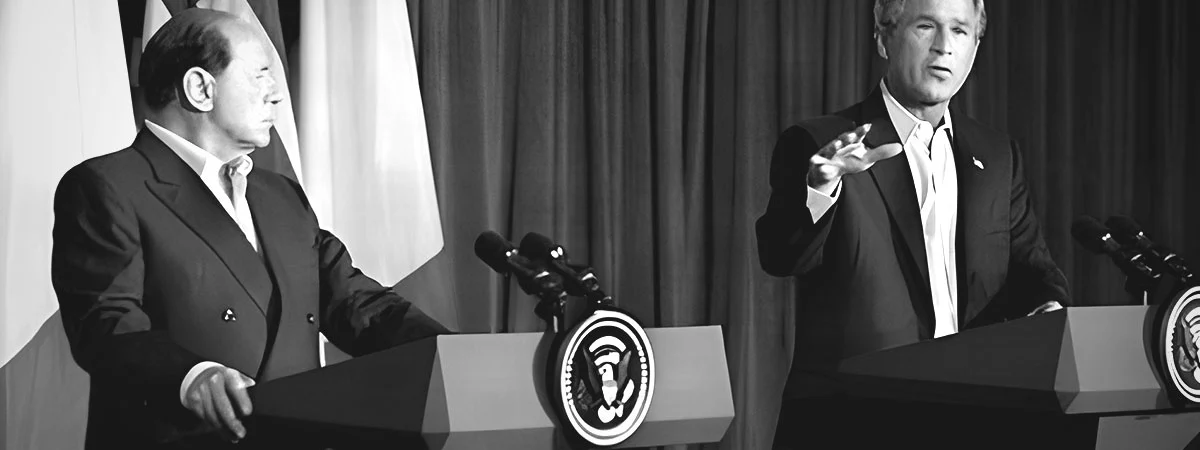
To most people, Silvio Berlusconi was the billionaire media magnate who became Italy’s longest-serving post-war prime minister: a charismatic yet deeply controversial figure whose business interests, political career and personal life repeatedly intersected.
Yet behind the public persona stood another story. Berlusconi was a first-generation entrepreneur who built his fortune from property development before creating a business empire spanning television, advertising, publishing, financial services, cinema and football. When he entered politics in 1994, he stepped away from executive positions in the group while retaining ultimate ownership.
By the time Berlusconi died in 2023, his five children had very different roles in the family enterprise. Marina and Pier Silvio had spent decades in senior positions, while the younger three were more involved as owners. His final testament left substantial economic interests to all five children and gave Marina and Pier Silvio joint control of Fininvest.
The will settled who would inherit. It left another question for the second generation: how would five siblings with different roles and levels of authority manage what their father had built — and decide what was still worth keeping?
From Property Development to Television
Silvio Berlusconi came from a middle-class Milanese family. His father, Luigi, worked for Banca Rasini, a small private bank in Milan, while his mother, Rosa Bossi, was a housewife. Berlusconi studied law at the University of Milan, supporting himself partly through jobs that included performing on cruise ships. He graduated in 1961, but his ambitions were already moving beyond legal practice.
That same year, aged 25, he entered property development with builder Pietro Canali. Their company, Cantieri Riuniti Milanesi, acquired a development site in Milan for 190 million lire, of which Berlusconi could reportedly assemble around 10 million himself. The purchase was made possible by a guarantee from Carlo Rasini, whose bank employed his father, while advance payments from buyers helped finance construction as the apartments were built.
The first project gave Berlusconi a route into larger developments. In 1963, he established Edilnord for a residential project at Brugherio, planned for around 4,000 inhabitants. The financing structure also became more ambitious. Berlusconi contributed his work and entrepreneurial role, while much of the capital came from outside investors, including a Swiss finance company represented by Renzo Rezzonico.
The same model of combining outside capital with large-scale development was used when Berlusconi turned his attention to Segrate, east of Milan. There, Edilnord developed Milano 2, a residential community built during the 1970s around landscaped green areas, schools, shops, sports facilities and pedestrian routes separated from road traffic.
The origins of some capital behind Berlusconi’s early property companies have remained disputed. His expansion drew on bank guarantees, external investors and Swiss financing vehicles alongside proceeds from his property developments. By the completion of Milano 2, his resources had expanded considerably from his first development.
Milano 2 also gave him an unexpected opening into television. The development had been wired for cable television, partly to avoid covering its carefully planned skyline with individual aerials. A small neighbourhood station called Telemilanocavo broadcast local programmes to residents. The venture struggled commercially, accumulating around 18 million lire in debt, including unpaid rent owed to Edilnord.
In 1976, Berlusconi acquired it for the symbolic price of one lira and assumed its debts. The acquisition became the starting point for his commercial television business. After private local broadcasting was liberalised, the station moved from cable to over-the-air transmission and became Telemilano. Berlusconi then began investing in programming, presenters, advertising sales and distribution.
By 1979, the pieces of a much larger system were coming together. Reteitalia acquired and traded television programmes, while Publitalia ’80 sold advertising directly to companies. Adriano Galliani brought expertise in broadcasting infrastructure. In 1980, Telemilano became Canale 5.
Within two decades, Berlusconi had built successful ventures in property development and commercial television. Television would provide the foundation for a much broader business group.
From Television Network to Fininvest
As Berlusconi’s interests expanded beyond property, he began bringing them under a common corporate structure. Fininvest was established as the holding company through which he could own and develop businesses across different sectors. Television soon became its largest activity, supported by companies specialising in programming, advertising and broadcasting infrastructure.
Canale 5 grew quickly within this structure. Publitalia ’80 sold advertising directly to companies, while Reteitalia acquired programmes for the expanding network. By 1980, Berlusconi and his business partner Adriano Galliani had assembled 16 local broadcasters into a system capable of carrying the same programming across Italy.
The model exploited an opening in Italian broadcasting. Private television had developed locally after the end of RAI’s effective monopoly over local broadcasting, while national private broadcasting remained legally uncertain. Fininvest distributed recorded programmes to affiliated stations for transmission at approximately the same time, allowing Canale 5 to function effectively as a national network.
Berlusconi also spent aggressively on content and talent. Mike Bongiorno, one of Italy’s best-known television presenters, joined Telemilano in 1979. In 1981, Canale 5 secured rights to broadcast matches from the Mundialito football tournament, forcing state broadcaster RAI to negotiate with a private competitor for the first time.
Acquisitions soon consolidated the market. Fininvest bought Italia 1 in 1982 and Rete 4 in 1984. Within a few years of entering television, Berlusconi controlled three networks, matching RAI’s three channels. Treccani estimates that by 1984 the Fininvest networks accounted for around 40% of television audiences and generated more advertising revenue than RAI.
That growth also exposed the enterprise to its first major regulatory crisis. Italian law did not permit private broadcasters to transmit nationally. In October 1984, judges in three regions ordered Fininvest’s simultaneous broadcasts to be stopped. Prime Minister Bettino Craxi’s government intervened within days with a decree temporarily permitting the system Fininvest was using. Parliament subsequently provided a legal basis for the networks to continue.
The episode revealed a characteristic that would follow the family enterprise for decades: its largest business operated at the intersection of commerce, regulation and politics. Decisions about broadcasting law could directly affect the value of the family’s principal asset.
Meanwhile, Berlusconi’s interest grew beyond television. In 1982, he and financial adviser Ennio Doris established Programma Italia, each contributing to a business that would eventually develop into Banca Mediolanum. The model relied on a network of financial advisers reaching clients directly, extending the group’s experience of distribution into financial services. In 1984, Fininvest acquired Mediolanum Assicurazioni.
Publishing followed. Fininvest acquired an initial stake in Arnoldo Mondadori Editore in 1985. Control came only after a prolonged struggle with Carlo De Benedetti that ended in 1991, bringing one of Italy’s largest publishing groups into the Fininvest portfolio. Berlusconi had already acquired a stake in Il Giornale in 1977, although broadcasting legislation later required him to transfer that interest to a group led by his brother Paolo.
In 1986, Fininvest acquired AC Milan. The investment carried exceptional public visibility and became closely associated with Berlusconi himself. During the family’s 31 years of ownership, the club won major domestic and European titles and developed into an internationally recognised sporting brand.
The group also began expanding its commercial television model into other European markets. Fininvest launched La Cinq in France in 1986 and Telefünf in Germany in 1987, before participating in the creation of Spain’s Telecinco in 1990. These ventures established an international ambition that would reappear decades later under Pier Silvio Berlusconi.
By the beginning of the 1990s, Fininvest sat above a collection of businesses spanning television, advertising, publishing, financial services, retail, property and football. The holding company provided a common ownership structure, while specialised executives assumed responsibility for individual businesses. Adriano Galliani worked across television and football, Fedele Confalonieri became a central figure in media, and Ennio Doris led the financial-services business he had created with Berlusconi.
This managerial layer would soon become essential. In 1994, Berlusconi entered politics and founded Forza Italia. His decision created an immediate governance question for a group whose founder remained its controlling shareholder while stepping away from executive corporate roles. Operational authority now had to function at greater distance from the man who had built the enterprise.
Politics and the First Transfer of Authority
When Berlusconi entered politics in 1994, his five children were at very different stages of their lives.
His two older children came from his first marriage to Carla Dall’Oglio. Marina, born in 1966, and Pier Silvio, born in 1969, were 27 and 24, respectively. Berlusconi’s second marriage to Veronica Lario brought three more children: Barbara, born in 1984, Eleonora in 1986 and Luigi in 1988. In 1994, they were still only nine, seven and five.
The age gap would have lasting consequences for the family’s succession. Marina and Pier Silvio had already begun gaining experience within the family businesses, although neither was ready to assume responsibility for the group. Their younger siblings would enter the enterprise years later, after the two older children had already established their positions.
Continuity therefore depended heavily on professional management.
Several of the people around Berlusconi had already worked with him for years. Fedele Confalonieri, a friend since their youth, had become a senior figure in the television business. Adriano Galliani had worked alongside Berlusconi since the expansion of commercial television and later became closely associated with AC Milan. Ennio Doris continued to lead the financial-services business they had founded together.
The group was also becoming more institutionalised. During the 1990s, its television operations were consolidated within Mediaset, which was listed on the Milan Stock Exchange in 1996. Mediolanum was listed the same year, while Mondadori was already publicly traded. Fininvest remained the privately held holding company above them.
This structure allowed Berlusconi to retain control through Fininvest while the major operating companies developed their own boards, executives and outside shareholders. Fininvest describes its evolution as one in which a family enterprise progressively opened its principal companies to public investors; MFE-MediaForEurope, Mondadori and Banca Mediolanum remain listed businesses today.
The second generation entered this structure through two distinct routes.
Marina had become involved in Fininvest’s decision-making at a young age, particularly in corporate management, business strategy and financial matters. In July 1996, aged 29, she was appointed Deputy Chair of Fininvest.
Pier Silvio‘s apprenticeship was operational. He began his professional career in Publitalia’s marketing division in 1992 before moving to Italia 1. In November 1996, he became Director of Network Programming at Mediaset, responsible for schedules and programmes. He was appointed Deputy General Manager for content at RTI in 1999 and Chairman and CEO of RTI in 2000.
By the end of the decade, two different roles were emerging. Marina gained experience in ownership and strategic oversight at Fininvest, while Pier Silvio developed within the group’s largest operating business.
The distinction in their roles became clearer during the following years. Marina was appointed Chair of Mondadori in 2003 and Chair of Fininvest in October 2005. Pier Silvio continued to rise through Mediaset, eventually becoming its CEO in 2015.
Their progression also changed the role of the founder. Berlusconi remained the ultimate controlling shareholder, but the businesses no longer depended on his direct executive management. Authority had been distributed across family directors, professional executives and the boards of publicly listed subsidiaries.
This arrangement gave the family time for a gradual leadership transition. Marina and Pier Silvio built long records inside the enterprise while their father remained the controlling owner. By the time their younger siblings began taking on roles of their own, the two older children had already established distinct positions within the group.
Bringing the Next Generation into Ownership
As Marina and Pier Silvio established themselves in senior positions, Berlusconi’s three younger children began entering the family enterprise through a different route.
Barbara was the first. In September 2003, aged 19 and still studying philosophy, she joined the Fininvest board. Her appointment meant that three of Berlusconi’s five children were now represented at the holding-company level.
In December 2013, following public tensions over the club’s management, AC Milan adopted a dual-CEO structure in which Barbara and long-serving executive Adriano Galliani divided executive responsibilities.
Luigi followed a finance-oriented path. After studying economics and finance at Bocconi University, he served on the board of Mediolanum from 2007. In 2012, he joined the Fininvest board. He also became closely involved with Holding Italiana Quattordicesima, the investment vehicle through which he, Barbara and Eleonora held their shared interest in Fininvest. He became its chairman in 2014.
Eleonora followed a less prominent corporate path. After studying business management in New York, she gained experience at Damiani, Fininvest, Endemol and Fondazione Milan. She is now represented alongside her siblings on the Fininvest board.
The differences in their careers were reflected in the family’s ownership structure. Before Silvio’s death, Marina and Pier Silvio each controlled a holding company representing approximately 7.8% of Fininvest’s voting rights, while Barbara, Eleonora and Luigi jointly controlled another representing approximately 21.9%. Silvio retained the decisive block through four additional holding companies, which together represented approximately 62.5% of the voting rights once Fininvest’s treasury shares were excluded.
All five children therefore already had an economic interest in Fininvest, although Silvio retained majority control. Marina and Pier Silvio held their interests separately, while the younger three held theirs collectively.
Ownership and management were also developing along separate lines. Marina chaired Fininvest from 2005 and Mondadori from 2003. Pier Silvio became CEO of Mediaset in 2015. Barbara accumulated operating experience at AC Milan, Luigi developed experience in finance and holding-company governance, and Eleonora remained less involved in the group’s formal leadership.
By this stage, many of the elements required for an eventual succession were already in place. His children held economic interests in Fininvest, two had established long-term leadership positions within the group, and professional executives provided continuity across the organisation. The listed subsidiaries also had their own boards, executives and outside shareholders. Silvio nevertheless retained majority control.
That left the most consequential ownership decision unresolved: what would happen to his controlling stake after his death?
The Will: Dividing Wealth and Control
Silvio Berlusconi died on 12 June 2023 at the age of 86. In October 2006, Berlusconi prepared a handwritten will that established the central principle of his eventual succession. The portion reserved by law for his children was to be shared equally among all five, while the disposable portion — the part he was free to allocate — went to Marina and Pier Silvio in equal shares. Later testamentary documents added further bequests without overturning this allocation.
When the will was opened on 5 July 2023, Marina and Pier Silvio each received 26.54% of Fininvest’s voting rights. Together they controlled approximately 53%, while Barbara, Eleonora and Luigi collectively held approximately 47%.
According to Silvio Berlusconi’s wishes, no single heir would inherit the control he had previously exercised over Fininvest. Marina and Pier Silvio would instead exercise control jointly.
The will also covered a much broader fortune. Contemporary estimates placed the estate at more than €5 billion, including investments, property, liquidity, yachts and an extensive art collection. Berlusconi left separate bequests of €100 million each to his brother Paolo and his final partner, Marta Fascina, and €30 million to his long-time associate Marcello Dell’Utri.
The will established the distribution of the estate, while further agreements defined how the siblings would exercise their ownership. On 11 September, all five accepted the inheritance and announced an agreement on its division, alongside additional rules governing their relationship as Fininvest shareholders.
A five-year lock-up committed the siblings not to alter their respective holdings in the family holding companies and, consequently, their interests in Fininvest. They agreed that at least 50% of Fininvest’s annual net profit would be distributed as dividends to the family holding companies. The siblings would also fund the €230 million of personal bequests in proportion to their respective inheritance shares.
Further protections addressed the imbalance between the two family branches. If the majority shareholders eventually accepted an offer for the inherited holding companies, Barbara, Eleonora and Luigi would have the right to sell on the same terms. The arrangements were subsequently incorporated into the statutes of Fininvest and the family holding companies.
Board representation was also broadened. Eleonora joined the Fininvest board in November 2023, meaning that all five siblings were represented directly. The board expanded from eight to ten members, with long-standing professional adviser Michele Carpinelli also joining.
The resulting structure separates ownership, control and management. Marina and Pier Silvio exercise joint indirect control, while their three younger siblings retain substantial economic ownership. All five are represented on the Fininvest board, and day-to-day management remains professionalised under CEO Danilo Pellegrino.
Five children inherited ownership, two received joint control, and professional management remained in place.
There was also a significant change outside the formal governance structure. None of Berlusconi’s children inherited his political role. For the first time in decades, control of the family’s business interests was separated from the political career that had repeatedly raised questions about conflicts of interest, particularly around Berlusconi’s media ownership. Fininvest entered its second generation without the same overlap between political office and family business control.
With the immediate succession settled, a different question followed: what should the second generation actually keep?
What Should the Family Keep?
The first years after Berlusconi’s death also reveal which parts of the inherited estate the family has retained.
Alongside Fininvest’s principal corporate holdings, the family also inherited football interests, extensive property and thousands of works of art accumulated by Berlusconi personally. Each carried a different combination of financial value, emotional significance and connection to the founder.
The inheritance raised different questions for different assets. Fininvest contained operating businesses with continuing strategic and financial roles. Berlusconi’s personal estate included properties and art closely associated with his interests and lifestyle. The heirs faced decisions about which should remain within the shared family portfolio.
Some were already being reconsidered; Fininvest sold AC Milan in 2017 after 31 years of ownership, but Berlusconi returned to the sport the following year when the group acquired AC Monza. With Adriano Galliani managing the club, Monza reached Serie A for the first time in its history in 2022. The investment became one of Berlusconi’s final major personal business projects.
His children chose not to retain it. In 2025, Fininvest agreed to sell AC Monza to Beckett Layne Ventures. An initial 80% stake was transferred in September 2025, followed by the remaining 20% in June 2026, completing the family’s exit from football.
The family’s property portfolio raised a similar question on a much larger scale. Berlusconi had accumulated several residences, including Villa Certosa, his Sardinian estate on the Costa Smeralda. The property had served as a private retreat, a venue for political meetings and one of the most visible symbols of his personal wealth.
In June 2026, the heirs sold Villa Certosa to a company linked to Qatar’s royal family. The price was widely reported at around €350 million. Reuters described the transaction as part of a broader rationalisation of the property portfolio inherited by the five children.
The art collection presents another inheritance problem. Berlusconi had acquired works throughout his life and accelerated his buying considerably in later years, often purchasing paintings through television auctions. The resulting collection reportedly ran into tens of thousands of works, ranging widely in quality and value. Its scale and uneven value created substantial storage, conservation and disposal questions for his heirs.
The collection attracted considerable ridicule after Berlusconi’s death. Art critic and long-time acquaintance Vittorio Sgarbi said that most of the roughly 25,000 works had little artistic value, while reports estimated that Berlusconi had spent around €20 million acquiring them and approximately €800,000 a year storing them. The collection consequently became another symbol in public commentary of the founder’s eccentric tastes and spending.
Its financial significance within the inheritance was limited, however. The reported €20 million acquisition cost represented a small fraction of an estate estimated at more than €5 billion. Accounts from people familiar with Berlusconi’s buying also suggest that he knew many of the works had little commercial value. Paintings were sometimes packaged and given to friends and associates. The collection can therefore be understood as a personal accumulation with a strong gift-giving element, with little evidence that Berlusconi regarded it primarily as an investment portfolio. For his heirs, the practical question was what to do with thousands of objects that carried limited financial or strategic value.
These assets illustrate a recurring issue in founder succession. Personal possessions can require separate decisions about family significance, investment value and eventual disposal.
The family’s principal operating interests have followed a different path. Under Pier Silvio’s leadership, MFE-MediaForEurope has continued its European expansion, acquiring control of German broadcaster ProSiebenSat.1 in 2025. Mondadori remains within the portfolio under Marina’s chairmanship, while Banca Mediolanum continues to represent a major financial interest.
Fininvest entered its second generation with these three sectors at its core. In 2025, it reported consolidated revenues of €5.03 billion, group net profit of €429.3 million and equity of €5.85 billion.
The second generation’s decisions therefore suggest a pattern of selective continuity. The principal operating businesses remain within the family portfolio while several assets closely associated with the founder have been sold. The question is increasingly which assets still have a place within the shared enterprise.
The Four Abundances reveal several dimensions of this transition. Wealth passed to five siblings with different levels of authority. Relationships now influence how that ownership is exercised. Time allowed leadership roles to develop before the founder’s death. Purpose appears in decisions about which businesses and assets should remain part of the shared family enterprise.
From Founder Control to Family Governance
The Berlusconi succession had been developing for decades before Silvio’s death. Professional management, next-generation leadership and partial family ownership were already established by 2023. His will completed the transfer of control, while the siblings’ subsequent agreements introduced rules for exercising that ownership together.
The sequence reveals the central governance lesson of the Berlusconi succession: management, ownership and control moved across generations on different timelines.
Management had already become substantially professionalised while Silvio was alive. Marina and Pier Silvio then accumulated decades of leadership experience, while ownership interests were established for all five children. The final transfer concerned the element Silvio had retained most closely: control.
Several elements of the post-founder structure were therefore already functioning when Berlusconi died. The transfer of control then created a new distribution of family power: joint control for Marina and Pier Silvio, substantial minority ownership for their three siblings, family board representation and professional management.
The governance challenge has therefore moved from preparing successors to maintaining co-ordination among owners. Marina and Pier Silvio must exercise control jointly, while Barbara, Eleonora and Luigi collectively represent almost 47% of the voting rights.
The five-year restrictions agreed in 2023 provide stability during the initial transition, but they do not settle every future question. The siblings will eventually have to decide how ownership can be transferred, whether the current balance between the two family branches should continue, and how the next generation will participate.
These questions will grow as ownership passes beyond the five siblings to a larger group of descendants with different interests, careers and relationships to the businesses. Greater ownership dispersion could make the relationship between economic participation and decision-making an increasingly important governance question.
Berlusconi spent decades building institutions that could operate beyond his direct management. His final succession arrangements extended that process to ownership, replacing one controlling founder with a system of shared family control.
The next test will be whether shared family control remains workable as ownership passes to another generation.
The Family Council Canvas
The Berlusconi case shows why succession planning extends beyond identifying who receives which shares. Families also need to consider how shared ownership will work once those shares have passed.
- Which assets should remain shared?
- Who participates in decisions?
- Which purposes continue across generations?
The Family Council Canvas is a practical governance framework designed to help families work through these questions together. It helps clarify what the family wants to hold in common, who should participate in decisions, how responsibilities are distributed and what the shared enterprise is ultimately intended to serve.
Disclaimer: This article is a case study based on publicly available information and is intended for educational and informational purposes only. The analysis and opinions expressed are those of the author and do not constitute factual claims about the private lives or intentions of the individuals discussed. Images and excerpts from third-party sources are included solely for purposes of commentary and criticism, with attribution provided where sources are known.
References:
Vock, I. (2023) ‘Berlusconi’s “Worthless” Art Collection Proving a Headache to Heirs‘, BBC News, 20 October.
Pollina, E. and Amante, A. (2023) ‘Heirs to Keep Some of Berlusconi’s Art Hoard from TV Shopping Shows‘, Reuters, 20 October.
Schrader, A. (2023) ‘Late Italian Prime Minister Silvio Berlusconi Hoarded A ‘Monstrously Entertaining’ Art Collection. Now His Heirs Must Decide What to Do With It’, Artnet, 20 October.