The Rockefeller saga began with a young bookkeeper in Cleveland who developed a reputation for precision, discipline, and unusual attention to capital allocation. John D. Rockefeller Sr. was not born into inherited wealth. His early business experience came through commission trading, where profits were reinvested repeatedly into larger opportunities. When Standard Oil was formally established in 1870, it emerged from accumulated partnerships, retained earnings, external financing, and a growing conviction that scale and organisation could create enduring economic power.
More than 150 years later, roughly 200 descendants remain connected to structures built around that original fortune.
For family office advisors, the Rockefeller story demonstrates how governance structures can protect wealth through trusts, professional leadership, and specialised administration. Over time, these systems create stability while also introducing pressures around authority, participation, legitimacy, and shared purpose.
The Rockefeller family encountered this challenge repeatedly. The operating business disappeared, family branches multiplied, public controversies emerged, professional executives gained influence, and younger generations introduced different priorities.
The Rockefeller structures did not fully transfer authority away from the family. Over time, family members increasingly shared influence with trustees, professional advisors, and institutional structures. The recurring challenge involved balancing continuity with participation: preserving long-term coordination while maintaining meaningful family involvement.
From Bookkeeping to Industrial Scale
John D. Rockefeller Sr. was born in 1839 in Richford, New York, into circumstances that offered little indication of future industrial dominance. His father, William Avery Rockefeller Jr., travelled as a trader and salesman and maintained an unpredictable presence within family life. His mother, Eliza Davison Rockefeller, introduced a very different influence: discipline, frugality, religious conviction, and careful management of limited resources.
At the age of sixteen, John found work as an assistant bookkeeper in Cleveland. His first salary was modest, but bookkeeping offered exposure to an environment that rewarded precision and discipline. Rather than entering oil immediately, he began his entrepreneurial career through a produce commission business established with Maurice B. Clark. The company traded grain, meat, hay, and agricultural products.
Several characteristics that later appeared in Rockefeller’s business strategy can already be observed in these early years. He developed a strong attachment to record-keeping, caution around spending, and a tendency to view resources through the lens of long-term objectives.
The Civil War (1861–1865) massively increased demand across the broader economy because armies required food, grain, livestock, transportation, uniforms, fuel, and industrial materials. Rail networks expanded rapidly and trade volumes rose. Businesses involved in moving and distributing goods often benefited, even if they had no direct military contracts. Rockefeller’s produce commission business benefited from rising commercial activity, and the resulting profits were repeatedly reinvested into larger opportunities. This pattern remained visible throughout his later career: capital was directed back into systems capable of expanding future capacity.
In the early 1860s, following the discovery of oil in Pennsylvania, an oil boom began across the United States. Rockefeller recognised an opportunity within the industry. Oil drilling itself carried significant uncertainty, with production fluctuating heavily and speculation driving rapid cycles of expansion and failure. Refining required technical expertise, capital, and organisational skills, while allowing for greater operational control and consistency.
He partnered with Samuel Andrews, who brought refining expertise, and in 1863, together with his produce commission business partner Maurice B. Clark, established a refinery named Andrews, Clark & Co. As the American oil industry expanded, Rockefeller increasingly directed resources and attention towards refining and its surrounding infrastructure.
Strategic differences soon emerged. Clark maintained a more cautious approach towards expansion, while Rockefeller pursued larger-scale growth and greater capital commitment. In 1865, the partners agreed to resolve their differences through an auction process in which either party could buy out the other. Rockefeller won the auction and acquired Clark’s interests for approximately $72,500. The business subsequently became Rockefeller & Andrews.
When Standard Oil was formally incorporated in Ohio in 1870, the company began with approximately $1 million in partnership capital. The capital base had accumulated through earlier business profits, retained refinery earnings, financing relationships, and partner contributions.
As Standard Oil expanded, scale itself began changing the governance requirements of the enterprise. Decision-making increasingly involved capital allocation, partnerships, regulatory relationships, and oversight across interconnected operating systems. The business had grown beyond a collection of commercial transactions into a highly coordinated structure with substantial economic and public influence.
Growth also introduced a tension that later became central to the Rockefeller story: the structures that generated scale gradually required their own systems of management and oversight.
The Institutionalisation of a Dynasty
Following the creation of Standard Oil, the family faced a challenge common to many large family enterprises: the business that created the fortune gradually became separate from the structures designed to preserve it.
During the early Standard Oil years, ownership and control remained closely aligned. Rockefeller exercised concentrated authority over strategy, capital allocation, and expansion. Decision-making relied heavily on a small group of trusted partners and reflected founder judgement.
Several products and operating features established the foundations of the enterprise:
- Refined kerosene: reliable and standardised lamp fuel that reached households and businesses at large scale.
- Petroleum by-products: lubricants and other derivative products that increased value extraction across the supply chain.
- Integrated distribution and refining systems: rail agreements, storage facilities, refining capacity and logistics became part of a coordinated structure designed around efficiency and control.
As Standard Oil expanded across refining, transportation, and distribution, coordinating an increasingly large network of businesses became more difficult. In 1882, Rockefeller and his associates introduced a new governance structure: the Standard Oil Trust.
The trust consolidated multiple companies under central administration. Shareholders transferred their interests to trustees, who then coordinated decision-making across the wider organisation. This arrangement allowed Standard Oil to maintain consistency across expanding activities and geographic regions.
The structure strengthened coordination while concentrating authority within a small leadership group. As Standard Oil expanded, questions emerged around the relationship between economic scale and concentrated influence.
By the early twentieth century, Rockefeller had become more than an industrial founder. In the public eye, he became a symbol of concentrated economic power. Admired for discipline and organisational ability, he was also criticised for secrecy, market dominance, and the scale of influence attached to Standard Oil. Questions around legitimacy gradually extended beyond the business itself and towards the broader relationship between private wealth and public responsibility.
Standard Oil Dissolution and Wealth Expansion
Investigative journalism played a significant role in bringing these concerns into public discussion. One of the most influential figures was Ida Tarbell. Her father had operated in Pennsylvania’s early oil industry and had experienced the market disruptions that accompanied Standard Oil’s rise. Beginning in 1902, Tarbell published a series of articles that later became The History of the Standard Oil Company. While examining the mechanics of Standard Oil’s expansion and the structures supporting it, several issues were discovered:
- Preferential railroad arrangements: Standard Oil negotiated highly favourable shipping rates and rebates with rail companies. Transportation costs represented a major competitive factor in the oil industry, giving the company significant operating advantages.
- Acquisition practices: competitors frequently entered arrangements with Standard Oil through acquisitions or consolidation agreements. Some viewed these deals as practical business decisions, while others believed the growing influence of Standard Oil limited their alternatives.
- Market concentration: as Standard Oil expanded, increasing portions of refining capacity, transportation systems, and distribution channels became linked to one organisation.
- Information asymmetry: through its relationships across rail transportation, refining, distribution networks, and financing channels, Standard Oil developed broad visibility into the industry’s operations. This position provided insight into pricing patterns, market developments, and commercial activity that smaller independent operators often struggled to access.
Standard Oil had delivered efficiency and lower costs to many consumers, yet public concern increasingly moved beyond the price or quality of kerosene. Political pressure gradually increased, alongside wider public concern about large trusts and concentrated corporate power.
As public attention intensified, John D. Rockefeller Sr. was already moving away from active business leadership. By the 1890s he had gradually reduced day-to-day involvement in Standard Oil, and in 1897 he effectively retired from active management. While still retaining enormous financial influence and public visibility, his role increasingly shifted from industrial operator towards family patriarch and philanthropist.
At the same time, John D. Rockefeller Jr. was gradually assuming greater responsibilities within the family’s expanding financial and philanthropic activities. During this transitional period, the family began moving from founder-led decision-making towards broader systems of administration and stewardship.
The period created an important governance transition. Public debate around Standard Oil intensified while authority became more distributed. Questions surrounding legitimacy, public responsibility, and concentrated economic power increasingly attached themselves not only to the company but also to the Rockefeller name and the structures surrounding it
Federal regulators eventually pursued legal action under the Sherman Antitrust Act. In 1911, the United States Supreme Court ordered the dissolution of Standard Oil into 34 independent companies, including predecessors of Exxon, Chevron, Marathon, and BP.
Operational control over a single industrial organisation disappeared, but ownership survived through holdings distributed across multiple successor companies. Paradoxically, the market value of these businesses rose sharply after the breakup, substantially increasing Rockefeller’s personal wealth.
The family now faced a different governance question: how should dispersed financial assets be governed once direct operational authority over a single enterprise no longer exists?
This transition also introduced a structural distinction that continued shaping the Rockefeller story across later generations: ownership and control gradually began following different paths.
During the Standard Oil period, ownership and operational authority had remained concentrated around Rockefeller and a small group of partners. Following the dissolution, family wealth increasingly consisted of ownership interests spread across multiple successor companies, investments, and later institutional structures. Operational authority, however, increasingly sat with executives, trustees, advisors, and governance systems responsible for coordinating these activities.
The distinction became increasingly important because public expectations rarely followed formal governance arrangements. During later events, public criticism attached itself to ownership even when day-to-day operational authority had become more distributed.
Transition from Operating Business to Governed Capital
By the early twentieth century, John D. Rockefeller Jr. faced a fundamentally different task from that of his father. The challenge involved coordinating capital, philanthropy, family interests, and public legitimacy. Several governance developments emerged during this period.
The Strategic Significance of Philanthropic Institutions
John D. Rockefeller Sr.’s religious beliefs strongly influenced his views on wealth and stewardship. As committed Baptists, the family practiced tithing, donating roughly ten percent of income to charitable and religious causes. Their contributions included substantial support for institutions such as Spelman College, founded to educate Black women, the University of Chicago and the Rockefeller Institute for Medical Research.
As family wealth expanded, direct charitable giving became more difficult to coordinate. Under John D. Rockefeller Jr., philanthropy evolved into a more formal system organised through institutions such as the Rockefeller Foundation. These structures supported public health campaigns, medical education reform, epidemiology, and disease research, helping shape parts of modern public health infrastructure in the United States and internationally.
The scale became historically significant. John D. Rockefeller Sr. reportedly donated more than $500 million during his lifetime, while Rockefeller institutions later distributed tens of billions of dollars across global initiatives.
Large private foundations also introduced broader governance questions surrounding concentrated wealth. As these institutions expanded, they gained influence over research, education, and public initiatives while operating outside conventional political structures.
For the Rockefeller family, philanthropy became both a mechanism for long-term stewardship and part of a wider discussion surrounding legitimacy, influence, and the public responsibilities attached to concentrated private wealth.
Family wealth organised through formal structures
The dissolution of Standard Oil created a different ownership environment. Wealth no longer remained concentrated within a single operating company. Family assets increasingly consisted of holdings spread across multiple businesses, investments, and philanthropic structures.
Managing these assets became more difficult as the family expanded across generations. Direct inheritance created pressures around fragmentation, ownership dilution, tax exposure, and coordination across increasingly diverse interests. Administrative functions increasingly moved towards organised structures capable of operating independent from individual family members.
These developments later contributed to the landmark family trust structures established from the 1930s onwards. Rather than functioning purely as estate-planning tools, the trusts became long-term governance mechanisms designed to preserve capital, coordinate liquidity, reduce transfer-related pressures, and maintain continuity across an expanding family network.
While this shift may appear as a movement from an operating enterprise towards trust-based structures, the underlying purpose had changed. The earlier Standard Oil Trust was designed to coordinate industrial scale and centralise control across a growing business network. The later Rockefeller family trusts addressed a different challenge: preserving continuity, protecting assets from fragmentation, and creating structures capable of supporting an expanding family system.
Expanding Administrative Systems
As family activities expanded, informal coordination became more difficult. Dedicated administrative functions developed around investments, family affairs, and philanthropy. Professional advisors increasingly entered positions of influence, providing continuity beyond individual family members. These systems later evolved into the family office structure known as Room 5600, which eventually became one of the most recognised family office models globally.
By the early twentieth century, Rockefeller wealth had expanded beyond Standard Oil into a broader portfolio of industrial and financial interests. One of these investments involved Colorado Fuel & Iron, a large mining and steel company in which Rockefeller interests gained around 40%, non-controlling interest . Although the family had not built the company directly and did not oversee day-to-day mining operations, public attention increasingly associated the business with the Rockefeller name.
Public Reputation as a Governance Concern
The Ludlow Massacre in 1914 became one of the most significant legitimacy crises in the Rockefeller family’s history. The crisis emerged during a prolonged strike at Colorado Fuel & Iron (CF&I). Workers had raised concerns regarding wages, working conditions, safety standards, and recognition of labour unions. Tensions escalated over several months. Following the eviction of striking workers and their families from company housing, miners established tent colonies. Violent confrontations eventually developed between striking workers, company-connected security personnel, and the Colorado National Guard. On 20 April 1914, a confrontation at one of these camps resulted in a fire that killed multiple people, including women and children. National outrage followed.
The event created an uncomfortable governance question for the Rockefeller family. John D. Rockefeller Jr. argued that the family had not directly managed CF&I and that operational responsibility rested with company management. Yet, the distinction between ownership and operational management carried less weight in public discussions, and the Rockefellers were already established as a symbol of concentrated industrial power and the obligations attached to it. Many saw the family as ultimately responsible because they retained significant ownership and influence.
In response, the family took the following steps:
Professional advisory involvement: John D. Rockefeller Jr. engaged Ivy Ledbetter Lee, an early public relations advisor. Lee argued that silence and distance were intensifying public hostility and encouraged a more active communication strategy.
Public engagement: Rockefeller Jr. increased his visibility, met workers and families, visited mining communities, and attempted to present a more personal and accessible image.
Structural reform: The response later moved beyond public messaging. Labour specialist William Lyon Mackenzie King was brought in to redesign labour relations within CF&I. The resulting Rockefeller Plan introduced employee representation committees, formal communication mechanisms between workers and management, workplace safety initiatives, and broader welfare measures. Supporters viewed the programme as an early attempt at modern industrial relations. Critics questioned whether representation remained too closely tied to company interests and insufficiently independent from management authority.
The Ludlow crisis demonstrated a broader lesson for family enterprises: public legitimacy can remain connected to ownership even when operational authority becomes more distributed. Reputation therefore entered the Rockefeller governance system as a long-term strategic concern rather than a temporary communications issue.
Trust Institutionalisation and Professional Leadership
As John D. Rockefeller Jr.’s generation gave way to later heirs, the family entered a different succession environment. Authority no longer passed to a single successor. Responsibility dispersed across Rockefeller Jr.’s children — including David Rockefeller, Nelson Rockefeller, Laurance Rockefeller, John D. Rockefeller III, and Winthrop Rockefeller — who pursued distinct paths across banking, public service, philanthropy, conservation, and investment.
Influence increasingly moved into trusts, philanthropic institutions, and administrative systems. The family shifted from founder-led authority towards coordinated stewardship across multiple branches.
This diversification broadened the family’s reach while creating new governance demands. As family branches multiplied, informal coordination became harder to sustain. Direct inheritance also introduced pressures around ownership dilution, tax exposure, liquidity, and long-term alignment.
Governance evolved accordingly. The 1934 Family Trust and later the 1952 Trust introduced mechanisms intended to preserve continuity across an expanding family network. These structures addressed several pressures simultaneously:
- increasing numbers of heirs
- ownership dilution
- transfer taxes and estate-related liabilities
- liquidity demands from family members
- preservation of coordinated long-term stewardship
The trusts held concentrated positions in Rockefeller-related assets alongside broader investments. Ownership increasingly moved into institutional frameworks, while authority shifted towards trustees, administrative systems, and professional oversight.
The 1934 trusts also embedded the family’s philanthropic principles into their distribution arrangements. Six trusts, each initially valued at $10 million, were established for John D. Rockefeller Jr.’s children. Between the ages of 21 and 30, beneficiaries were entitled to receive ten per cent of annual trust income, while the remaining 90 per cent was directed towards charitable institutions. Access to principal remained restricted, with subsequent withdrawals subject to approval by independent trust committees composed of non-family advisors. The arrangements therefore linked financial inheritance with philanthropic responsibility, while placing substantial decision-making authority in professional hands.
One feature of this arrangement later became known as the “Waterfall Method”, a closed-loop approach designed to replenish capital across generations:
Trust assets generated income
↓
Trust income funded permanent life insurance policies on family members
↓
The trust became both owner and beneficiary
↓
Cash value accumulated and could support approved family needs
↓
Death benefits returned tax-free to the trust
↓
Capital re-entered the system for future generations
The arrangement addressed practical concerns surrounding liquidity, succession, and transfer-related pressures while attempting to preserve long-term continuity. At the same time, these mechanisms raised broader questions regarding concentrated private capital and public legitimacy.
The transition also widened the separation between ownership and control. Family members remained beneficiaries, yet authority increasingly sat with trustees and professional administrators. Continuity now depended on institutional systems and specialised expertise operating alongside family stewardship.
A significant figure during this transition was Joseph Richardson Dilworth, who later led Room 5600, the Rockefeller family office, and served as a senior advisor for more than two decades. He represented a broader governance shift in which trusted non-family professionals gained institutional authority within the family system.
In 1974, during confirmation hearings for Nelson Rockefeller’s appointment as Vice President of the United States, Dilworth testified before Congress regarding Rockefeller family wealth and governance structures. A non-family professional had effectively become the public representative of the family’s institutional system.
Nelson Rockefeller himself reflected another evolution within the Rockefeller story. Family influence increasingly extended beyond industrial ownership into public administration, urban development, culture, and national politics. During four terms as Governor of New York, he became associated with large-scale infrastructure projects, expansion of the State University of New York system, and support for major cultural institutions including Lincoln Center.
By the later twentieth century, governance responsibilities had moved substantially beyond individual family members. Room 5600 evolved into one of the world’s most recognised family office structures, coordinating investments, administration, and family affairs across multiple generations.
The central governance challenge had changed once again: maintaining alignment, participation, and continuity across an increasingly complex family system.
Current Succession Position
As authority became more distributed across Rockefeller family branches, David Rockefeller, the youngest son of John D. Rockefeller Jr., emerged as one of the family’s most visible coordinating figures. Unlike earlier transitions centred around a founder, his influence developed through institutional leadership and stewardship rather than concentrated ownership authority. He served as chairman and chief executive of Chase Manhattan Bank while remaining closely involved in family affairs and philanthropy. Over time, he became an important link between earlier generations and the family’s evolving governance structures.
Following David Rockefeller’s death in 2017 at the age of 101, later generations continued operating through established trusts, family institutions, and professional governance systems. His son, David Rockefeller Jr., remained one of several visible representatives involved in stewardship and family activities.
Family participation also developed through dedicated governance and communication practices. As the fourth generation expanded into a network of cousins, the family established biannual Family Forums to maintain connections across different branches. The June Forum, traditionally held at the Pocantico estate, brought together adult family members and their spouses, while the December Forum provided a setting for formal reporting and philanthropic deliberation. These gatherings created regular opportunities for family members to remain involved in shared affairs, even as their professional interests and personal priorities became increasingly diverse.
The Rockefeller succession environment now reflects governance changes introduced over multiple generations. John D. Rockefeller Sr. transferred authority through a founder-to-successor model centred around John D. Rockefeller Jr. Later transitions became more distributed as family branches expanded and activities diversified across banking, philanthropy, public service, investment, and family administration.
Over time, trusts, family institutions, professional leadership, and administrative systems became mechanisms for coordinating these interests. The central challenge evolved beyond identifying a successor. The broader question became how a growing family system could maintain alignment while accommodating increasingly diverse roles, interests, and priorities.
The family’s collective wealth is estimated at approximately $10 billion and remains diversified across public equities, private investments, real estate, energy, technology, and philanthropic institutions.
At the same time, another governance shift emerged. For decades, the Rockefeller family office, Room 5600, operated as a private Single-Family Office managing the family’s investment, administrative, and philanthropic affairs. As the family expanded and wealth became more distributed across descendants, these capabilities gradually evolved into Rockefeller Capital Management, a broader Multi-Family Office and wealth management platform serving external clients alongside Rockefeller interests.
The transition introduced several structural changes:
- spreading high fixed operating costs across a broader client base
- strengthening the ability to attract specialised advisors and executives
- transforming internal family capabilities into an independent commercial enterprise
The move continued a recurring Rockefeller pattern: governance adapted alongside changing priorities. Early systems coordinated industrial growth, later systems focused on family continuity, and recent developments introduced another challenge: how should a distributed family preserve institutional quality while coordinating an increasingly complex family network?
The Rockefeller structures addressed practical concerns surrounding continuity, liquidity, and succession. They also raised a broader question that continues surrounding significant family wealth: where does long-term stewardship end and long-term concentration of influence begin?
The Four Abundances
The Rockefeller story is often viewed through financial success, yet wealth alone does not explain why some family systems remain coordinated over time. The Four Abundances framework provides another way of viewing how the structures that preserve wealth can influence relationships, decision-making, and the family’s ability to adapt as circumstances change.
Abundance of Wealth
The Rockefeller system developed multiple layers designed to preserve financial continuity. Trust structures, diversified investments, institutional administration, and later the transition from a Single-Family Office towards Rockefeller Capital Management created mechanisms capable of supporting long-term capital preservation.
The family moved beyond dependence on a single operating company. Wealth gradually became distributed across public equities, private investments, real estate, banking interests, philanthropy, and later commercial family office activities.
Pressure nevertheless emerged alongside this stability. As family branches expanded, questions surrounding liquidity, ownership participation, and access to resources became increasingly complex. Structures designed to preserve capital also attracted broader discussion around concentrated wealth, tax optimisation, and long-term influence. The challenge gradually shifted from creating wealth towards governing continuity.
Abundance of Relationships
The Rockefeller family built structures intended to maintain cohesion across an increasingly large family network. Philanthropic institutions, trusts, family office systems, and shared governance arrangements created points of connection extending beyond ownership itself. These structures provided opportunities for participation and shared stewardship.
Pressure emerged as the family became more geographically and professionally distributed. Later generations developed different priorities, identities, and interests. Questions increasingly moved towards: Who participates? Who influences decisions? How does a family preserve engagement when experiences across generations differ substantially? Maintaining relationships became less dependent on proximity and more dependent on the quality of the surrounding structures.
Abundance of Time
The Rockefeller system repeatedly attempted to extend decision-making beyond individual lifetimes. Trusts, institutional leadership, and professional administration reduced dependence on any one person and allowed planning over long time horizons. These structures created continuity extending across multiple generations.
Pressure nevertheless appeared in another form. Long-lived systems can accumulate procedures, assumptions, and habits developed under earlier conditions. Structures built for one generation may continue operating under different circumstances. Governance therefore introduced an ongoing question: How frequently should long-term systems redesign themselves?
Abundance of Purpose
Purpose became one of the strongest organising principles within the Rockefeller story. Early generations linked wealth with ideas of stewardship, philanthropy, and public contribution. Later generations inherited institutions capable of translating these ideas into practical activity. Purpose also introduced some of the family’s most visible internal tensions.
The fourth generation established the Rockefeller Family Fund in 1967, creating opportunities to pursue emerging social and environmental priorities. As the fifth generation matured, philanthropy continued to serve as a shared family purpose while allowing individual members to pursue their own interests and commitments.
The family’s later fossil-fuel divestment debates highlighted growing differences between inherited sources of wealth and the values of younger generations. Descendants increasingly questioned whether family capital and family priorities remained aligned. The challenge increasingly involved preserving legitimacy around why the family remained connected as a system.
Where a Family Council Canvas Would Intervene
The Rockefeller system developed mechanisms capable of preserving wealth and continuity. The recurring tensions emerged more around coordination, participation, and alignment as the family became larger and more distributed. Several intervention points become visible.
Ownership versus influence
Over time, ownership and decision-making became increasingly separated. Family members remained connected to trusts and institutional structures, while professional leadership, trustees, and advisors gained growing influence.
Questions gradually emerge within such systems: Who owns assets? Who exercises authority? Who participates in decisions? Which decisions belong to the family, and which belong to professional leadership? A structured process could make these roles explicit and reduce ambiguity surrounding influence and responsibility.
Continuity of purpose
Early generations organised around building and preserving an enterprise. Later generations inherited institutions, philanthropic structures, and a broader stewardship mission. Over time, assumptions around legacy can begin diverging across family branches.
A structured dialogue could help clarify: What should remain constant? What should evolve? Which values belong to the family system rather than to a particular generation?
Participation across generations
As family networks expand, later generations often experience wealth and family institutions differently from earlier generations. Some may participate actively in governance and philanthropy. Others may feel increasingly distant from the structures surrounding them.
A governance process could create clearer pathways around education and preparation, participation opportunities, responsibilities attached to ownership, and expectations surrounding stewardship.
Reputation and legitimacy
The Rockefeller story repeatedly demonstrates that legitimacy pressures may remain attached to ownership even when operational authority becomes more distributed. Questions surrounding reputation appeared through Standard Oil, labour relations and Ludlow, philanthropy and later environmental debates.
A structured governance process could create space for discussing how the family wishes to position itself publicly and how social expectations interact with long-term family goals. Approaches such as the Family Council Canvas aim to support conversations around wealth, relationships, time, and purpose before tensions become embedded within the wider family system.
The recurring challenge is maintaining clarity around who the family is, how decisions are made, and how continuity adapts as the surrounding system becomes larger and more complex.
What This Case Teaches Family Offices
The Rockefeller story demonstrates that as wealth expands, continuity challenges keep changing form. Early generations focused on building productive capacity and coordinating industrial scale. Later generations increasingly focused on preserving continuity across an expanding family system. Several lessons emerge for family offices.
Governance structures eventually become strategic assets
The Rockefeller family repeatedly redesigned the structures surrounding its wealth. Partnerships evolved into trusts, trusts evolved into family office systems, and private structures later expanded into broader institutional platforms. Governance gradually became part of the asset base itself. For advisors, this introduces a practical question: Is governance being treated as administrative support, or as infrastructure supporting long-term continuity?
Ownership and control rarely remain aligned indefinitely
As wealth diversified and family branches expanded, ownership increasingly separated from operational authority. Professional advisors, trustees, and institutional leadership gradually gained influence over decision-making. The Rockefeller experience suggests that this transition becomes increasingly difficult when authority, accountability, and participation remain implicit. Clear definitions surrounding ownership rights, stewardship responsibilities, and decision authority become increasingly important over time.
Legitimacy remains a long-term governance concern
The family repeatedly encountered scrutiny through different forms: Standard Oil and market concentration, labour relations and the Ludlow crisis, philanthropy and institutional influence and questions surrounding concentrated intergenerational wealth. The surrounding issue repeatedly extended beyond financial performance. Questions emerged regarding whether the public narrative surrounding the family remained aligned with the scale of its influence. Family offices therefore face questions extending beyond capital preservation alone: How is wealth perceived? What obligations emerge alongside influence? How should legitimacy evolve across generations?
Preserving continuity and preserving influence may not be identical goals
The distinction becomes increasingly important because public scrutiny often extends beyond the mechanics of wealth preservation itself. The Rockefeller story therefore introduces a broader question for family offices: How should continuity evolve when the surrounding expectations of legitimacy continue changing?
Closing Reflection
The Rockefeller system repeatedly redesigned itself in response to changing pressures surrounding scale, legitimacy, and succession. Industrial structures were dismantled, governance systems evolved, trust arrangements expanded, and philanthropy became increasingly institutionalised. Each transition addressed practical challenges around coordination, public scrutiny, and long-term family stewardship.
John D. Rockefeller Sr. built Standard Oil through consolidation and industrial scale. Later generations inherited a different challenge: preserving alignment once the original operating business no longer served as the family’s central organising structure. Over time, the family applied many of the same principles of coordination, integration, and long-term planning to itself that Standard Oil had once applied to industry.
The Rockefeller system also produced institutions whose influence extended far beyond the family itself. Rockefeller philanthropy contributed to major developments in public health, education, medical research, science, culture, and international initiatives. These contributions became part of the broader public narrative surrounding the family’s long-term institutional presence.
The same developments nevertheless continued to raise difficult questions. The family distributed substantial resources through philanthropy while maintaining significant wealth, institutional reach, and social influence. From within the family system, the objective may appear straightforward: preserving assets, supporting future generations, and maintaining long-term stability. From outside the system, the same arrangements may appear as mechanisms sustaining concentrated advantage.
Future generations may therefore face several possible paths. They may allow greater dispersion of wealth or influence. They may strengthen transparency and communicate more directly how their activities create broader public value. They may continue redesigning governance structures as expectations evolve. Or they may accept that a degree of tension between continuity and legitimacy remains unavoidable.
The Rockefeller story ultimately leaves family offices with a question extending beyond succession itself: at what point does preserving continuity become preserving concentrated influence, and can any governance structure fully resolve that tension?
Disclaimer: This article is a case study based on publicly available information and is intended for educational and informational purposes only. The analysis and opinions expressed are those of the author and do not constitute factual claims about the private lives or intentions of the individuals discussed. Images and excerpts from third-party sources are included solely for purposes of commentary and criticism, with attribution provided where sources are known.
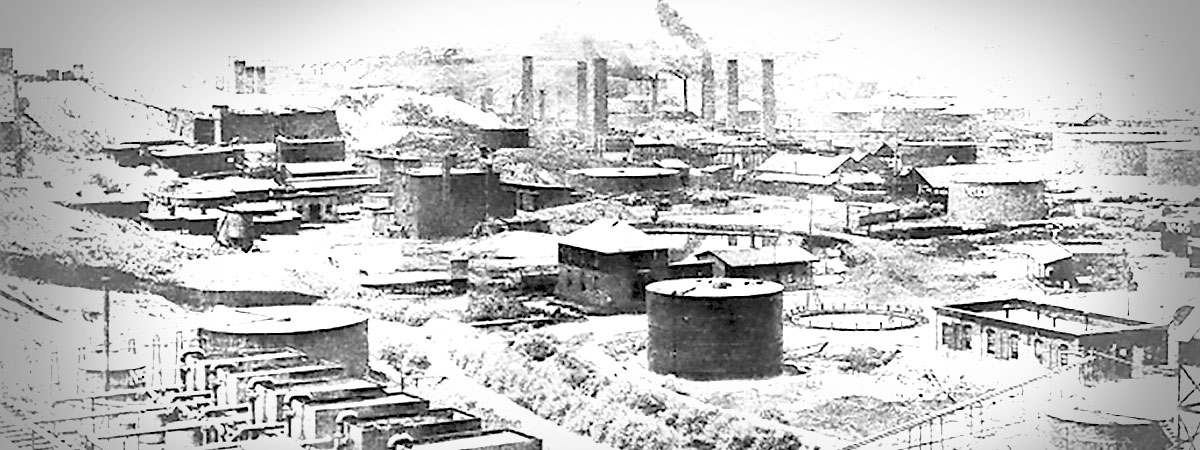
Image: Standard Oil Refinery No. 1 in Cleveland, Ohio
Sources:
AEA Investors (2026). AEA’s History. Available at: https://www.aeainvestors.com/our-history/
Capital Research Center (2019). The Private Investments of Private Foundations (Part 2). Available at: https://capitalresearch.org/article/the-private-investments-of-private-foundations-part-2/
Cato Institute (2025). Reappraising Standard Oil. [online] Regulation, Summer 2025. Available at: https://www.cato.org/regulation/summer-2025/reappraising-standard-oil
Cleary Gottlieb (2025). Viking Global Investors in Investment Transaction in Rockefeller Capital Management. Available at: https://www.clearygottlieb.com/news-and-insights/news-listing/viking-global-investors-in-investment-transaction-in-rockefeller-capital-management
Growald, Paul (2023). Why the Rockefellers are Spending Their Oil Fortune to End Fossil Fuels. Newsweek. Available at: https://www.newsweek.com/why-rockefellers-are-spending-their-oil-fortune-end-fossil-fuels-1836165
Hallahan, Kirk. (2002). Ivy Lee and the Rockefellers’ Response to the 1913-1914 Colorado Coal Strike. Journal of Public Relations Research. 14. 265-315. 10.1207/S1532754XJPRR1404_1
Heintz, S. and Wayne, V. R. (2017). Rockefeller Foundations Enlist Journalism in ‘Moral’ Crusade. Observer. Available at: https://observer.com/2017/01/exxonmobil-rockefeller-foundation-deception/
Kelly, B. (2025). Rockefeller Capital doubles valuation to $6.6B with new investors. InvestmentNews. Available at: https://www.investmentnews.com/ria-news/rockefeller-capital-doubles-valuation-with-new-investors-according-to-the-company-its-valued-not-at-66-billion-up-from-31-billion-just-two-years-ago/262540
Rockefeller Capital Management (2025). Rockefeller Capital Management Welcomes New Distinguished Families and Investors to Support Next Phase of Growth. Available at: https://www.rockco.com/media/rockefeller-capital-management-welcomes-new-distinguished-families-and-investors-to-support-next-phase-of-growth/
Gao, H. and Gao, Y. (2026). Giving Across Generations: A Century of Rockefeller Family Philanthropy and Innovation. Wealth Management Institute, September 2026.
Wikipedia (2026). ExxonMobil climate change denial. Available at: https://en.wikipedia.org/wiki/ExxonMobil_climate_change_denial
Wikipedia (2026). J. Richardson Dilworth. Available at: https://en.wikipedia.org/wiki/J._Richardson_Dilworth)
Wikipedia (2026). Venrock. Available at: https://en.wikipedia.org/wiki/Venrock