Despite sharing the famous surname, Sir David and Sir Frederick Barclay were unrelated to the Barclays banking family. They built their fortune independently, beginning with a small building and decorating business in London. Over the following five decades, they transformed it into one of Britain’s largest privately owned business empires, spanning premium media, retail, luxury hospitality and real estate. Their portfolio eventually included Telegraph Media Group, The Very Group, The Ritz London, and a network of holding companies and offshore trusts.
Like many successful family enterprises, the Barclays eventually reached a point where ownership and leadership extended beyond the founders. The enterprise had grown, the family had expanded, and responsibilities now had to be distributed across multiple people and family branches.
Earlier case studies in this series explored different ways of addressing that transition. The Li Ka-shing family prepared its organisation before leadership changed hands. The Ambani family redistributed leadership across multiple businesses as succession progressed. The Rockefeller family gradually pivoted its shared purpose from operating the business to stewarding the family’s wealth and philanthropic legacy. In each case, governance continued to define how the family participated in the enterprise as ownership and operational leadership evolved.
The Barclay case followed a different path. As authority became concentrated within one family branch, questions arose about how the wider ownership group would continue participating in the governance of the enterprise. Over time, the family’s freedom to determine the future of many of its businesses became increasingly constrained by litigation, creditors, regulators and, ultimately, new owners.
For family office advisors, the Barclay case raises an important governance question: once operational leadership passes to one part of the family, how should the wider ownership group continue exercising influence over the enterprise?
The Beginnings of an Empire
Born in 1934 into a working-class family in Hammersmith, London, identical twins David and Frederick Barclay grew up as two of ten children. Their father worked as a travelling salesman, and the family experienced financial hardship during and after the Second World War. Neither brother pursued higher education, leaving school at the age of sixteen to begin working.
In 1956, Frederick and his younger brother Douglas established a small building and decorating business from the family home. After Douglas left the business, Frederick partnered with David, beginning a commercial partnership that would last for more than five decades. The brothers focused on steadily accumulating capital through property renovation, real estate investment and small business acquisitions. Each successful transaction provided the resources to pursue the next, allowing the brothers to retain close control over the enterprise without relying on public equity markets.
As their confidence and financial resources increased, so did the scale of their ambitions. The brothers developed an acquisition strategy centred on identifying undervalued businesses and assets that could be improved operationally or repositioned commercially. In property terms, they bought fixer-uppers. In business terms, they acquired established brands whose commercial performance no longer reflected the strength of their underlying assets.
They sought recognised brands with loyal customers, valuable underlying assets and businesses under operational or financial pressure that could be acquired at attractive valuations. They focused on enterprises with enduring commercial value that they believed could prosper under long-term ownership.
Expansion was frequently financed through borrowing, allowing the brothers to acquire businesses beyond their own capital resources. The strategy proved sustainable because the businesses they acquired generally generated recurring cash flows and were purchased at valuations that provided a margin of safety. They were also long-term owners. Their objective was to own businesses for decades while improving their commercial performance.
Although no formal investment philosophy was ever published, their approach appears to have relied heavily on disciplined founder judgment. Borrowing was balanced by careful asset selection, disciplined capital allocation and patience. Over several decades, these principles transformed a modest entrepreneurial venture into one of Britain’s largest privately owned business groups. As later events would demonstrate, however, many of those disciplines resided with the founders themselves rather than within enduring governance structures.
Rising to Prominence
By the end of the twentieth century, David and Frederick Barclay had become two of Britain’s most influential private businessmen. Their public standing was recognised in 2000 when both brothers received knighthoods for charitable services, becoming widely known as Sir David and Sir Frederick Barclay.
Their acquisitions reflected the same investment philosophy across different industries.
In 2002, the brothers acquired Littlewoods before merging it with Shop Direct, creating what would later become The Very Group. The business evolved from one of Britain’s largest catalogue retailers into a digital commerce platform while preserving a defining feature of its original model: integrated consumer credit. The Barclays modernised the distribution model while preserving the customer relationships and financing capabilities that distinguished the business.
The acquisition of the Telegraph Media Group in 2004 extended the family’s influence beyond purely commercial interests. Publisher of The Daily Telegraph, The Sunday Telegraph and The Spectator, the group occupied a unique position within British political and media life. Under Barclay ownership, the business adapted to structural changes in the newspaper industry through a growing emphasis on digital subscriptions while preserving its established editorial identity.
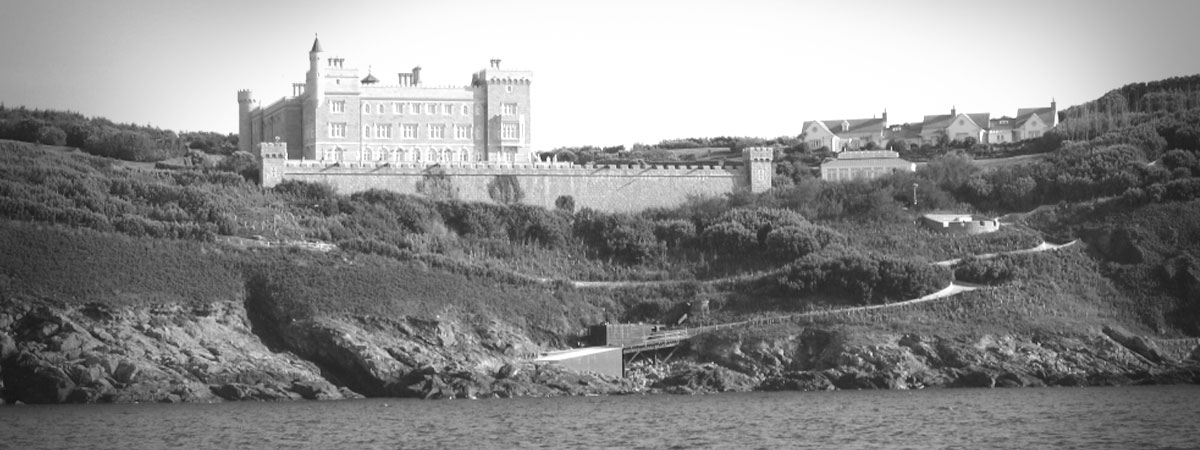
The Ritz London became both a prestigious hospitality business and Sir Frederick’s preferred location for commercial negotiations. Brecqhou Island, the family’s private residence, also embodied their commitment to privacy, independence and long-term ownership.
Throughout this period, governance remained inseparable from the founders themselves. Sir David and Sir Frederick acted simultaneously as owners, strategic decision-makers and family leaders. Although the operating companies employed professional executives and management teams, the founders remained the ultimate decision-makers on acquisitions, financing, capital allocation and long-term strategy. Boards and executives managed the operating companies, while the brothers exercised stewardship across the wider enterprise.
This concentration of authority proved highly effective while both founders remained actively engaged. As succession approached, however, ownership could be transferred through trusts and operational responsibilities delegated to the next generation. Whether the founders’ way of governing the enterprise could continue under the next generation would become a central question.
How Succession Progressed while Governance Stayed Behind
As both founders reached their eighties, the subject of succession became unavoidable. In 2014, the family undertook a major restructuring of its ownership arrangements. Wealth was transferred into a network of offshore trusts and holding companies, primarily based in Jersey and the British Virgin Islands. The structures formed part of the family’s long-standing estate planning arrangements, although their scale and opacity later attracted considerable public and legal scrutiny.
For more than five decades, the enterprise had been built on an equal partnership between Sir David and Sir Frederick. By the time the succession structures were redesigned in 2014, however, the family’s ownership had become significantly asymmetrical. The restructuring allocated approximately 75% of the family’s wealth to Sir David’s branch, received through his sons Aidan, Howard and Alistair. Sir Frederick’s branch received the remaining 25% through his daughter, Amanda Barclay. Public reporting has never explained the reasoning behind the imbalance.
Over the decades, the family’s assets had been acquired through multiple companies and holding structures, meaning legal ownership may no longer have reflected the founders’ original partnership. It may also have formalised existing trust arrangements or reflected estate planning objectives. The precise reasoning behind the final allocation has never been made public.
The 2014 restructuring reportedly became a source of significant tension between the brothers. It coincided with a marked deterioration in the brothers’ relationship. Public reporting describes disagreements that culminated in a physical altercation, after which the brothers became estranged. Sir David reportedly banned Sir Frederick from Brecqhou Island and stopped paying his personal maintenance. When Sir Frederick later asked to send surveyors from Savills to value Brecqhou for his divorce proceedings, Sir David refused in writing.
The ownership transition had begun amid significant relationship tensions. By 2019, those tensions had spread to the next generation, while the family’s post-succession governance arrangements remained largely untested.
How Ownership Was Divided, and Authority Was Concentrated
As both founders reached their eighties, succession became increasingly important. In 2014, the family redesigned its ownership structure through a network of offshore trusts and holding companies. Like many ultra-high-net-worth families, the Barclays sought to facilitate the transfer of wealth across generations while preserving long-term control of the enterprise. The resulting structure allocated approximately 75% of the family’s wealth to Sir David’s branch through his sons Aidan, Howard and Alistair, while the remaining 25% was allocated to Sir Frederick’s branch through his daughter Amanda Barclay.
From a succession perspective, the redesign addressed a challenge faced by many family enterprises. It preserved a controlling ownership block capable of making strategic decisions for the business while the family expanded. The governance implications, however, were more complex.
Amanda Barclay became the economic beneficiary of the Amelia Trust, which indirectly owned approximately one quarter of the family’s business interests. Yet this ownership carried little influence over the operating companies. Practical control of the principal operating businesses remained with Aidan and Howard Barclay, while Sir Frederick no longer held direct management responsibilities within the principal operating businesses.
Although the trust structures determined economic ownership, the precise allocation of governance rights within the wider holding structure has never been fully disclosed publicly. What is evident from subsequent events is that practical authority over major strategic and financial decisions rested principally with Sir David’s branch.
Legally, the trusts transferred ownership and preserved a clear centre of control. What remained unclear was the role of the wider family once ownership, operational leadership and governance no longer resided in the same individuals.
For decades, the founders themselves had fulfilled that governance function. Their partnership balanced ownership with shared judgement, continuous dialogue and mutual trust. They determined capital allocation, acquisitions, financing and long-term strategy together. Formal governance structures were largely unnecessary because stewardship remained embedded in their relationship.
The second generation inherited a fundamentally different situation. The enterprise itself had also evolved. As the portfolio expanded, day-to-day management increasingly rested with professional executives. The family’s role therefore shifted from direct management towards ownership, board oversight and capital allocation. That transition made it even more important to distinguish operational management from family governance. While the boards oversaw individual businesses, the family still needed a separate process for governing itself as owners.
Operational leadership rested primarily with one family branch, while another retained a significant economic interest but no comparable operational responsibilities.
The transition raised a series of questions that extended beyond legal ownership:
- Which decisions should remain family decisions?
- How should different ownership branches participate in major strategic decisions?
- What influence should accompany significant economic ownership?
- Who should oversee capital allocation, distributions and leverage?
- How should disagreements between family branches be resolved before they affected the enterprise?
The restructuring answered the question of who would control the business. It also separated three roles that the founders had previously combined: economic ownership, operational authority and family stewardship. From that point onwards, they no longer resided in the same hands.
The Gradual Disappearance of Governance Levers
The first visible sign that the new governance model was under strain emerged in September 2019, when the flow of funds from the operating structure to the Amelia Trust ceased. For Sir Frederick’s branch, this interrupted the primary source of liquidity associated with its economic interest in the enterprise. Although the underlying ownership arrangements remained unchanged, access to their economic benefits had become dependent on decisions taken elsewhere.
The interruption illustrated the practical implications of the new ownership structure. Operational control influenced both the strategic direction of the enterprise and the distribution of economic benefits across the wider ownership group. Once relationships deteriorated, the public record reveals no effective, mutually accepted governance process through which disagreements could be resolved before affecting the business itself.
Two months later, tensions escalated dramatically. In November 2019, Alistair Barclay installed a listening device in the conservatory of The Ritz, where Sir Frederick regularly conducted private business meetings. Over the following days, Aidan, Howard and Andrew Barclay reportedly accessed and transcribed more than 1,000 private conversations, arguing that the surveillance was necessary to protect the family’s commercial interests from unauthorised negotiations. Sir Frederick and Amanda regarded the operation as a profound breach of trust and pursued legal action.
Together, these events marked a decisive turning point. Commercial disagreements increasingly migrated from private family discussions into legal proceedings, while questions of ownership, liquidity and governance were resolved through legal rights rather than shared stewardship.
The restructuring successfully concentrated control. The subsequent disputes suggest that the ownership structure alone did not prevent disagreements over liquidity, decision-making and the relationship between the different family branches.
As trust declined, commercial disagreements migrated from family discussions into litigation. The sale of The Ritz became another point of conflict, with Sir Frederick arguing that one of the family’s defining assets had been sold below its true value. His subsequent divorce proceedings further intensified the pressure by exposing the family’s offshore trust structures to public scrutiny. Questions that had previously remained private — including ownership, liquidity and access to trust assets — were now examined in open court. Individually, none of these events necessarily threatened the enterprise. Together, they tested a governance system already under strain.
The timing proved challenging because the enterprise had become dependent on coordinated financial decision-making. For decades, the Barclays had successfully financed acquisitions through borrowing, with recurring cash flows supporting interest payments, refinancing and further investment. As the group expanded, however, its financial structure became more interconnected. Debt accumulated across multiple holding companies, while refinancing, distributions, intra-group financing and asset sales required coordinated oversight.
Those decisions became difficult as relationships between the ownership branches deteriorated. Sir David Barclay died in January 2021 at the age of 86. With one of the founders gone, the enterprise lost the remaining possibility of returning to the governance model that had originally guided it.
By 2023, lenders had assumed an increasingly influential role in determining the future of the family businesses. Lloyds Banking Group placed Telegraph Media Group into receivership following defaults on more than £1 billion of borrowing. Similar debt-driven restructurings later affected The Very Group, the family’s property businesses and ultimately the personal finances of Aidan and Howard Barclay. Although Aidan and Howard Barclay continued managing the group, financial restructuring increasingly depended on lenders, creditors and regulators.
How Control Passed Beyond the Family
The gradual transfer of influence from the family to external stakeholders ultimately remodelled the enterprise.
In June 2023, Lloyds Banking Group placed Telegraph Media Group into receivership after the family defaulted on borrowings exceeding £1 billion. Although the Barclays temporarily regained control later that year through refinancing backed by RedBird IMI, the arrangement was blocked by the UK Government under the Digital Markets, Competition and Consumers Act because of concerns about foreign state influence over a major British newspaper group. The prolonged sale process finally concluded in June 2026, when Axel Springer completed its acquisition of Telegraph Media Group. By that stage, The Spectator had already been sold separately to Sir Paul Marshall in 2024. The media assets that had once symbolised the family’s public influence had therefore left Barclay ownership.
Similar developments followed across the wider portfolio. In 2025, The Very Group passed into the ownership of Carlyle after another debt restructuring. Several property businesses entered administration, while Aidan and Howard Barclay narrowly avoided personal bankruptcy in 2026 after reaching an eleventh-hour settlement with HSBC over £143 million of guarantees.
The family nevertheless remains wealthy through private investments and residual holdings, although the enterprise built jointly by Sir David and Sir Frederick no longer exists as an integrated family-controlled business group. Rather than directing the sigle integrated enterprise, the different family branches now oversee separate investments.
The Four Abundances
The Barclay enterprise’s deterioration unfolded across all four dimensions of long-term stewardship. Wealth, relationships, time and purpose gradually became disconnected from one another, leaving the family with fewer opportunities to respond as new challenges emerged.
Wealth
The Barclay family devoted considerable attention to preserving ownership for the next generations. The trust structures reduced the risk of fragmentation and maintained a controlling ownership block, allowing the enterprise to continue making decisive strategic choices.
The case also illustrates that ownership alone does not create stewardship. Once operational leadership became concentrated within one branch, the wider ownership group required a clearly defined role within the governance of the enterprise. Economic interests survived the succession. Shared stewardship became more difficult as operational leadership and economic ownership became increasingly separated.
For family offices, preserving wealth therefore also requires defining how owners continue contributing to the long-term direction of the enterprise after succession.
Relationships
For decades, the founders’ relationship formed the enterprise’s primary governance mechanism. Sir David and Sir Frederick resolved strategic questions through ongoing dialogue and shared judgment. As succession progressed, those personal relationships no longer provided the same stabilising influence. Disagreements expanded from the founders to the next generation, eventually becoming court matters.
The legal disputes illustrate how disagreements that had previously been managed within the family ultimately came before the courts.
Time
The 2014 restructuring focused primarily on ownership and control. Publicly available information provides far less insight into how governance between the ownership branches was expected to operate after succession.
As relationships deteriorated, the opportunity to address that question steadily diminished. Time that could have been used to clarify governance roles, prepare future generations and establish decision-making processes became absorbed by litigation, refinancing, asset sales and personal disputes. At the same time, the enterprise faced mounting financial pressures that demanded coordinated stewardship across the ownership group.
The Barclay case suggests that succession depends not only on acting early enough to transfer ownership, but also on using the period before conflict emerges to build governance that future generations can rely upon. Once the family’s attention shifts from preparation to crisis management, those opportunities become far more difficult to recover.
Purpose
Throughout the founders’ era, the enterprise was guided by a clear commercial vision. The brothers consistently sought undervalued businesses with enduring strategic value and managed them with a long-term perspective.
The Barclays also established a private charitable foundation. Unlike the business itself, however, there is little public evidence that the foundation evolved into a multi-generational governance institution through which different branches of the family continued exercising stewardship together.
Following the succession, that common purpose became less visible. The family’s attention shifted towards disputes over ownership, liquidity and control, while external stakeholders assumed a greater influence over the future of the enterprise.
The Barclay case suggests that succession should also be about preserving a shared understanding of why the family continues to own the enterprise and how it intends to steward it together.
Where a Family Council Canvas Would Intervene
Ultimately, the Barclay family’s central challenge was not the ownership structure. Many family enterprises deliberately concentrate ownership and operational authority to preserve strategic control across generations. The more important question is what role remains for the wider family once that concentration has taken place.
A Family Council Canvas could have helped the family clarify the governance questions that remained unanswered after the restructuring.
Defining the family’s role
Once operational leadership had passed to Aidan and Howard Barclay, how should the wider family continue contributing to the enterprise?
Should family members without executive responsibilities still participate in discussions about long-term strategy, capital allocation or significant asset sales?
Clarifying governance rights
Ownership and governance do not necessarily provide the same influence. The Barclay case raises questions that many family enterprises eventually face:
- Which decisions belong to the boards of the operating companies?
- Which remain family decisions?
- Which decisions require consultation across ownership branches?
- What governance rights accompany significant economic ownership?
Creating structured dialogue
For decades, Sir David and Sir Frederick resolved disagreements personally. After succession, that informal governance mechanism disappeared. Regular family governance discussions could have provided an alternative forum before disagreements migrated into litigation.
Preparing governance after succession
The restructuring determined who would control the enterprise. A governance process could have focused on how the family would govern after succession.
- How should relationships evolve?
- How should future generations participate?
- How should disagreements be managed without relying solely on legal rights?
These questions become particularly important once the founders are no longer acting as the family’s primary decision-makers.
What This Case Teaches Family Offices
The Barclay family demonstrates that preserving ownership and preserving stewardship are related, but distinct, governance challenges. The restructuring successfully maintained a controlling ownership position and reduced the risk of fragmentation. The subsequent events show that concentrating authority alone does not answer how a family continues governing itself once operational leadership becomes concentrated.
Several broader observations emerge.
First, succession changes the family’s role. As enterprises mature, many families naturally move away from day-to-day management. That transition requires an equally deliberate definition of what stewardship will mean in the next generation.
Second, governance should evolve alongside ownership. Structures that function effectively for two founder-partners may no longer provide sufficient guidance once ownership branches, professional executives and external stakeholders become part of the governance system.
Third, family relationships influence enterprise resilience. The Barclay case illustrates how disputes over ownership, liquidity and control can gradually affect strategic decision-making, financing and ultimately the enterprise itself.
Finally, preserving control is only one objective of succession. Families must also preserve the governance capacity to exercise that control over time.
Closing
Sir David and Sir Frederick Barclay built an extraordinary enterprise through a patient ownership approach and a shared entrepreneurial partnership. Their succession planning sought to preserve a clear centre of control that had served the founders so well. Yet succession also changed the role of the family. As operational leadership became concentrated and later generations assumed different responsibilities, the enterprise required governance mechanisms to support those new relationships.
By 2026, many of the businesses that had defined the Barclay empire had passed into new ownership. The family remained wealthy, but no longer exercised unified stewardship over the enterprise that Sir David and Sir Frederick had spent more than fifty years building.
The Barclay case suggests that preserving control is not the final step in succession planning. Concentrating authority does not, by itself, resolve how different ownership branches will continue participating in the enterprise over time.
Disclaimer: This article is a case study based on publicly available information and is intended for educational and informational purposes only. The analysis and opinions expressed are those of the author and do not constitute factual claims about the private lives or intentions of the individuals discussed. Images and excerpts from third-party sources are included solely for purposes of commentary and criticism, with attribution provided where sources are known.
Sources:
The Guardian (2020) Aidan and Howard Barclay break silence over family feud: ‘We acted to protect the group’.
City AM (2025) Barclay family’s Very Group snapped up by US private equity giant Carlyle and IMI.
The Guardian (2020) Barclay nephews say it was ‘necessary and reasonable’ to bug Ritz conservatory.
The Guardian (2022) Sir Frederick Barclay paid £800,000 to settle Ritz espionage case, court told.
The Guardian (2024) Telegraph results show £244m loss after family extracts unrecoverable loans.
The Guardian (2026) Barclay brothers avoid bankruptcy after reaching 11th-hour settlement with HSBC over £143m debt.
Barclay v Barclay (2021) Family Asset Allocation and Minority Trust Disclosures. High Court of Justice (Family Division).
Bailiwick Express (2023) Selling Brecqhou could help resolve Barclay twins’ £100m row.