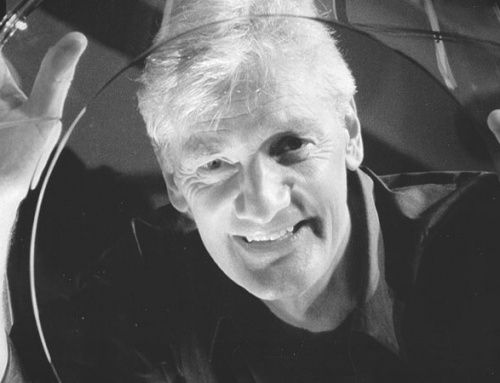

For many business families, succession is treated as the moment when leadership changes hands. The Li family approached it differently. Years before Li Ka-shing retired, the foundations of the next generation’s governance were established through ownership restructuring, corporate reorganisation and the separation of family roles. By the time executive authority passed to Victor Li in 2018, many of the decisions that typically create uncertainty had already been resolved.
This case examines how one of Asia’s largest family-controlled business groups turned succession into a long-term governance process. It explores how family ownership remained concentrated while publicly listed companies continued to operate under professional management, how structural decisions reduced the risk of future family conflict, and how governance continued to evolve as the third generation entered the enterprise. For family office advisors, the Li family’s experience raises an important question: how many succession risks can be removed before succession actually begins?
From Founder-Led Empire to Institutional Stewardship
Li Ka-shing, originally from Chaozhou, arrived in 1940, at the age of 12, in Hong Kong with his family after fleeing the Second Sino-Japanese War. When his father died from tuberculosis three years later, he left school at fifteen and worked long hours in a plastics factory to support his family. Beginning as a salesman, he quickly distinguished himself through exceptional sales performance and was promoted to general manager by the age of nineteen, overseeing around 300 employees. The role exposed him to every stage of the business — from manufacturing and procurement to export sales and financial management — and convinced him that he could build an enterprise of his own.
In 1950, using personal savings and loans from relatives, he founded Cheung Kong Industries, initially manufacturing plastic products. The company achieved its first commercial breakthrough after Li introduced high-quality plastic flowers for export, having identified the opportunity in an Italian trade publication and studied the manufacturing process firsthand.
The venture generated the capital that financed Li’s first property acquisitions, establishing a pattern that would define the enterprise for decades: reinvest operational cash flow into undervalued assets while maintaining financial flexibility.
The company’s next defining decision came during the 1967 Hong Kong riots. While many investors withdrew amid political uncertainty, Li acquired prime development sites at depressed prices, believing the disruption would prove temporary. Those purchases became the foundation of Cheung Kong’s property portfolio and positioned the business for rapid expansion when confidence returned.
As property became the group’s primary activity, the business evolved beyond its manufacturing origins. In 1972, the enterprise was listed on the Hong Kong Stock Exchange as Cheung Kong Holdings, providing permanent access to public capital while remaining under family control. Seven years later, Cheung Kong Holdings acquired a 22.8% stake in Hutchison Whampoa from HSBC, giving Li effective control of one of Hong Kong’s oldest British trading conglomerates.
Several products and business models drove this transformation:
- Plastic flowers established manufacturing expertise and generated the family’s first significant capital reserves.
- The presale property model reduced financing risk by securing buyers before construction, allowing rapid growth with relatively modest leverage.
- Hutchison Port Holdings built one of the world’s largest container terminal networks, producing stable long-term infrastructure income.
- Orange and Three demonstrated the family’s willingness to build telecommunications businesses before selling mature assets at attractive valuations.
- A.S. Watson, including Watsons and Superdrug, became one of the world’s largest health and beauty retail groups through scale, logistics and customer data.
Throughout this period, capital allocation remained remarkably consistent. The family invested during periods of uncertainty, limited financial leverage where possible, and recycled mature assets into new opportunities.
Designing Succession Before the Transition
Li Ka-shing remained Chairman of CK Hutchison and CK Asset until May 2018, when he retired and became Senior Advisor. He spent years restructuring both the business and the family’s governance before stepping aside.
The first major governance decision came in 2012. Li Ka-shing decided to assign distinct roles to his sons, rather than dividing the operating business equally. He approached succession beyond the subject of inheritance, and more so as a governance challenge.
Victor Li, the Internal Successor
Victor Li became the designated successor to the listed family empire. Born in 1964, Victor Li is the elder son of Li Ka-shing. He attended St Paul’s Co-educational College in Hong Kong before studying Civil Engineering at Stanford University, where he completed both bachelor’s and master’s degrees.
Unlike many heirs who spend years working elsewhere, Victor joined the family group shortly after graduating in the mid-1980s. Over more than three decades, he held a succession of operational and investment roles across Cheung Kong and Hutchison, learning the business from within before assuming the chairmanship in 2018. By the time he became Chairman, he had already spent decades involved in capital allocation, acquisitions and strategic decision-making.
Those who have worked with him often describe him as analytical, private and disciplined, characteristics frequently associated with his engineering background. Publicly, he has maintained much of his father’s investment philosophy, focusing on cash generation, balance-sheet strength and disciplined capital allocation.
Richard Li, the Entrepreneur
Richard Li received substantial financial resources to develop his own businesses. Born in 1966, he also attended St Paul’s Co-educational College but followed a different educational path. He enrolled at Stanford University, although he left before completing his degree to pursue business opportunities.
While he initially worked within Hutchison Whampoa, Richard showed greater interest in technology, media and telecommunications than in managing the family’s diversified conglomerate.
In the early 1990s he founded Pacific Century Group, which later expanded into telecommunications and financial services. His purchase and subsequent sale of STAR TV generated significant capital, allowing him to build PCCW, followed years later by the pan-Asian insurer FWD Group. His career centred on entrepreneurial ventures in technology, media, telecommunications and insurance, complementing the family’s established businesses.
The 2012 arrangement appears designed to clarify responsibilities, reduce operational overlap and minimise the risk of future disputes. This was made possible by his recognition of his son’s different career paths and nurturing them individually.
Preparing for the Transition
The second major governance milestone followed in 2015 with Project Diamond. Announced by Li Ka-shing while he remained Chairman, the restructuring prepared the organisation for the next generation before leadership changed hands.
The existing holding structure had evolved over decades into a complex network of cross-holdings that combined property, infrastructure, telecommunications and retail businesses within the same corporate architecture. The reorganisation merged the existing entities before separating them into two independent listed companies:
CK Hutchison Holdings, containing the group’s operating businesses, and
CK Asset Holdings, containing its property and investment portfolio.
The redesign simplified capital allocation, improved transparency and provided Victor Li with a governance framework aligned with his future responsibilities.
By the time Li Ka-shing retired in 2018, executive succession was largely procedural. Victor Li became Chairman of both CK Hutchison and CK Asset after more than three decades within the organisation. The founder remained Senior Advisor, allowing continuity while executive authority transferred to the second generation. In 2024, Victor further consolidated leadership by becoming the Chairman and Executive Director of CK Hutchison.
Li Ka-shing prepared his successor, while also preparing the organisation for his successor.
Stewarding the Third Generation
The Li family is now divided into two major branches. Victor Li’s branch of the family carries responsibility for the continued governance of CK Hutchison and CK Asset, while Richard Li has built a separate business group through Pacific Century Group, PCCW and FWD. Each enterprise now follows its own governance path and will ultimately face its own succession. The Li family multiplied its entrepreneurial capital without fragmenting its original enterprise. However, the succession framework has not been publicly disclosed for Pacific Century Group.
The third generation has begun entering the governance structure through Victor Li’s family. Michelle Li, Victor’s eldest daughter, graduated in law from King’s College London before joining the boards of family institutions, including the Li Ka Shing Foundation and Tsz Shan Monastery. In 2023, she assumed a business development role at CK Asset Holdings and became publicly involved in the acquisition of Civitas Social Housing REIT in the United Kingdom. While no successor to Victor Li has been identified publicly, Michelle’s progression suggests a measured process of governance development similar to the apprenticeship that preceded her father’s own transition into leadership.
The family’s governance extends beyond the executive roles visible to public shareholders. Control of the listed companies remains concentrated through a network of discretionary trusts holding a substantial voting block (approximately 30% in CK Hutchison and varying by listed entity). The family maintains influence through a conventional one-share-one-vote structure combined with coordinated voting.
By the completion of the succession, the family’s governance rested on four complementary layers. Ownership remained concentrated through discretionary trusts, publicly listed companies provided transparency and access to capital, Victor Li exercised strategic authority as Chairman, and long-serving professional executives maintained operational continuity. Rather than concentrating every responsibility in a single individual, the structure separated ownership, governance and management while preserving unified family stewardship.
The continuity of the executive team reflects the stability of the family’s governance. Frank Sixt and Canning Fok have worked alongside both Li Ka-shing and Victor Li for decades. Clear lines of authority allowed professional leadership to remain focused on long-term strategy as governance continued to evolve.
The succession preserved the family’s investment philosophy. Recent portfolio decisions, including the divestment of global port assets and the exit from the UK telecommunications market, demonstrate that the enterprise continues to adapt as markets evolve.
Governance continued to evolve alongside the enterprise. Family roles were clarified, ownership structures simplified, trusts consolidated control, and responsibility gradually shifted from founder to successor without disrupting the organisation’s day-to-day operations. The result is an enterprise that has remained entrepreneurial in its capital allocation while becoming progressively more institutional in its governance.
Several governance questions nevertheless remain open. The family has not disclosed how responsibility will ultimately be shared among Victor Li’s children, nor how future generations will participate in the trust structure that underpins control of the listed companies. The next succession challenge centres on determining how governance evolves once stewardship extends into a larger family.
The Four Abundances of the Li Family
At The Cecily Group, we view family enterprise continuity through the lens of the Four Abundances: Wealth, Relationships, Time, and Purpose. Financial capital often receives the greatest attention, yet the other abundances are also crucial: relationships influence decision-making, time affects how transitions are managed, and purpose provides direction.
Wealth
The Li family’s wealth was built through successive cycles of reinvestment. Each generation redirected capital towards industries offering stronger long-term opportunities while preserving strategic control through family ownership.
The combination of concentrated family ownership through discretionary trusts and publicly listed operating companies allows the family to retain strategic control while continuing to access public capital markets. This governance structure has supported patient capital allocation without relinquishing family stewardship.
Today, retail through A.S. Watson generates the largest share of group revenue, while infrastructure, property and other long-term investments continue to provide resilient cash flows and strategic flexibility.
Relationships
Relationships have been supported by clear governance as well as personal trust. Li Ka-shing established distinct roles before succession took place. This reduced overlapping authority while allowing both branches of the family to continue creating wealth.
The stability of the family’s governance also supported exceptional continuity within the executive team. Long-serving leaders such as Frank Sixt and Canning Fok worked alongside both Li Ka-shing and Victor Li, providing institutional memory across two generations.
Time
The family’s succession demonstrates the value of treating governance as a long-term process. Victor Li spent more than thirty years within the organisation before becoming Chairman, while the governance structure itself was redesigned several years before the leadership change. Today, the third generation is entering family institutions gradually.
The same long-term perspective also guides investment decisions and succession planning.
Purpose
Described by the founder as his “third son”, the Li Ka Shing Foundation has become both a significant philanthropic institution and a permanent element of the family’s governance architecture. It channels substantial resources into education and healthcare while providing a space for continued family involvement.
The Foundation also reflects a broader philosophy that has characterised the family since its earliest years. Wealth is treated as capital to be stewarded, reinvested, and ultimately deployed beyond the commercial enterprise itself.
The Foundation complements the family’s commercial activities. It preserves the founder’s belief that wealth should continue creating opportunities for future generations, both within and beyond the enterprise.
Where a Family Council Canvas Would Intervene
Unlike many family enterprises, the Li family does not present a case of unresolved succession or fragmented ownership. Leadership responsibilities, ownership structures and family roles have largely been clarified before the transition between the first and second generations. The governance challenge now shifts from succession to stewardship across a broader family.
A Family Council Canvas could support this next stage by creating a structured forum for discussions that extend beyond executive appointments.
The family’s long-term investment philosophy has remained remarkably consistent despite repeated changes in the industries in which it operates. Documenting the principles that have guided capital allocation — from identifying undervalued opportunities to recycling mature assets into new sources of growth — would help distinguish family values from decisions that reflect changing market conditions.
As the third generation becomes more involved, the family may also wish to clarify the different pathways through which family members can contribute. Previous transitions demonstrate that stewardship of the legacy enterprise and entrepreneurial independence can coexist successfully. Future generations may similarly contribute through leadership within the listed companies, new entrepreneurial ventures, philanthropy or service within the family’s governance institutions. Defining these pathways explicitly could reduce uncertainty while allowing individual strengths to develop.
The relationship between the family’s commercial activities and its philanthropic mission also presents an opportunity for continued discussion. Reviewing how future generations participate in both the commercial enterprise and the Foundation could strengthen continuity across the family’s wider purpose.
Finally, the family may benefit from periodically reviewing the governance framework itself. The enterprise has repeatedly evolved through structural redesigns. Establishing regular opportunities to revisit governance and its relationship to strategic directions would help maintain the balance between renewal and continuity — a balancing act that has characterised the family for more than seventy years.
Governance That Evolves Without Losing Direction
The Li family demonstrates that succession is most effective when it forms part of a broader programme of governance evolution. Leadership transitions, ownership structures and corporate architecture were redesigned over many years, allowing the next generation to inherit an organisation that had already been prepared for change.
Several lessons emerge for family offices.
First, preparing a successor is only one element of succession planning. The organisation itself may also need to evolve. Project Diamond simplified a corporate structure that had served the first generation well but would have imposed unnecessary complexity on the second.
Second, continuity can coexist with renewal. Across seven decades, the family repeatedly redirected capital towards new sources of long-term value while preserving its investment philosophy.
Third, governance can create space for entrepreneurship rather than constrain it. By concentrating stewardship of the legacy enterprise within Victor Li’s branch while enabling Richard Li to build an independent business group, the family preserved a unified conglomerate and created an additional source of long-term wealth. Succession allowed the family to expand its entrepreneurial capacity while preserving the original enterprise.
Finally, institutional governance and entrepreneurial thinking need not develop in opposite directions. The Li family strengthened trust structures, clarified ownership, simplified corporate architecture and retained experienced professional leadership, while continuing to make bold strategic decisions about where capital should be deployed. Governance provided stability while supporting continued entrepreneurial renewal.
Closing Reflection
Across more than seventy years, the Li family enterprise has repeatedly transformed itself, while managing to preserve a consistent approach to stewardship, capital allocation and long-term ownership.
Under Victor Li’s leadership, the group has continued to update its portfolio in response to changing economic and geopolitical conditions. These decisions demonstrate that the governance structures established during the succession have continued to support decisive portfolio management under the second generation.
For family office advisors, the case demonstrates that governance and entrepreneurship don’t represent competing priorities. Robust governance can provide the stability that allows an enterprise to keep renewing itself. Strong governance can enable future generations to make bold decisions without reopening questions of authority or control.
The third-generation transition has only begun, and with it comes a new governance question. The first transition asked who should succeed the founder. The next will determine how an increasingly institutional enterprise preserves the entrepreneurial judgement that has repeatedly renewed it. For family office advisors, that may be the more enduring lesson: governance succeeds when it protects continuity without limiting the next generation’s ability to redefine the business.
Disclaimer: This article is a case study based on publicly available information and is intended for educational and informational purposes only. The analysis and opinions expressed are those of the author and do not constitute factual claims about the private lives or intentions of the individuals discussed. Images and excerpts from third-party sources are included solely for purposes of commentary and criticism, with attribution provided where sources are known.
Sources:
CK Hutchison Holdings, 2015. Project Diamond: The Cheung Kong and Hutchison Whampoa Reorganisation and Combination.Hong Kong: CK Hutchison Group. Available at: https://www.ckh.com.hk/upload/attachments/en/journal/37_3_Project_Diamond_v_e.pdf
CK Hutchison Holdings, 2025. Directors’ Report and Audited Financial Statements for the Year Ended 31 December 2025. [online] Hong Kong: CKH Group. Available at: https://doc.irasia.com/listco/hk/ckh/annual/2025/en/directorsrep.pdf
Li Ka Shing Foundation, 2011. My Third Son: About Our Founder and the New Culture of Giving. Hong Kong: LKSF. Available at: https://www.lksf.org/our-founder/
Mergersight, 2025. BlackRock-TiL Consortium’s $22.8bn Acquisition of Hutchison Ports. New York: Mergersight Group. Available at: https://www.mergersight.com/post/blackrock-til-consortium-s-22-8bn-acquisition-of-hutchison-ports-assets
ONC Lawyers, 2015. The Cheung Kong and Hutchison Whampoa Reorganisation: Part 1 – Redomiciliation of Cheung Kong. Hong Kong: ONC. Available at: https://www.onc.hk/en_US/publication/the-cheung-kong-hutchison-reorganisation-part-1-redomiciliation-of-cheung-kong?page=126
ThinkChina, 2023. All Eyes on Michelle Li Sze-tak: The Onboarding of Li Ka-shing’s Eldest Granddaughter and the £485m UK Civitas REIT Acquisition. Singapore. Available at: https://www.thinkchina.sg/economy/all-eyes-are-still-retired-hong-kong-tycoon-li-ka-shing
Vodafone Group Plc, 2026. Vodafone to Take Full Ownership of VodafoneThree via £4.3bn Buyout of CK Hutchison’s 49% Stake. Newbury: Vodafone Newsroom. Available at: https://www.vodafone.com/news/newsroom/corporate-and-financial/vodafone-to-take-full-ownership-of-vodafone-three
Visual: Zhongwanhang – HK Central Admiralty night Hutchison House