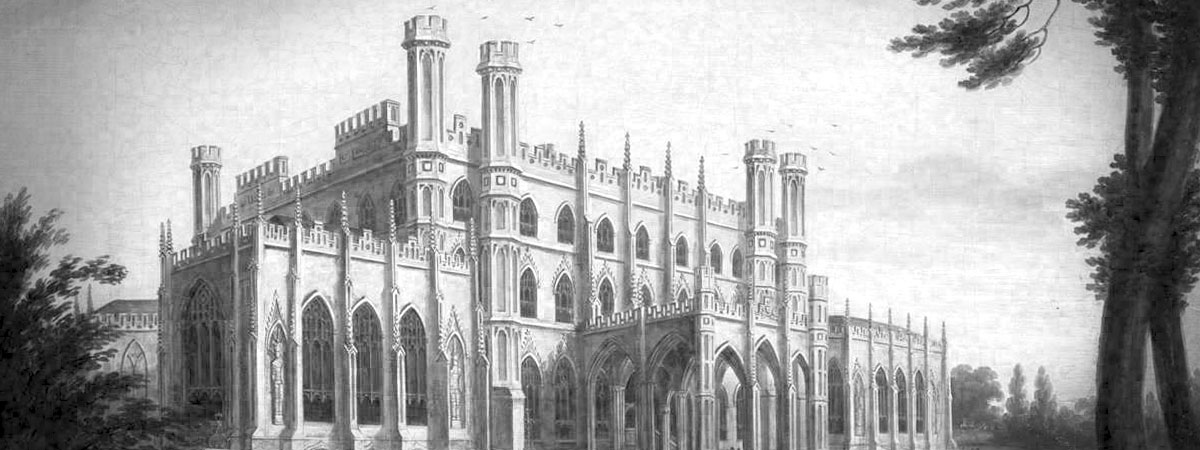
Richard Bankes Harraden – Eaton Hall, Cheshire – Grosvenor Museum
A £9 billion estate passes intact from one generation to the next, governed by a structure in which the legal owner does not truly own, and the heir is not expected to lead. At the same time, the Grosvenor Estate continues to influence London’s cultural and physical heritage through its long-term control of land use, architectural standards, and commercial activity in districts such as Mayfair and Belgravia. The estate is privately controlled, yet its assets function as part of a shared civic environment. Decisions about capital allocation, development, and preservation carry implications that extend far beyond the family itself.
How does a family operating under continuous public and political scrutiny maintain control over capital, reputation, and long-term direction? The Grosvenor model answers this by redesigning the relationship between ownership and control. Assets are held in trust for successive heirs. Governance authority is distributed across institutional bodies, and day-to-day execution is professionally managed within a trustee-led framework. What remains with the heir is a highly defined, constrained type of stewardship. The family defines purpose and direction, while professionals determine execution across markets, asset classes, and time horizons.
The Grosvenor Estate offers a rare example of that design under sustained pressure — from taxation, regulation, and shifting social expectations — while preserving both control and cohesion through centuries.
The Marriage That Secured the Estate
In 1677, the marriage of Sir Thomas Grosvenor, 3rd Baronet, to Mary Davies transferred ownership of the Manor of Ebury, a 500-acre tract of undeveloped land on the western edge of London. At the time, it was pasture and marshland — geographically promising, but economically dormant.
For the Grosvenor family, the marriage was a strategic acquisition: it converted a regional baronetcy into a family with direct access to London land, which was already gaining importance. The Grosvenors were already an established landed family, with their ancestral seat at Eaton Hall in Cheshire, where they had held land since before the 15th century. The land was rural, with limited growth potential and primarily local political relevance. The Manor of Ebury was different in kind, not just in scale: it sat on the edge of London, which was beginning to expand westward.
For Mary Davies’ side, the logic was equally clear: marrying into an established family with political standing. Members of the Grosvenor family had already been serving as Members of Parliament for Chester and surrounding constituencies from the 16th century. Landowning families often held enduring influence over specific constituencies at the time, yet their role in Parliament strengthened their position as a governing elite, not just landowners.
At the time, elite marriages often served as property consolidation mechanisms. Land was the primary source of wealth, and inheritance without structure posed risks — especially when the heir was young and female. Mary Davies was 12 years old at the time of the marriage, and Sir Thomas Grosvenor was about 21 years old. This age gap, while striking today, was not unusual in aristocratic and property-driven marriages of the period, especially when a significant inheritance was involved.
Following her husband’s death, Mary became the subject of a legal dispute over an alleged secret marriage which, if upheld, would have transferred control of the estate. With the heir still a minor, her position was legally and strategically exposed. A Scottish claimant, Alexander Fenwick, attempted to capitalise on the situation, but his claim was ultimately rejected. The case illustrates the vulnerability of asset ownership when tied to an individual.
The initial marriage arrangement nonetheless secured the family’s position for generations. The estate could not be easily sold or divided, and its value depended on long-term urban development.
The Preservation Period
Under the next generation, represented by Sir Richard Grosvenor, 4th Baronet, the priority was to retain and stabilise the asset. The family remained based in Cheshire, treating the London land as a reversionary holding — something to be activated only when external conditions aligned.
This restraint reflects a specific form of governance. The estate was preserved through centralised inheritance, financial discipline, and political continuity. Crucially, the land was neither sold nor prematurely developed. At a time when many estates were fragmented through inheritance or depleted through spending, the Grosvenor holdings remained intact.
The family sustained its involvement in Parliamentary life, particularly through representation of Chester, while maintaining its political networks. This ensured that the estate could be held without pressure, both financially and institutionally.
The contribution of this phase is easy to overlook because it produced no visible transformation. Its significance lies in what did not happen: the asset was neither divided nor exhausted. It survived long enough to become valuable.
With Sir Richard’s death, the estate passed intact to the next generation. What had been preserved as a latent asset would now be tested under changing external conditions, as London’s expansion began to convert location into opportunity.
From Periphery to Influence
By the early 18th century, external conditions began to shift. London expanded westward, bringing the Grosvenor land into the path of urban growth. The transition from preservation to development unfolded across successive generations of the Grosvenor baronetcy, as the family began to activate its London holdings.
The initial phase began in the 1720s under the Grosvenor baronetcy, marking the first structured development of what would become Mayfair. The family adopted a planned approach, laying out streets and squares and granting long-term leases while retaining freehold ownership.
This early development established the operating logic of the estate. Land was not treated as a disposable asset, but as a permanent base from which value could be generated over time.
The next generation extended this model as the estate’s economic weight began to translate into political recognition. Under Richard Grosvenor, 1st Earl Grosvenor, the family entered the peerage, reflecting its growing influence within both London and national political structures. His role combined continued development with parliamentary engagement, reinforcing the connection between land, capital, and political positioning.
This phase marked a shift in status as much as in function. The estate was no longer a latent holding or a developing asset—it had become a source of sustained economic and political influence.
Belgravia and Urban Control
The transition from initial development to large-scale urban control unfolded in the early 19th century, as London’s expansion accelerated and the estate moved from opportunity to execution at scale.
This phase was led by Robert Grosvenor, 1st Marquess of Westminster, who inherited an estate already generating momentum but not yet fully realised. His elevation to Marquess in 1831 reflected the family’s growing economic and political influence at a moment when the structure of British power was shifting.
Under his direction, the estate undertook the development of Belgravia and Pimlico. Execution was entrusted to Thomas Cubitt, whose role extended beyond architecture into large-scale development coordination. Working with surveyor Thomas Cundy, he introduced a consistent architectural language, standardised construction methods, and a process for delivering entire districts.
This phase scaled the existing model. Land remained under family ownership. Properties were leased rather than sold. Value was generated through the long-term management of place, rather than through asset disposal. What changed was the level of coordination and execution, as development moved from individual streets to entire districts.
The next generation, under Richard Grosvenor, 2nd Marquess of Westminster, extended and refined this system. His contribution lay less in initiating development and more in maintaining and enhancing the estate’s coherence, ensuring that the architectural and social character of the area remained aligned with its positioning.
By the time of Hugh Grosvenor, 1st Duke of Westminster, the estate had reached a point of consolidation. The Dukedom, granted in 1874, formalised a position that had already been established: the alignment of land ownership, urban control, and political influence.
What emerged was a system in which location, social status, and legal structure reinforced each other over time. Ownership remained concentrated, while value creation depended on coordinated execution across generations. The estate no longer relied on individual decisions alone, but on a model that could be extended, preserved, and adapted as conditions changed.
Adaptation Under Pressure
By the early 20th century, the Grosvenor model — built on long-term land retention and leasehold income — faced pressures it had not been designed for. War, taxation, and legislative reform began to erode the economic foundations of traditional landed wealth.
Over the mid-20th century, the estate’s holdings came to be organised through discretionary trusts. This structure allowed assets to be managed across generations rather than transferred between individuals at each succession. By replacing large, one-off inheritance tax events with periodic charges, the trusts reduced the risk of forced asset sales and preserved the integrity of the estate.
This introduced a structural distinction between ownership and control, allowing decision-making authority to be reassigned without disrupting the underlying asset base.
At the same time, regulatory changes began to erode the estate’s ability to recover long-term value and maintain full control over its land base. Under the traditional leasehold model, properties reverted to the estate at the end of long leases, often at higher value. Legislative reforms beginning with the Leasehold Reform Act 1967 disrupted this mechanism by granting tenants rights to acquire freeholds and extend leases under regulated terms. This reduced both the estate’s control over assets and its ability to capture long-term value, forcing a gradual shift towards more active and diversified asset management.
Hugh Grosvenor, 2nd Duke of Westminster, inherited the estate as these external conditions were beginning to shift. The introduction of punitive death duties, combined with the financial impact of the World Wars, placed sustained pressure on liquidity. Land could no longer be held indefinitely without active financial planning.
This trajectory continued under William Grosvenor, 3rd Duke of Westminster, whose role was to stabilise the estate in the post-war environment. Strategic disposals, including significant interests in Pimlico, were used to meet tax liabilities and reinforce the capital base. The emphasis shifted towards financial discipline and consolidation, ensuring the estate remained viable under sustained external pressure.
The 4th and 5th Dukes of Westminster operated within the same constrained environment. Their contributions were incremental but necessary: maintaining continuity, navigating ongoing regulatory change, and preserving the estate’s structural integrity without the conditions required for expansion. Governance during this phase remained closely tied to the family, but increasingly informed by financial and legal considerations rather than tradition alone.
Across these generations, the contribution was adaptation. The estate preserved continuity by accepting a controlled degree of contraction and introducing financial discipline into what had previously been a largely self-sustaining system. Stewardship was redefined: the objective was to manage risk, maintain liquidity, and defend the integrity of the estate under changing external conditions.
This phase did not complete the transformation, but it made it unavoidable. It set the conditions for the next transition — one that would emerge more fully in the following generation — from a resilient landholding to a professionally managed and diversified organisation.
Professionalisation & Institutionalisation
The transition from estate to organisation took shape under Gerald Grosvenor, 6th Duke of Westminster, who inherited a system that had preserved continuity but was no longer sufficient for scale.
While the prior phase introduced financial discipline, governance remained tied to the individual Duke. The challenge was no longer preservation, but redesign — how to sustain continuity in a system that could operate beyond the capabilities of any single heir.
The 6th Duke addressed this by formalising the estate into a professionally managed organisation. Through the creation and expansion of the Grosvenor Group, the estate adopted a corporate structure capable of operating across jurisdictions, introduced boards with external professionals, and shifted from local land management to global property investment and development.
At the same time, capital was diversified beyond central London into North America, Europe, and Asia. This reduced exposure to UK-specific regulatory risk and repositioned the estate as an international investment platform.
Geographic expansion was followed by a shift in capital deployment. The estate moved beyond traditional property investment into areas aligned with long-term structural trends, including food and agricultural technologies and sustainability within the built environment. These priorities became more defined in the late 2010s, reflecting regulatory change, market expectations, and the growing importance of environmental performance in real estate. Alongside this, the estate strengthened its public positioning, operating not only as a long-term owner of assets but as an active participant in urban and environmental outcomes.
At the core of this transformation was a clear separation between ownership and control. Assets remained held for the family through trust structures, ensuring continuity across generations, while decision-making authority over execution was delegated to professional management.
Governance operated through a defined hierarchy. Legal ownership resided with the trustees, who were responsible for purpose, values, and long-term strategic direction. The Duke participated within this structure as a steward, not as an operator. Operational decisions were made by professional managers within clearly defined parameters, aligning execution with capability rather than inheritance.
This structure ensured that control over direction remained with the family, while performance became independent of the individual heir.
Following the death of the 6th Duke of Westminster in 2016, public attention shifted to the structure underlying the estate. The scale of the wealth, combined with the use of long-established trust arrangements, raised questions about inheritance taxation and the distribution of fiscal burden. In response, the estate clarified that its assets are subject to periodic taxation under trust structures, rather than inheritance tax triggered at death. While this operates within the legal framework, the visibility of the estate placed it within broader debates about fairness, legitimacy, and the role of inherited wealth in contemporary society.
A similar dynamic applies to ongoing criticism of leasehold practices. As a major landowner in central London, the Grosvenor Estate operates within a system that has come under increasing scrutiny from policymakers and the public. Issues such as tenant rights, enfranchisement, and long-term control over land use have shifted from technical legal matters into areas of public concern. While these debates are not specific to Grosvenor, they form part of the environment in which the estate operates. The implication is structural: long-term control of urban land now carries not only economic value, but also ongoing accountability to external stakeholders.
The current phase, under Hugh Grosvenor, 7th Duke of Westminster, reflects the maturity of the stewardship system. He inherited an organisation designed to function independently of his operational involvement. His role has centred on reinforcing long-term positioning through sustainability initiatives, impact investing, and an evolving public role. While the family maintains dedicated philanthropic structures, such as the Westminster Foundation, social and environmental considerations are embedded within the core investment model, with philanthropy remaining structurally separate.
Governance now operates as a layered system in which trustees define long-term intent, boards oversee strategy and performance, and regional teams execute within defined parameters. Authority is distributed, but coherence is maintained. Succession continues to determine who represents the system, but no longer how the system performs. The estate no longer depends on the capabilities of the heir, but on the design of the institution itself.
The Four Abundances
Wealth
The Grosvenor Estate preserved wealth through a combination of long-term land retention, leasehold income, and later trust ownership. This created a system where capital was protected from fragmentation, insulated from succession shocks, and able to compound over time.
The introduction of discretionary trusts was a turning point. By removing assets from direct personal ownership, the estate avoided the need to liquidate capital at each generational transition.
Over time, diversification beyond London further strengthened this position by reducing exposure to local regulatory risk and aligning capital with global markets. Wealth became less dependent on individual decisions.
Relationships
Relationships within the system were stabilised by reducing the points at which conflict typically emerges. Rather than relying on informal alignment, the structure addressed common sources of tension directly — separating economic benefit from control and defining roles in advance.
In earlier phases, primogeniture ensured continuity by avoiding fragmentation, but it also concentrated power in a single heir. The later introduction of trust structures rebalanced this dynamic. Beneficiaries could derive economic value without exercising control, while no individual heir retained the authority to dispose of core assets unilaterally.
Externally, the estate interacted continuously with government, tenants, communities, and public perceptions of inherited wealth.
This created an ongoing requirement to maintain legitimacy. The estate responded not through withdrawal, but by positioning itself as a long-term steward within a shared civic environment.
Relationships, therefore, were not managed informally — they were structured and mediated through governance.
Time
Time was the estate’s most consistently leveraged advantage.
From the initial acquisition, the family’s ability to hold land without pressure to sell allowed value to emerge as external conditions shifted. This extended into multi-decade development cycles, long-term lease structures, and intergenerational capital planning through trusts.
The key shift came when time was no longer dependent on the financial resilience of individual heirs. The trust structure ensured that capital remained invested across generations and that planning horizons extended beyond a single lifecycle.
This allowed the estate to operate with a degree of temporal continuity that most family businesses cannot sustain.
Purpose
Purpose evolved from implicit to explicit.
In earlier phases, it was embedded in behaviour: preserving land, maintaining status, and ensuring continuity. Over time, this became formalised through governance structures that defined long-term direction, reputational boundaries and the role of the estate in the broader environment.
In recent decades, this has extended into areas such as sustainability in the built environment, long-term urban stewardship, and investment in food and agricultural systems.
These are not separate from the commercial model. They are integrated into it, reflecting the need to maintain a social licence to operate in a context where inherited wealth is subject to scrutiny.
Purpose, in this system, functions as a constraint on decision-making, ensuring continuity is aligned with external expectations.
Where a Family Council Canvas Would Intervene
The Grosvenor Estate represents a highly evolved system. In this context, the role of a family governance tool, such as the Family Council Canvas, would be to make existing mechanisms more explicit, transferable, and governable.
Structure & Ownership Clarity
The estate’s wealth is preserved through trusts and long-term asset strategies, yet these mechanisms remain abstract for most beneficiaries. A Family Council Canvas would translate the trust structure into clear, accessible principles. It would define what ownership means in practice—clarifying rights, limitations, and expectations—while making explicit the relationship between capital preservation, income distribution, and reinvestment.
This ensures that future generations understand the design principles behind existing structures.
Roles & Boundaries
While the system reduces conflict through structure, it still relies on clarity of roles. A Family Council Canvas would articulate the distinction between beneficiaries, stewards, and governance participants, making visible who participates in decision-making and who receives economic benefit.
As the family expands, this becomes increasingly important. The risk is not conflict arising from disagreement, but from ambiguity. The Canvas provides a shared reference point that defines how family members engage with the system.
Continuity & Succession Framing
The estate already operates on a multi-generational horizon, yet succession remains a visible moment of transition. A Family Council Canvas would formalise the role of the heir as steward rather than operator, and clarify how preparation takes place over time.
It would also make explicit how continuity is maintained beyond individuals—how decisions persist, how priorities are upheld, and how the system absorbs generational change without disruption. In this way, succession becomes a continuation of a defined role within a stable structure.
Alignment & Legitimacy
Purpose is embedded within the estate’s governance but continues to evolve in response to external expectations. A Family Council Canvas would codify what stewardship means in practice, defining how commercial activity aligns with broader responsibilities and where the boundaries lie.
This creates a shared understanding of the estate’s public role, ensuring that decisions remain aligned with long-term positioning, even as regulatory, environmental, and societal pressures change.
Structural Role of the Canvas
In this context, the Canvas acts as a translation layer between legal structures and human understanding, and as a continuity tool. This is the intention behind the Family Council Canvas developed by The Cecily Group: to provide families with a structured way to map ownership, roles, time horizons, and purpose in a single, coherent framework.
Even in a mature system, complexity increases, and distance between family members and operations grows. The risk shifts from structural failure to loss of clarity. The function of the Canvas is to preserve alignment by ensuring that the system remains understood and intentionally governed over time.
What This Case Teaches Family Offices
The Grosvenor Estate does not offer a model to replicate in form, but it provides clear principles in structure. Its longevity is not the result of exceptional individuals, but of a system designed to reduce dependence on them.
The first lesson is the separation of ownership and control. By moving assets into trust structures and delegating execution to professional management, the estate ensured continuity without relying on the capability of any single heir. Control was retained at the level of purpose and direction, while operational decisions were transferred to those best equipped to make them.
The second lesson concerns time. Most family offices operate within the constraints of generational transitions, where liquidity needs and inheritance events disrupt long-term strategy. The Grosvenor model removed this constraint by structuring ownership across generations. This allowed capital to remain invested, enabling decisions to be made on a multi-decade horizon rather than within the lifespan of individual family members.
A third lesson lies in the management of external pressure. Taxation, regulation, and political scrutiny did not disappear; they intensified. The estate responded by adapting its structure rather than resisting change. Asset sales, diversification, and eventually institutionalisation were not signs of decline, but mechanisms of continuity.
The case also highlights the importance of professionalisation. As complexity increased, governance shifted from informal, family-led decision-making to structured systems with defined roles, boards, and accountability. This allowed the organisation to scale while maintaining coherence.
Finally, the Grosvenor Estate demonstrates that legitimacy is not a passive condition. Long-term ownership of visible assets — particularly in urban environments — requires continuous alignment with public expectations. The integration of sustainability, responsible development, and a clearly defined public role reflects an understanding that continuity depends not only on internal structure, but also on external acceptance.
Despite the maturity of the current structure, the next phase of the estate’s evolution is not without risk. As the number of beneficiaries increases and the distance between family members and the operating business grows, maintaining alignment becomes more complex. The system depends not only on its legal and governance structures, but on continued clarity of purpose and engagement across generations.
The challenge is no longer preserving assets, but preserving understanding.
Closing Reflection
The Grosvenor Estate endured because it changed the level at which decisions were made. What began as a marriage securing land on the edge of London evolved into a system that no longer depends on any individual. Each phase addressed a different risk — fragmentation, timing, external pressure, and finally, dependence on the heir. Over time, these responses accumulated into a structure where the estate remains visibly tied to a family, yet its performance is determined by governance. Ownership persists across generations, while control adapts to context.
For family offices, this highlights how continuity requires more than heritage. It depends on redesigning the structure that holds it so it can persist under changing conditions.
Disclaimer: This article is a case study based on publicly available information and is intended for educational and informational purposes only. The analysis and opinions expressed are those of the author and do not constitute factual claims about the private lives or intentions of the individuals discussed. Images and excerpts from third-party sources are included solely for purposes of commentary and criticism, with attribution provided where sources are known.
Sources:
Davies, C. (2024). ‘Most eligible bachelor’ Duke of Westminster to marry – but all eyes are on William and Harry. The Guardian. [online] Available at: https://www.theguardian.com/uk-news/article/2024/jun/01/duke-of-westminster-to-marry-all-eyes-on-william-harry [Accessed 18 Feb 2026].
Grosvenor (2025). Global Sustainability Report. [online] Available at: https://grosvenorlive.b-cdn.net/live/grosvenor/media/sustainability/group-sustainability-report_final.pdf [Accessed 18 Feb 2026].
Grosvenor (2026). Our History. [online] Available at: https://www.grosvenor.com/about-us/our-history [Accessed 18 Feb 2026].
Hodge Jones & Allen (2016). Was the Duke of Westminster’s estate really exempt from inheritance tax? [online] Available at: https://www.hja.net/expert-comments/blog/wills-probate/was-the-duke-of-westminsters-estate-really-exempt-from-inheritance-tax/ [Accessed 18 Feb 2026].
Preston, M. (2023). The facts about our ownership. [online] Grosvenor. Available at: https://www.grosvenor.com/about-us/how-we-work/tax-policy/the-facts-about-our-ownership [Accessed 18 Feb 2026].
Sheppard, F.H.W. (ed.) (1977). Survey of London: Volume 39, the Grosvenor Estate in Mayfair, Part 1 (General History). [online] British History Online. Available at: https://www.british-history.ac.uk/survey-london/vol39/pt1/pp1-5 [Accessed 18 Feb 2026]. Davies’s inheritance.
Wikipedia (2026). Grosvenor Group. [online] Available at: https://en.wikipedia.org/wiki/Grosvenor_Group [Accessed 18 Feb 2026].