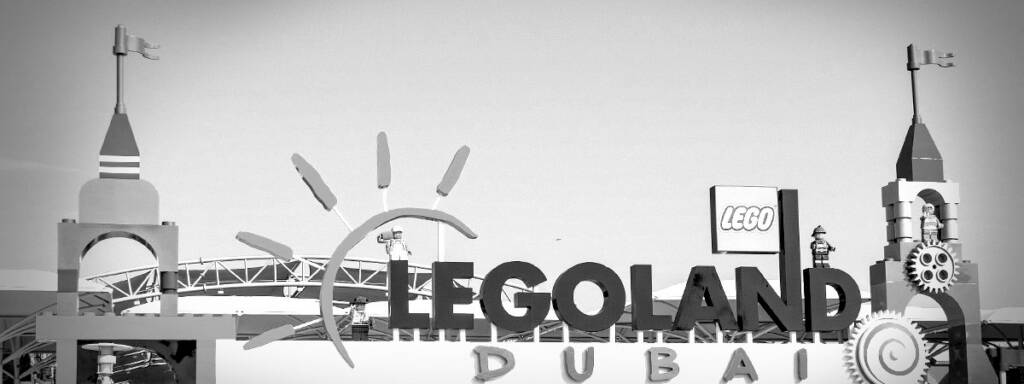
Sarion – Legoland Dubai, Entrance
Most family dynasties follow a familiar pattern: the first generation builds, the second expands, the third dissipates, and the fourth struggles to stay relevant. The Kristiansen family, the owners of LEGO Group, broke this cycle. While many global families dilute control or fracture as branches multiply, the Kristiansens completed a transition to the fourth generation with governance more consolidated than before. Among family enterprise experts, their approach is widely regarded as a benchmark for effective succession.
Their longevity rests on more than a successful product. It is grounded in a clear ownership philosophy known as the Active Owner model. Rather than placing every heir in operational roles or granting equal influence over daily decisions, the family appoints a single “baton holder” to represent ownership.
This structure allows the family to speak with one voice and creates a clear, stable link between the owners and professional management. As we explore their journey from a small carpentry workshop to a global powerhouse, we see that their success is not accidental, but a result of deliberate structural choices designed to protect both the brand and the family bond.
From the Great Depression to “Only the best”
The LEGO story did not begin with a global empire, but with a series of devastating setbacks that would have crushed a less resilient family. In 1932, amidst the depths of the Great Depression, Ole Kirk Kristiansen was a master carpenter in Billund, Denmark, who had lost his business and his wife, leaving him to care for four young sons.
Driven by necessity and a pivot toward the only thing people could still afford — small joys for their children — Ole began crafting wooden toys. It was during this period of extreme adversity that he established the foundational value that still governs the multi-billion-dollar enterprise today: “Det bedste er ikke for godt” (Only the best is good enough). Ole’s initial wooden designs established the family’s reputation for excellence and durability, providing the financial and cultural foundation for the brand’s future global success
He viewed succession as an active, long-term apprenticeship rather than a legal event. By 1950, eight years before his passing, Ole appointed his son, Godtfred, as Junior Vice President. This wasn’t a title in name, but a period of rigorous mentoring where the values of quality and “the system of play” were ingrained.
This early era established two critical pillars for future generations:
- Cultural Continuity: The belief that the product must serve a higher purpose (child development) meant that the business was always more than just a source of liquidity.
- Early Responsibility: By giving the next generation a seat at the table while the founder was still present, the Kristiansens avoided the “succession shock” that often occurs when a patriarch holds onto power until the very end.
The “brick” was not yet the plastic icon we know today, but the values were already being moulded. This early commitment to excellence and generational overlap provided the foundation needed to transition from a small-town workshop to a scalable global system.
A Linear Path to Professionalism
The Kristiansen family’s history is defined by a remarkably linear transfer of power, but it has not been without its trials. Each generation has had to evolve the governance model to meet the scale of the business, moving from a small family workshop to a global corporation.
When Godtfred Kirk Christiansen took the helm following his father Ole’s death in 1958, he inherited a business that was already shifting from wood to plastic. Following a chance conversation with a toy buyer regarding the lack of a “system” in the industry, Godtfred spent months developing a way for all toys to fit together. He officially launched the LEGO System in Play in 1955, centred around the innovative Town Plan.
This set was developed with the modern challenges of child education in mind. In the 1950s, as cars became affordable for the Danish middle class for the first time, Godtfred collaborated with the Danish Council for Road Safety to design the Town Plan as a tool to teach children traffic rules. On the cover of the 1955 box, a young Kjeld Kirk Kristiansen (the future third-generation leader) can be seen playing with the set — an image so iconic it was recreated for the 50th-anniversary commemorative set in 2008.
To ensure this system was technically superior, Godtfred also patented the modern stud-and-tube coupling system in 1958. This provided the bricks with the “clutch power” necessary for the system to function, ensuring that “Only the best is good enough” was a mechanical reality, not just a slogan.
Godtfred followed his father’s example by providing Kjeld with a rigorous period of preparation before the final handover. Just as Ole had appointed Godtfred as Junior Vice President eight years before his passing to mentor him, Godtfred gave Kjeld the autonomy to prove his leadership through specific strategic projects. This pattern of early “on-ramping” and mentorship became a hallmark of the Kristiansen model, eventually evolving into the formal “Active Owner” preparation process used by the family today.
Global Growth and Scaling Crisis
In 1979, Kjeld Kirk Kristiansen officially took the helm and took his father’s “System” to a new level. If Godtfred built the bricks, Kjeld built the stories. He introduced the LEGO Minifigure in 1978, adding a “hero” that shifted play from construction to character-driven roleplay. He introduced many iconic “Themes” (Space, Castle, Town), allowing children to build immersive worlds. He was also a pioneer in digital play, championing early robotics through the LEGO MINDSTORMS project.
Under his leadership, LEGO transformed from a successful regional toy maker into a global cultural phenomenon. Beyond the products, Kjeld was the architect of the family’s modern purpose; he moved the family office, KIRKBI, toward sustainable investments and deepened the family’s commitment to the LEGO Foundation.
However, this growth eventually led to over-diversification, pushing the company toward near-collapse in 2003–2004. Believing that the traditional plastic brick was losing its appeal to digital technology, LEGO launched an “innovation binge”. They expanded aggressively into areas where they had little expertise, including:
Theme Parks: Opening three new LEGOLAND parks in rapid succession (UK, US, Germany), which were capital-intensive and failed to provide expected returns.
Lifestyle Products: Launching jewellery, clothing, watches, and even television shows diluted the brand’s core identity.
Unprofitable Experiments: Sets like Galidor and Jack Stone featured specialised parts that abandoned the “System of Play,” alienating traditional fans and parents.
This crisis became the catalyst for the most significant governance reset in the family’s history. Kjeld made the difficult decision to step down as CEO in 2004, appointing Jørgen Vig Knudstorp as the first non-family CEO. This move formally separated Ownership (the family) from Management (external professionals). Kjeld famously noted:
“We want to be the best owner we can be. And that requires that we are professional in our ownership”.
By moving the family into board-level roles rather than daily operations, the Kristiansens protected the company from the near bankruptcy of the early 2000s. This shift ensured that the family remained the guardians of the brand’s core while allowing professional experts to handle the global supply chains and retail.
Competence Over Birth Order
In May 2023, the Kristiansen family completed a multi-year transition that solidified their commitment to the fourth generation. Thomas Kirk Kristiansen officially took over as Chairman of both LEGO A/S and the family’s investment vehicle, KIRKBI.
The appointment followed nearly two decades of structured preparation, ensuring both operational understanding and governance maturity. He holds a degree in marketing from Aarhus Business College and began his career within the company as an operational trainee, gaining fundamental experience in how the business functions at a ground level. Since joining the LEGO A/S Board of Directors as an observer in 2004 — and later as a full member in 2007 — he has worked in close collaboration with both his father and the company’s professional leadership to master the complexities of family-owned governance. His tenure as Chairman of the LEGO Foundation and Deputy Chairman of LEGO A/S since 2016 provided him with significant experience in managing the brand’s dual priorities of global commercial success and social impact, earning him the unanimous support of his siblings and the wider family as the most qualified candidate for the “Active Owner” role.
Thomas is a proud successor of his father, whom he sees as a visionary role model:
“My father has been truly visionary… He has been and still is an inspiring role model for how to be an active, engaged family owner – not just for me and Agnete… but also for coming generations.”
— Thomas Kirk Kristiansen.
This transition was a culmination of a deliberate “off-ramping” process that began as early as 2016. By stepping down from the Chair role while still active, Kjeld allowed his son to lead with full authority rather than lingering in his shadow.
While Thomas holds the “baton,” his sisters, Sofie and Agnete, remain deeply engaged as owners through board seats and specific projects, but they are also free to pursue distinct personal paths (Sofie manages a significant nature restoration project in Scotland, and Agnete is an Olympic dressage rider).
Today, the family’s wealth is managed through KIRKBI, which holds a 75% stake in the LEGO Group. Following the 2023 handover:
- The three siblings each own approximately 25% of KIRKBI.
- Their father, Kjeld, retains 22.5%.
This structure signals a high level of trust and alignment, ensuring that the family remains a “consolidated” owner that can provide clear, unified direction to professional management.
The Four Abundances
The Kristiansens’ longevity becomes clearer when viewed through the lens of the Family Council Canvas and its four forms of abundance. Success for this family clearly isn’t measured only in bricks sold; it’s much more about how they manage their collective resources.
Wealth
Unlike families that fragment their holdings into a thousand different directions, the Kristiansens maintain concentrated ownership through KIRKBI, their family office.
Asset Allocation: They prioritise long-term capital over short-term liquidity, managing an estimated $20B+ in assets.
Values-Driven Investing: Every investment, from offshore wind farms to companies like Merlin Entertainments, must align with their core pillars: “The Planet” and “The Child.”
Relationships
The family has mastered the art of reducing sibling rivalry by creating differentiated roles.
The “Baton” Holder: By choosing one “Active Owner” (Thomas) based on competence rather than birth order, they avoid the “too many cooks in the kitchen” syndrome.
Legitimacy of Others: Thomas’s sisters, Sofie and Agnete, are not marginalised. They hold recognised ownership roles while pursuing independent paths of success. This separation between leadership responsibility and personal fulfilment reduces the pressure and latent resentment that often emerge in high-net-worth families.
Time
The Kristiansens treat succession as a marathon rather than a sprint. Off-ramping is not an ad hoc response to age or crisis, but a long-standing family practice. Each generation begins stepping back while still active, creating space for the next to lead without ambiguity.
This gradual transfer of authority allows successors to operate with real responsibility, while outgoing leaders remain present as mentors rather than decision-makers. Over time, this approach reduces succession shock and supports continuity across generations.
Purpose
The educational mission that started with the Town Plan is now directed inward through the “LEGO School”, an internal program designed by the Kristiansen family to prepare the fifth generation — currently a group of children and young adults — for their future roles as owners. Rather than teaching the technical aspects of toy manufacturing, the curriculum focuses on professionalising the next generation of shareholders. They learn family history, values, and even attend board meetings as observers to understand the gravity of their future roles. Younger members stay connected to the core product by testing new LEGO sets and providing feedback, ensuring the “spirit of play” remains central to their identity. The teens’ focus shifts to values and legacy. They study family history, the philosophy of founder Ole Kirk Kristiansen, and the ethical responsibilities that come with significant wealth. For older members of Gen 5, the school provides practical experience in corporate governance. They attend board meetings as observers, allowing them to witness governance dynamics and decision-making processes firsthand before they are ever granted a formal vote.
How the Canvas Could Have Helped
Although the Kristiansen family arrived at a robust governance model, their journey involved moments of pressure, most notably during the 2003–2004 crisis. For many families, waiting for such moments to clarify roles and authority carries unnecessary risk. Tools like the Family Council Canvas help shift these conversations earlier, when choices are still wide, and trust is easier to preserve.
Making authority explicit before tension arises
Even in families with a clear leadership philosophy, informal influence can blur decision-making. The Canvas helps distinguish ownership authority, board responsibility, and personal influence. By making these boundaries visible, families reduce the risk of parallel decision-making and unspoken expectations resurfacing during periods of stress.
Legitimising non-leadership roles
Not every family member needs, or wants, to lead. The Canvas allows families to map different forms of contribution — leadership, stewardship, advisory involvement, or ownership-only roles — without ranking them. This makes alternative paths visible and legitimate early on, reducing rivalry and the quiet resentment that often emerges when status is left undefined.
Designing off-ramps as a process, not an event
The Kristiansens practised gradual off-ramping across generations, but many families struggle to articulate this until it becomes urgent. The Canvas supports deliberate off-ramp design by clarifying when authority transfers, how mentoring continues, and where outgoing leaders remain involved without obstructing the next generation. This preserves dignity for those stepping back while giving successors real space to lead.
Stress-testing governance before a crisis
One of the Canvas’s most valuable functions is allowing families to discuss difficult scenarios in advance: What if professional management becomes necessary? What if successors are ready at different times? What if ownership outgrows family management capacity? Addressing these questions early prevents governance from being shaped reactively under pressure.
Creating continuity beyond individuals
Finally, the Canvas helps translate lived experience into a shared structure. By documenting how roles are assigned, how successors are prepared, and how authority transitions over time, families reduce reliance on memory and personality. This becomes increasingly important as generations expand and the direct experience of past transitions fades.
For advisors, the Canvas is less about providing answers and more about creating the conditions for durable agreement. It turns implicit assumptions into shared reference points, allowing families to act before urgency dictates the terms.
What the Case Teaches Family Offices
The Kristiansen model offers a blueprint for families navigating the complexities of multi-generational wealth. For family offices and advisors, four key lessons emerge from the LEGO journey:
One Voice Protects the Whole: The “Active Owner” acts as a vital buffer. By having one family member speak for the shareholders, the professional CEO is protected from family politics, and the family is protected from the chaos of “design by committee.”
Governance Scales Better than Consensus: Many families strive for total consensus on every decision, but as a family grows, consensus often leads to paralysis. Clarity of roles scales; the Kristiansens prove that everyone doesn’t need to agree on everything as long as they know where they stand and who holds the “baton.”
Preparing Heirs is Not the Same as Preparing Leaders: The Kristiansens distinguish between the two. Through their internal “LEGO School,” they teach Gen 5 how to be responsible shareholders — understanding balance sheets and family history — regardless of whether they ever sit in the Chairman’s seat.
Identity Diversification Reduces Pressure: Succession friction often arises when an heir’s entire identity is tied to the family business. By supporting Sofie and Agnete in their independent passions—from Olympic-level equestrian sports to massive land conservation—the family reduced the “all or nothing” pressure on the lead role, fostering genuine support for Thomas’s leadership.
Closing Words
The Kristiansen family recognised an uncomfortable truth: while care may be equal, aptitude and interest rarely are. Their strength lay in designing a succession process that respected this difference without undermining family cohesion.
For advisors, the ultimate lesson is that a good succession plan does not depend on everyone agreeing on every detail; it depends on everyone feeling that the process is legitimate, transparent, and rooted in shared values. The “Active Owner” model reminds us that the best way to keep a family together is often to give them the freedom to stand apart, united by a single, clear voice at the helm.
As you reflect on your own family office or the clients you serve, ask: Does your current model support clarity, or does it rely on the hope that everyone will just “get along”? In the world of global enterprise, hope is a poor substitute for a well-built structure.
Disclaimer: This article is a case study based on publicly available information and is intended for educational and informational purposes only. The analysis and opinions expressed are those of the author and do not constitute factual claims about the private lives or intentions of the individuals discussed. The use of any copyrighted material is done for the purposes of commentary and criticism and is believed to fall under the principles of fair use. All images are used with attribution to their known sources.
References:
Hamilton, B. (2023). ‘Generational change at Lego as new chair steps up’, The Copenhagen Post, 1 May. Available at: https://cphpost.dk/2023-05-01/news/generational-change-at-lego-as-new-chair-steps-up/ (Accessed: 2 February 2026).
Milne, R. (2016). ‘Lego builds on generational shift as ex-CEO steps down’, Financial Times, 28 April. Available at: https://www.ft.com/content/121aae4c-4f12-11e9-b401-8d9ef1626294 (Accessed: 26 March 2019).
Pelletier, A. (2023). ‘Kirk Kristiansen Family Passes The LEGO Group to a New Generation’, The Toy Book, 1 May. Available at: https://toybook.com/kirkbi-lego-new-generation-news/ (Accessed: 2 February 2026).
KIRKBI A/S (2019). Press Release: Kjeld Kirk Kristiansen steps down from the Board of Directors of LEGO A/S. 26 March. Available at: https://www.kirkbi.com/media/iqmcht4l/kjeld-kirk-kristiansen-steps-down-from-the-bod-of-lego-as_final.pdf (Accessed: 2 February 2026).
KIRKBI A/S (2023). The Kirk Kristiansen family completes generational handover: Thomas Kirk Kristiansen appointed Chairman of KIRKBI A/S. Press Release, 1 May. Available at: https://www.kirkbi.com/press-releases/2023/the-kirk-kristiansen-family-completes-generational-handover-thomas-kirk-kristiansen-appointed-chairman-of-kirkbi-as/ (Accessed: 2 February 2026).
KIRKBI A/S (no date). Family Ownership. Available at: https://www.kirkbi.com/about-us/family-ownership/ (Accessed: 2 February 2026).
LEGO Group (2019). The LEGO Group – A short presentation. Available at: https://www.lego.com/cdn/cs/aboutus/assets/blt4ee78e0776fce92f/LEGO_Company_Profile.pdf (Accessed: 2 February 2026).
LEGO Group (no date). Godtfred Kirk Christiansen. Available at: https://www.lego.com/en-us/history/articles/a-godtfred-kirk-christiansen (Accessed: 2 February 2026).
LEGO Group (no date). Ownership. Available at: https://www.lego.com/en-us/aboutus/lego-group/ownership (Accessed: 2 February 2026).
Forbes (2025). Sofie Kirk Kristiansen. Available at: https://www.forbes.com/profile/sofie-kirk-kristiansen/ (Accessed: 2 February 2026).