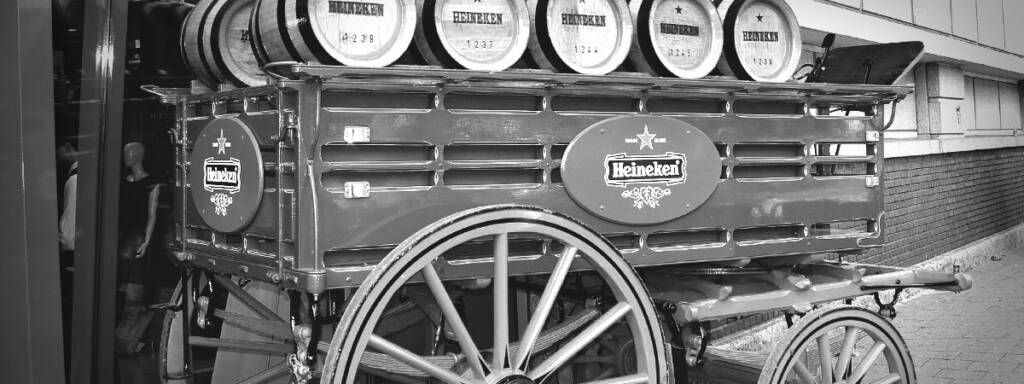
Ank Kumar – Heineken Museum Experience
In 1942, the Heineken family no longer owned the company that bore their name. Twelve years later, they reclaimed control. Still, half a century after that, they faced the ultimate stress test: a succession that was sudden and entirely unprepared.
Today, the family holds only a minority economic stake rather than absolute ownership. The C-suite is fully professionalised. Yet, the family’s strategic authority is arguably more potent now than at any point in its history.
This is the Heineken Paradox: How does a family dilute its equity, multiply its heirs, and list publicly — all while retaining decisive influence? The answer is found in governance architecture.
The Era of Absolute Authority (1864–1917)
In 1864, twenty-two-year-old Gerard Adriaan Heineken acquired the struggling De Hooiberg brewery in Amsterdam. His father, Cornelis Heineken, worked as a cheese merchant, and the purchase was financed largely through his mother’s estate. Gerard therefore inherited not a brewing tradition but a merchant mindset: identify a declining asset, modernise it, and scale it. According to later company accounts, his attitude toward the venture could be summarised in three words: “All or nothing.”
From the beginning, his strategy combined entrepreneurial instinct with a commitment to institutional excellence. Dutch consumers predominantly drank ale, so Gerard introduced bottom-fermented Bavarian lager in 1869, a style that was still unusual in the Netherlands at the time. Rather than relying on traditional brewing methods, he established a laboratory dedicated to improving brewing consistency and quality.
Dr Hartog Elion, head of the lab and a former student of Louis Pasteur, helped isolate the proprietary Heineken A-yeast in 1886. The strain allowed the company to produce beer with a consistent flavour profile, a critical advantage in an era when brewing quality often varied widely.
While operational innovation was significant, governance remained informal and founder-centric. Authority was concentrated in the founder, and strategic direction, risk appetite, and time horizon were inseparable from ownership.
When Gerard died in 1893, the succession did not immediately shift to a new patriarch. His son, Henry Pierre, was still young, and governance temporarily rested with a supervisory structure influenced by Gerard’s widow and trusted advisors. The episode illustrates an early moment when governance briefly moved beyond the founder model, foreshadowing the more institutional structures that would emerge in later generations.
The Crisis of Scale (1917–1940)
When his son, Henry Pierre, assumed leadership in 1917, the company shifted from entrepreneurial instinct to industrial discipline. A trained biochemist, he reinforced technical excellence. During the Great Depression, the company continued expanding its international presence while maintaining production stability. Heineken was the first imported beer to enter the United States after Prohibition ended in 1933.
Operationally, the second generation professionalised. Structurally, however, family control weakened. International expansion required capital. Capital required markets. In 1939, Heineken went public. By 1942, Henry Pierre sold his remaining shares, and the family relinquished control.
This was the first major governance rupture. The Heineken case offers an early cautionary lesson: growth without governance design can end family control within a single generation. The restoration would require something far more than the entrepreneurial spirit of the founder: structural engineering.
Reclaiming Control, Building for Permanence
Alfred “Freddy” Heineken joined the company as an eighteen-year-old apprentice, beginning on the brewery floor with basic operational tasks before moving into commercial roles. The family name still stood above the brewery gates, yet by 1942, the remaining family shares had been sold to outside investors. He entered the company in an ambiguous position. The family enterprise was not preparing him for leadership. He was joining a publicly owned company that merely happened to bear his surname. For Freddy, succession therefore arrived in an unusual form: as the memory of lost control. This experience defined his mission for the rest of his career.
After gaining commercial experience abroad — including several years in New York working with the company’s American importer — Freddy returned to the Netherlands convinced that the family needed to regain control of the business.
Beginning in the early 1950s, he started accumulating shares on the market using borrowed capital. The campaign succeeded in 1954, when the family once again secured a controlling stake in the company.
The restoration solved one problem while revealing another. If the family had lost control once, simple ownership concentration would not guarantee that it could not happen again. Freddy realised that prevention had to be structural.
In 1952, Freddy initiated a corporate restructuring that created Heineken Holding N.V., the mechanism that would define the company’s governance for decades. He was able to pursue this restructuring even before the family had rebuilt a controlling stake. Ownership had dispersed after the war, yet the founding dynasty still carried symbolic authority within the company. Freddy had also built strong relationships with directors and key shareholders during his early career. In a company without a dominant owner, such influence could shape governance decisions.
The restructuring introduced a layered structure:
L’Arche Green N.V. (family vehicle)
↓
Heineken Holding N.V. (control layer)
↓
Heineken N.V. (operating company)
The holding company would control the operating company, while the family would control the holding company. Public shareholders could provide capital at the operating level without gaining decisive strategic power.
The result was a deliberate separation between economic ownership and strategic control. For family office advisors, this design illustrates a core principle of dynastic governance: control can be preserved even as ownership becomes diluted — provided the architecture is engineered early.
With governance secured, Freddy focused on transforming Heineken into a global brand. As CEO from 1971 to 1989, he expanded the company into international markets and redefined its identity. The green bottle, the red star, and the distinctive “smiling e” became global symbols of the brand. He famously remarked that he did not sell beer but “gezelligheid” — a Dutch concept roughly translated as conviviality or shared enjoyment.
The visibility that accompanied this success also brought risk. In 1983, Freddy was kidnapped outside the company’s Amsterdam headquarters and held for three weeks until a large ransom was paid. The incident had profound personal consequences. Freddy became intensely protective of the family’s privacy, and public exposure was increasingly avoided.
Freddy had only one child, Charlene, who lived largely outside the corporate sphere and spent many years raising her own family in London. The next generational transition, therefore, remained largely informal. When Freddy died unexpectedly in 2002, the dynasty again faced a familiar vulnerability: succession without preparation.
Fortunately, while Freddy remained the dominant strategic figure, operational leadership was already entrusted to experienced executives. At the time of Freddy’s death, the company was led by Anthony Ruys, a long-serving Heineken executive who had become CEO in the early 2000s. Ruys provided continuity during the immediate succession period, ensuring that the company’s operations remained stable while the new ownership situation settled.
Charlene de Carvalho-Heineken inherited a secure structure, but went on to build something remarkably different: a model of stewardship capable of sustaining a family that was about to grow far more complex.
Stewardship in a Cousin Future
Freddy’s structure was designed to protect authority in a small dynasty: a single heir, a concentrated shareholder block, and a highly centralised leadership culture. It did not feature a governance model suited to a larger family. Charlene and her husband, Michel de Carvalho, had, however, five children. This shift posed a new governance challenge: how to maintain unity while authority became generationally dispersed.
Charlene did not attempt to replicate her father’s personal leadership style. Instead, she gradually reframed the family’s role as institutional steward, governing through institutional structures.
Her approach focused on three priorities:
- strengthening board independence
- supporting professional executive leadership
- preparing the next generation for responsible ownership
The family’s role shifted from operational leadership to strategic guardianship. Control is exercised primarily through the holding structure and board representation rather than executive management. While professional CEOs run the operating company, the family retains decisive influence over long-term direction through its control of Heineken Holding N.V. This governance design allows operational expertise and dynastic oversight to coexist without blurring authority.
The arrangement is visible in the governance structure today.
- Heineken Holding N.V. controls 50.005% of the issued share capital of Heineken N.V
- Through the holding entity, the family maintains decisive voting power.
- The family’s economic ownership remains approximately 23–25% of the group.
This means that while professional managers run the company day to day, the family retains final strategic authority through its control of the holding structure. Ownership and management are separated, but control remains firmly anchored in the family.
When Jean-François van Boxmeer became CEO in 2005, the company was entering a phase of rapid consolidation in the global beer industry. His leadership transformed Heineken from a successful international brewer into one of the dominant global players. The most significant step came in 2010 with the acquisition of FEMSA Cerveza, which dramatically strengthened Heineken’s position in Latin America and changed its geographic balance.
Across his tenure, the company completed more than fifty acquisitions worth roughly $30 billion, expanding aggressively into emerging markets and building a truly global distribution network. While the family safeguarded control at the holding level, van Boxmeer ensured that the operating company remained competitive and strategically ambitious.
In 2020, Dolf van den Brink succeeded van Boxmeer as CEO after more than two decades with the company. His tenure has focused on adapting the business to changing consumer behaviour. His EverGreen strategy prioritises premium brands, operational efficiency, and growth in low- and no-alcohol beverages such as Heineken 0.0. It also includes a major productivity programme targeting €400–€500 million in annual savings, alongside organisational restructuring across the global group.
In January 2026, the company announced that van den Brink would step down later that year after guiding the organisation through the pandemic period and the early implementation of the new strategy.
Current Succession Stage
Charlene and Michel also introduced a more deliberate succession preparation process. They engaged a specialist adviser to conduct individual and collective conversations with the heirs about their ambitions, responsibilities, and relationship to the family legacy.
This process has already produced early role differentiation.
- Alexander de Carvalho sits on the board of Heineken Holding N.V. and is widely viewed as the most active successor.
- Louisa Brassey contributes to sustainability initiatives and philanthropic structures connected to the family.
- Charles de Carvalho is gaining external commercial experience.
- Isabel and Sophie de Carvalho are being prepared primarily for responsible ownership roles.
The fifth generation is being prepared for distributed stewardship — exercising influence through boards, foundations, and ownership oversight rather than executive control.
More than 160 years after the founding of the brewery, the Heineken dynasty occupies a position that appears paradoxical but is carefully engineered. Despite only owning a minority economic stake, the family still determines the strategic direction of the group. The governance architecture created by Freddy protects control. The stewardship model developed by Charlene aims to protect continuity as the family expands. The coming generational transition will test whether these two elements — structural control and collaborative stewardship — can remain aligned once authority passes to a group of heirs.
The Four Abundances
The longevity of the Heineken dynasty cannot be explained by financial success alone. Many wealthy families accumulate capital; far fewer maintain coherence across generations while governing a global corporation.
Viewed through a family governance lens, the Heineken system reveals four distinct resources that extend beyond financial wealth: wealth, relationships, time, and purpose.
Capital Without Surrendering Control
Heineken offers one of the clearest examples of how dynastic capital can be protected while remaining integrated with public markets. The family’s economic stake in the group today is roughly 23–25%, yet it maintains decisive voting authority through the holding structure.
This is made possible by the layered governance system. Because the holding company owns 50.005% of the operating group, the family retains majority voting control even though public shareholders provide a large share of the capital.
The structure allows the company to access global equity markets while protecting independence from hostile takeovers. This design proved its value in 2014, when the family swiftly rejected exploratory takeover interest from SABMiller.
The key insight for family offices is structural: wealth preservation does not necessarily require majority ownership if governance architecture protects strategic authority.
Managing the Human Side of Control
If the holding structure protects the company, family cohesion protects the control structure by reducing the risk of ownership fragmentation. The Heineken dynasty historically benefited from an unusual demographic pattern: for several generations, the controlling heir was an only child. This simplified succession but masked a potential challenge.
That pattern ended with the fourth generation. Charlene (and her husband Michel) created the first true cousin-generation governance challenge in the family’s history. Their answer was a more deliberate preparation process to clarify how different members of the next generation might contribute:
- governance roles
- philanthropic leadership
- responsible ownership
- or external professional careers.
This approach helps all heirs feel heard and included while giving them the chance to earn recognition through their unique contributions.
A Long-Term Horizon
Few governance decisions illustrate the family’s time horizon more clearly than its repeated commitment to independence. The holding structure was designed to ensure continuity across many decades. The rejection of takeover interest in 2014 reinforced that philosophy: liquidity was available, but independence remained the priority.
The family’s philanthropic initiatives also reflect this long-term orientation. Foundations supporting scientific research and education are closely tied to the company’s historical identity and reinforce the idea that the Heineken legacy extends beyond the brewery itself.
In governance terms, time becomes a strategic resource. The system allows the company to pursue multi-decade brand development and international expansion without the pressure for short-term exits that often plague publicly traded firms.
Protecting the Name
This commitment to independence has economic implications, but it also carries symbolic meaning. For the family, independence is closely tied to identity and legacy.
Generational stewardship, therefore, becomes a cultural project: preserving a company that embodies the family’s history while adapting it to new global markets.
From the beginning, the company’s identity was tied to quality. Gerard Adriaan Heineken introduced scientific brewing methods and established one of the first quality control laboratories in the industry. The development of the proprietary Heineken A-yeast in 1886 created a distinctive flavour profile that remains central to the brand more than a century later.
Subsequent generations interpreted this commitment differently. Freddy Heineken translated technical excellence into brand excellence, building a global identity around the green bottle and the idea that beer equals enjoyment. Today, the principle continues through product innovation and portfolio development.
For the family, stewardship therefore means more than protecting ownership. It means protecting the reputation attached to the name itself. Every bottle carries the family name, and every generation inherits responsibility for what that name represents.
How The Family Council Canvas Could Help
From a corporate governance perspective, Heineken is already highly sophisticated. The holding structure, board composition, and professional executive leadership form a mature system that has proven resilient across decades. The next governance challenge lies at the family level. As the dynasty moves from a single-heir pattern to a generation of five potential stewards, the complexity of internal alignment increases significantly. This is precisely the domain where a structured family governance tool such as the Family Council Canvas becomes valuable.
Clarifying Roles in a Multi-Heir System
The most immediate governance question facing the family is how authority will be distributed among the fifth generation. The system will likely require a combination of roles:
- family board representatives
- philanthropic leaders
- long-term owners
- and independent professionals working outside the enterprise.
A structured process helps make these distinctions explicit before informal expectations create tension.
Aligning Ownership Philosophy
Another key issue concerns the long-term ownership philosophy of the family. For several generations, the guiding principle has been independence. Yet as ownership fragments across more heirs, questions inevitably arise:
- Should the family maintain the controlling block indefinitely?
- Under what conditions might liquidity become acceptable?
- How should dividends, reinvestment, and share transfers be managed?
A structured family governance framework allows these questions to be addressed proactively rather than during moments of conflict.
Strengthening Communication Across Generations
Large families often discover that governance problems are not primarily legal or financial. They are relational: misunderstandings about expectations, responsibilities, and the meaning of ownership. A structured governance framework creates a forum where these issues can be discussed openly across generations, reducing the risk that strategic disagreements evolve into family fractures.
Preparing the Stewardship Transition
Ultimately, the Heineken case illustrates a broader truth about dynastic enterprises. Corporate governance can be engineered through legal structures, while family governance must be cultivated through dialogue. Freddy designed the architecture that protects the company, while Charlene institutionalised the family’s role as guardian of that system. The next challenge will be ensuring that five heirs inherit a shared understanding of what it means to steward a global enterprise.
A governance framework can ensure that the family’s vision is clearly articulated and understood by family members and their advisors alike.
Closing Reflection
The Heineken story reflects a classic progression in family enterprise. The first generation builds the company, the second expands it, and the third protects it.
The fifth generation will inherit the strategic influence over a professionally led and publicly traded multinational corporation. What remains uncertain is whether the family itself can maintain the cohesion required to govern such an institution.
The real lesson of the Heineken case is therefore about the evolution of stewardship. A dynasty endures only if each generation learns to exercise control responsibly within a system larger than itself.
Disclaimer: This article is a case study based on publicly available information and is intended for educational and informational purposes only. The analysis and opinions expressed are those of the author and do not constitute factual claims about the private lives or intentions of the individuals discussed. Images and excerpts from third-party sources are included solely for purposes of commentary and criticism, with attribution provided where sources are known.
References
Heineken N.V. (2026a) ‘Heineken N.V. announces second tranche of its 1.5 billion share buyback programme’, Heineken Newsroom, 12 February. Available at: https://www.theheinekencompany.com/newsroom (Accessed: 5 March 2026).
Heineken N.V. (2026b) ‘CEO of Heineken N.V. to step down on 31 May 2026’, Heineken Newsroom, 12 January. Available at: https://www.theheinekencompany.com/newsroom (Accessed: 5 March 2026).
InsideHook (2018) ‘That Time Beer Tycoon Freddy Heineken Was Kidnapped for $10M’, 30 November. Available at: https://www.insidehook.com/culture/the-kidnapping-of-freddy-heineken (Accessed: 5 March 2026).
Movendi International (2025) ‘Tragic Anniversary: When Bill Gates Bet on Big Beer’, 7 March. Available at: https://movendi.ngo/blog/2025/03/07/tragic-anniversary-when-bill-gates-bet-on-big-beer/ (Accessed: 5 March 2026).
Forbes (2025) ‘Profile: Charlene de Carvalho-Heineken’, Forbes Billionaires List 2025. Available at: https://www.forbes.com/profile/charlene-de-carvalho-heineken/ (Accessed: 5 March 2026).
Sellers, P. (2014) ‘Heineken’s Heiress: Finding Your New Power’, Fortune Magazine, 3 December. Available at: https://fortune.com/2014/12/03/heineken-charlene-de-carvalho-self-made-heiress/ (Accessed: 5 March 2026).
The Guardian (2002) ‘Guardian obituaries: Freddy Heineken’, 5 January. Available at: https://www.theguardian.com/news/2002/jan/05/guardianobituaries (Accessed: 5 March 2026).
AFM (2007) ‘Heineken Holding N.V. shareholding structure adjusted’, Netherlands Authority for the Financial Markets, 2 March. Available at: https://www.afm.nl/en/sector/registers/meldingenregisters/substantiele-deelnemingen (Accessed: 5 March 2026).
Brooks, S. (2022) ‘Historic Beer Birthday: Alfred Heineken’, Brookston Beer Bulletin, 4 November. Available at: https://brookstonbeerbulletin.com/historic-beer-birthday-alfred-heineken/ (Accessed: 5 March 2026).
Consultancy UK (2014) ‘UK consultant helps Heineken with succession planning’, 31 December. Available at: https://www.consultancy.uk/news/1268/uk-consultant-helps-heineken-with-succession-planning (Accessed: 5 March 2026).
