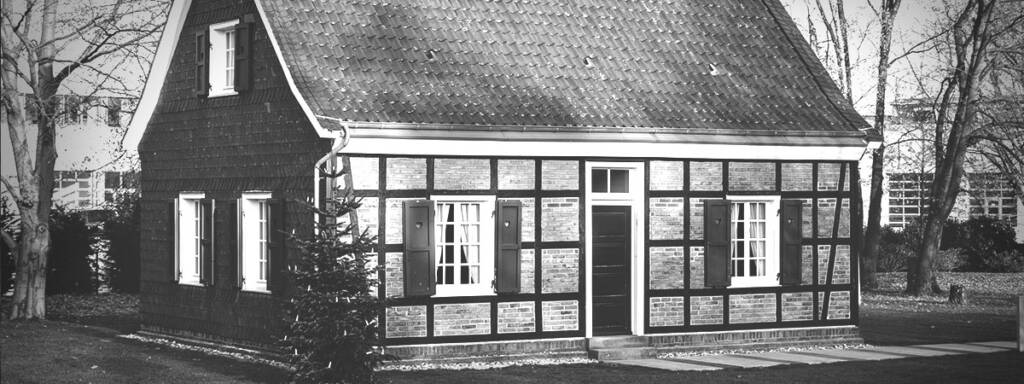
Steffen Schmitz – Historic Krupp House in Essen
For more than a century, the name Krupp stood for steel, artillery, and an unshakable industrial empire. Strict primogeniture and sole proprietorship kept the company in one pair of hands at a time. A written internal constitution governed workers’ lives from housing to toilet breaks. Social welfare was generous, but it came with the price of obedience, loyalty, and silence. Then history intervened.
The already established rigid structure allowed the company to mesh itself tightly with political power in Berlin. After the war, a convicted war criminal still sat at the head of the dynasty. And when the time came for the title to pass once more to the next in line, the final heir looked at the inheritance and simply refused. What followed was one of the most radical succession decisions in European industrial history: the transfer of a family empire into a foundation that would outlive the dynasty itself.
This case tracks the line from Friedrich Krupp, the struggling founder, to Alfred, the “Cannon King”; to Friedrich Alfred and his daughter Bertha; to Gustav and Alfried, who tied the family name to the Third Reich; and finally to Arndt, whose refusal opened the way for the Alfried Krupp von Bohlen und Halbach Foundation to become the true successor.
A Founder Without a Safety Net
Although Friedrich Krupp is often described as the “founder” of the Krupp dynasty, the family’s commercial history predates him. His father, Friedrich Jacob Krupp, ran a small trading business and grocery shop in Essen. When Friedrich Jacob died in 1795, Helene Amalie Krupp (née Ascherfeld, 1758–1810) was left a widow at 37 with young children, including eight-year-old Friedrich. She kept the family solvent, maintained the business, and held the household together at a moment when dependence on relatives or creditors would have been the expected path.
In 1811, Friedrich Krupp (1787–1826) established a small cast steel works in Essen, hoping to match English steel quality at a time when Britain guarded its techniques closely. The venture demanded high capital and technical skill, and the market was uncertain. Friedrich was a technician before anything else; he cared about steel quality, not commercial cushioning. The firm, the Gusstahlfabrik, remained fragile. Orders fluctuated, and the family finances never reached stability.
When Friedrich died in 1826, he left behind an underperforming factory, significant liabilities, and a teenage son who had grown up inside the workshop but without a prepared transfer of power. The first real act of succession in the Krupp story was therefore an act of necessity rather than design.
Building an Empire on Sole Proprietorship
When Alfred Krupp (1812–1887) inherited the factory at fourteen, he was far too young to manage its liabilities or its future. Two women ensured the works survived long enough for him to grow into the role. Theresia Krupp (his mother) handled creditors, household finances, and the administrative work Alfred could not yet perform. Helene Amalie, with experience from the earlier family trading business, supported negotiations and correspondence and helped prevent liquidation during the most vulnerable period.
They made personal sacrifices, including selling family possessions, to protect what remained of the enterprise. Without their intervention, there would have been no second generation of industrial Krupps.
Over the following decades, Alfred rebuilt the business and laid the foundations of the dynasty. His turning point came in 1852, when he developed the seamless forged and rolled railway tyre, a durable product that matched the needs of rapidly expanding rail networks. Railways brought scale; scale brought steady cash flow; and that revenue funded further industrial development.
From there, Krupp moved decisively into artillery. By 1859, Krupp guns were sold across Europe. Alfred’s name became closely linked to heavy steel and heavier weapons. Rulers from Prussia, the newly unified German Empire, Russia, and the Ottoman Empire visited Essen to see the works. The Prussian king Wilhelm I, the German emperor Wilhelm II, Tsar Alexander II, and several Ottoman sultans became key clients.
By the mid-nineteenth century, Alfred Krupp was widely known as the “Cannon King”, and Essen had become an industrial city.
Primogeniture as Governance
This expansion took place under a very specific ownership model: the firm remained a sole proprietorship, meaning that it belonged to one individual: Alfred. Alfred’s answer to the problem that had plagued his father—fragility—was radical concentration. He committed to a rigid rule:
The firm would always be held as a sole proprietorship. Ownership and control would pass exclusively to the eldest son.
No division of capital, no share transfers, no internal bargaining. The company would not be sliced into portions for siblings or cousins. It would remain a single, indivisible industrial estate. This had several consequences:
- It shielded the enterprise from the dilution and quarrels that weakened many family firms.
- It allowed for rapid, centralised decision-making.
- It blended family identity and industrial purpose so tightly that they became almost indistinguishable.
The price was clear: the entire system depended on each heir accepting, and being able to bear, the role.
Alfred also structured life inside the company with a degree of detail that bordered on the obsessive. In 1872, he issued the Generalregulativ, a comprehensive internal rulebook that functioned as the firm’s constitution. It set out expectations for managers and workers alike, from conduct to welfare, from housing to political behaviour. Workers became “Kruppians”, living in a world structured around the plant. Three features defined this regime:
- Social welfare as loyalty contract
Krupp provided benefits that predated state systems: health insurance, pension schemes, and company-owned housing in planned “colonies” near the works. - Strict discipline and control
In return for security, workers accepted intrusive oversight. They swore loyalty oaths. They required written permission from supervisors for matters as basic as leaving the work area. Their private lives were, in practice, subject to company norms. - Prohibition of political involvement
Workers were expressly forbidden to engage in national politics. The clear intention was to keep them distant from unions and socialist agitation, and to keep the factory focused solely on production.
It amounted to a complete social system: housing, welfare, work, and behaviour, all directed from above in Essen. Alfred believed these measures promoted the “common well-being”, yet he insisted on defining the terms of that well-being himself. The purpose was straightforward: prevent conflict and protect output. Several elements later appeared in Bismarck’s social reforms, but at Krupp they served industrial rather than ideological aims.
By the time he died in 1887, the line of succession was unambiguous, and the firm had become a tightly organised industrial machine. The workforce was tied to the company through housing and welfare, and the enterprise had become a central force in German heavy industry.
What it still lacked was any plan for a break in the line; however, that weakness surfaced rather quickly.
Friedrich Alfred and the Unexpected Heiress
When Friedrich Alfred Krupp (1854–1902) inherited the enterprise, primogeniture ensured he became the undisputed head of the firm. He maintained the focus on steel and armaments and kept the company aligned with the strategic needs of the German Empire. The structure Alfred designed remained intact.
For the first time, however, the succession system faced a pressure it had not been designed to handle. Friedrich Alfred and his wife Margarethe had one surviving child only: Bertha Krupp (1886–1957). Under the legal rules of the sole proprietorship, Bertha could inherit the company. Under the social norms of the time, the idea of a young woman leading one of Europe’s largest armaments firms was not considered viable. This tension between the legal structure and social expectation set the stage for the next transition. When Friedrich Alfred died suddenly in 1902, the problem could no longer be postponed. Bertha, at sixteen, became the owner of the Krupp empire — on paper. The operational reality required a different arrangement.
Bertha’s inheritance drew national attention. The company was at this point a strategic asset of the German state. The Kaiser himself intervened to ensure that the transition preserved both political stability and industrial continuity.
The solution was pragmatic. Bertha would remain the legal owner, while a suitable husband would take on operational leadership. To support this arrangement, the company underwent a structural shift, and in 1903, it was converted into Fried. Krupp AG, a joint-stock company. This form allowed for a supervisory board and formalised governance, yet it sat uneasily beside the family’s long-standing tradition of sole proprietorship. The Kaiser approved Bertha’s marriage in 1906 to diplomat Gustav von Bohlen und Halbach, and in 1907 authorised him to add the Krupp name to his own. Bertha kept ownership; Gustav became the public leader of the firm. The marriage and corporate restructuring created a hybrid model: a company with the legal structure of a corporation and the sentiment of a family-held estate.
The succession line, therefore, remained intact, but the mechanism changed. Primogeniture was upheld in theory, while in practice, it was maintained without direct male descent and through marriage.
The Drift Toward Militarisation
Gustav became the public face of the firm from 1907 onwards. He inherited a powerful but demanding role of maintaining the firm’s position as Germany’s core supplier of heavy armaments. His role carried political weight whether he sought it or not. He had to navigate government expectations and shifting state policy across the different political eras, while safeguarding the family’s sole proprietorship.
He oversaw continuous expansion, a strong relationship with the Prussian and later German elites, and a workforce still bound by Alfred’s paternalistic model. During the First World War, Gustav supervised rapid scale increases, major contracts for armour and guns, and the extension of the firm’s logistical and metallurgical network. The Krupp brand became tied to German military identity. Essen’s industrial output was part of the national strategy.
After the war, the Treaty of Versailles imposed strict limits on German armaments. Krupp, like other heavy manufacturers, had to adjust. The firm moved towards civilian production, machinery and components not covered by treaty restrictions, and discreet technical preparation that would later enable rearmament. Gustav positioned the company to survive the period of restriction without abandoning its core capabilities.
During the Weimar Republic, Germany’s political climate was volatile. For Krupp, the challenge was maintaining industrial capacity while operating under a government with limited stability. By the late 1920s and early 1930s, Gustav, like many of his contemporaries in heavy industry, viewed the existing political order as fragmented and unproductive.
As Germany’s political crisis deepened, Krupp became one of several industrial groups that supported parties promising to restore national confidence and industrial expansion. Gustav offered financial backing to the National Socialist movement during a period when they were still consolidating influence.
This alignment had several motivations: the expectation of renewed industrial investment, a belief that a more forceful government might stabilise the economy, and a desire to protect Krupp’s position within any emerging national strategy.
By 1933, when the Nazis rose to power, the company was well positioned to benefit from rearmament policies. Gustav’s relationships within political circles granted Krupp favourable access to contracts and resources.
Once the regime established itself, Krupp returned to armaments on a vast scale. Under state encouragement, the firm expanded production and invested heavily in new facilities. Gustav presided over renewed artillery programmes, expansion into vehicle and submarine components, and strategic collaboration with the government on armament priorities.
Krupp was again a core military asset, and Gustav’s decisions placed the company deep within the political machinery of the time.
Despite his visible role, Gustav remained consistent with family tradition. He prepared the next heir, Alfried Krupp von Bohlen und Halbach, to assume control. Yet the context had changed dramatically. The successor would inherit not only a steel empire, but a firm strongly associated with a political regime whose ambitions were expanding rapidly. The question of continuity, once a simple matter of primogeniture, now carried consequences that reached well beyond Essen.
The Lex Krupp and the Concentration of Power
By the early 1940s, Gustav’s health had begun to fail. The Second World War was at its height, and the German state depended heavily on Krupp for armaments. Any uncertainty at the top of the firm risked disrupting military production.
The traditional mechanism of primogeniture was still in place, but the legal form of the enterprise didn’t align with it since Krupp had been converted into Fried. Krupp AG, a joint-stock company in 1903. To restore the original model and ensure uninterrupted succession, a new legal framework was required.
In December 1943, Adolf Hitler issued a special decree known as the Lex Krupp, written specifically for the family. Its provisions were highly unusual:
- The company was reconverted into a sole proprietorship, reversing the earlier joint-stock form.
- All corporate and private family assets were transferred directly to Alfried Krupp von Bohlen und Halbach.
- The rule of primogeniture was reaffirmed and codified under wartime law.
- The succession circumvented inheritance taxes and bypassed other potential heirs.
This decree ensured that the enterprise remained under a single will and placed the entire responsibility of a major wartime supplier on one individual. The family tradition of concentrated control continued, but now under conditions of unprecedented political alignment.
Alfried Krupp had grown up in a world where the Krupp name was synonymous with industrial strength. He inherited not only the works but also the expectations of the state. His role was predefined by his father’s political relationships, the regime’s dependence on industrial output, and the family tradition of unquestioned authority in Essen. The transition was smooth in legal terms but heavy in its implications. Alfried assumed command in a system that demanded speed, scale, and loyalty.
Under Alfried’s leadership, Krupp expanded its use of forced labour to meet wartime production demands. Nearly 100,000 prisoners were employed under coercive conditions, including soviet prisoners of war, forced labourers from occupied territories, and concentration camp inmates, including groups from Auschwitz.
These workers were deployed across Krupp facilities in Essen and in subsidiary operations elsewhere. This period marked the darkest chapter of the firm’s history.
The scale of forced labour placed Krupp within the broader system of exploitation.
The wartime structure reinforced the family’s governance tradition in its strongest form: all authority was centralised in the hands of one man, all decisions flowed downward, and the company remained aligned with state priorities.
Yet this centralisation also meant that responsibility, legal and moral, would later be assigned to one individual. When the war ended, the continuity that primogeniture had guaranteed became the basis for personal accountability.
Rebuilding Under a Stained Legacy
When Germany surrendered in 1945, the Allied authorities began a comprehensive review of companies that had supported the war effort. Krupp, as one of the regime’s primary armament producers, became a central subject of investigation. Gustav was indicted in the main Nuremberg Trial, but his declining health made him unfit to stand trial. This left the focus squarely on Alfried, the sole proprietor under the Lex Krupp.
Alfried and eleven senior directors were charged with exploiting slave labour, plundering occupied territories, and manufacturing arms for a war of aggression. In 1948, Alfried was convicted and sentenced to 12 years in prison and forfeiture of all property.
Although the sentence was severe, the political context changed quickly. By 1951, with the Cold War escalating and West German industrial recovery considered a priority, Alfried was released early. In 1953, most of the confiscated assets were restored. This reinstated Alfried as head of the firm: the line of succession held, but it carried a visible break in moral legitimacy.
Alfried concentrated on restoring the firm’s position in heavy industry. He strengthened the steel division, invested in new technologies, and brought the group back into the centre of West German production. Internationally, however, the Krupp name faced constraints. Many countries remained wary of dealing with a firm so closely tied to wartime exploitation, and the company’s leadership was under continuous scrutiny. Despite this, the enterprise recovered. Krupp became a key contributor to what would later be known as the Wirtschaftswunder, the West German economic “miracle”.
The next successor, Arndt von Bohlen und Halbach, was expected to take the role that generations before him had inherited without question. Yet his relationship with the legacy was markedly different.
The Anti-Heir and Institutional Succession
Born in 1938, by the time Arndt reached adulthood, the Krupp name carried both the weight of industrial achievement and the stigma of war crimes. Arndt was educated, multilingual, and well-connected, yet it became increasingly evident that he had no desire to assume the life of a Krupp proprietor. He valued private life, travel, and social freedom, and had no wish to become the next single bearer of a structure as heavy, disciplined, and politically exposed as Essen’s steel empire. He commented publicly that the Krupp legacy had brought his predecessors “much unhappiness” and that he saw no reason to sacrifice his entire life to a tradition he had not chosen.
His stance exposed the Achilles’ heel of the primogeniture system: it had worked when heirs accepted the burden, but it had no mechanism for refusal. For the first time in the dynasty’s history, the sole proprietorship faced a successor who did not want it.
In 1966, after discussions with his father and advisers, Arndt made his decision formal. He renounced his entire inheritance — the company, the assets, the name, and the expectation of sole proprietorship. He accepted a lifelong annual stipend of two million Deutsche Marks instead, securing financial independence without the obligation of leadership. For a closer look at Arndt’s later life, the documentary Herr von Bohlen (2015) offers a thoughtful portrait of him after he stepped away from the family legacy.
With Arndt’s refusal, Alfried had to confront the continuity question directly. The primogeniture model could not be maintained. Splitting the firm among distant family members would weaken it, and turning it into a public company would risk losing its strategic coherence.
Instead, he chose a structure that preserved unity without relying on a biological successor. In his final will, Alfried ordered that upon his death, the entire enterprise — both corporate assets and private wealth — be transferred into a new entity: The Alfried Krupp von Bohlen und Halbach Foundation (Stiftung).
This structure, established in 1967 and activated in 1968, served several purposes: preserved the company as a single unit, prevented fragmentation during inheritance, redirected future income to charitable causes, and insulated the enterprise from political shifts or shareholder pressures. The Stiftung became the legal and institutional heir of the Krupp empire. With Alfried’s death on 30 July 1967, the succession chain that had passed from father to eldest son for four generations now shifted to a new form:
The family line had ended its role as custodian of the enterprise. The next phase of the company’s life would be shaped by an appointed steward whose work would define the modern identity of the legacy.
The Steward Who Reframed the Legacy
The stability and credibility of the Stiftung depended on the reputation and judgment of its first Chairman: Berthold Beitz (1913–2013). Beitz had been a close adviser to Alfried and brought an unusual background for this role. During the Second World War, while posted in occupied Galicia, he saved hundreds of Jewish people from deportation by employing them and protecting them under the cover of industrial necessity. His actions later earned him recognition as “Righteous Among the Nations”.
This moral standing became a vital asset for a company whose name was tied to war crimes. Beitz’s leadership allowed the post-dynastic Krupp entity to re-enter international markets with a measure of credibility. He represented a shift from dynastic control to institutional stewardship. Under his chairmanship, the Foundation upheld the charitable mandate of Alfried’s will, and the company’s public image gradually transitioned from wartime legacy to modern industrial actor.
By the late twentieth century, the landscape of European heavy industry had changed. Global markets were more competitive, steel production required greater consolidation, and traditional industrial giants faced pressures that could not be met through family models alone. In 1999, the Krupp enterprise entered a new phase when Fried. Krupp AG Hoesch-Krupp merged with Thyssen AG to form thyssenkrupp AG. This merger created one of Europe’s largest industrial groups, combining steelmaking, engineering, and technology under a unified corporate structure. The Krupp name remained embedded in the new company, but the transition from patriarchal family business to professional corporation was complete.
The Alfried Krupp von Bohlen und Halbach Foundation became the central shareholder of the merged entity. Today, it holds roughly 21% of the voting rights, making it the largest single shareholder. The Foundation can exercise its voting rights at the Annual General Meeting, appoint two members to the Supervisory Board, and oversee long-term strategic decisions through formal governance channels. However, it cannot instruct management directly on operating matters, access profits for private benefit, and act as a family proxy.
This separation protects the company from personal influence and ensures that the Foundation’s involvement remains structured, predictable, and insulated from short-term pressures. Income from the Foundation’s holdings must be used exclusively for charitable purposes, directed toward science and research, education,
health and social welfare, arts and culture. In this way, the once-private industrial fortune now functions as a perpetual public asset.
The stability of the post-dynastic structure depended heavily on the leadership of Berthold Beitz. Serving as Chairman of the Foundation from 1968 to 2013, he oversaw the transition from a family-led firm to a professional foundation, the company’s rehabilitation in global markets, the ethical repositioning of the Krupp name, and the management of the Foundation’s charitable responsibilities. When Beitz died in 2013, he left behind a structure capable of standing on its own, governed through clearly defined statutory rules. The dynasty ended. The stewardship continued.
How the Family Council Canvas Could Have Helped
The Krupp enterprise was defined by single-person rule. Each successor carried the entire weight of the business alone: legally, morally, and psychologically. The FCC offers the opposite: shared clarity, structured dialogue, and an articulated purpose that survives the preferences or limitations of any single heir. Three turning points stand out:
Turning Point 1: The Death of Friedrich Krupp
In 1826, the family had no articulated purpose beyond “keep the factory alive.” Theresia and Helene Amalie acted instinctively, but there was no shared language for who makes decisions until Alfred is of age, how risk is managed, what assets are non-negotiable, and whether the family even wished to remain in steel.
The Krupps survived because of the competence of two women whose contributions would later be erased. Had they had a tool like the Family Council Canvas in place, it could have helped the family with defining clearer roles, objectives and decision-making processes. This would have set a precedent for collective stewardship: the opposite of what later became the Krupp tradition.
Four Abundances Lens:
- Wealth: The Gusstahlfabrik was fragile; the family had no safety net.
- Relationships: Strong maternal line ignored by later succession rules.
- Time: No prepared horizon; everything was reactive.
- Purpose: Not defined, only implied through survival.
In such a case, the Family Council Canvas could turn necessity-driven improvisation into a conscious governance model.
Turning Point 2: Gustav’s Political Entanglement
Gustav saw himself as the guardian of the firm’s stability. His alignment with nationalist and later Nazi politics came from a belief that the state and Krupp needed one another. But no one ever asked: Is this the family’s purpose?
Had the Family Council Canvas existed, it would have forced a structured conversation around three questions:
What is the long-term purpose of Krupp stewardship?
Industrial excellence? National service? Profit? Legacy?
What is the family’s boundary with political power?
Support? Neutrality? Distance?
What is unacceptable risk?
Regime alignment? Coercive production? Forced labour?
The absence of these questions caused a silent drift from economic partnership to political entanglement and eventually, to moral collapse.
Four Abundances Lens:
- Wealth: expanded rapidly, but tied to political conditions.
- Relationships: deepening dependence on a single political network.
- Time: short horizons; decisions made for immediate stability, not future legitimacy.
- Purpose: never articulated, leaving the firm exposed to being defined by the regime.
The Family Council Canvas could have exposed the quiet conflation of industrial purpose with authoritarian power.
Turning Point 3: Arndt’s Refusal
This is the clearest case where the FCC would have transformed the outcome, and it fits perfectly in the Dynamics → Compass → Journey → Goals & Actions structure.
Arndt’s refusal did not come out of nowhere. It was the result of decades of oppressive expectations, inherited guilt, isolation from decision-making and a tradition that offered wealth but no freedom.
If the FCC had existed, Arndt would have been asked early what role he wanted.
The family could have planned for alternative models (trusts, foundations, dual structures). A framework for non-operational heirs could have been set up. Decisions could have been strategic, not last-minute and emotionally driven.
Four Abundances Lens:
- Wealth: too concentrated; no flexible ownership model.
- Relationships: strained between father and son; no arena for honest conversation.
- Time: no succession horizon except primogeniture.
- Purpose: unclear; Arndt saw “unhappiness,” not meaning.
The Family Council Canvas could have prevented the succession crisis from emerging as a rupture and instead turned it into a planned, dignified transition.
Governance Lessons for Modern Family Enterprises
The Krupp story offers several lessons, many of which resonate strongly in today’s conversations about succession, legacy, and institutional resilience.
Lesson 1: Primogeniture Without Flexibility Invites Lineage Risk
The sole proprietorship ensured unity for over a century. Yet when the designated heir refused the mandate, there was no alternative structure in place. A succession model built solely on the assumption that an heir will comply leaves the enterprise exposed.
Modern families need:
- contingency plans,
- governance frameworks that allow for choice,
- and mechanisms for disengaged heirs to step back without triggering collapse.
Lesson 2: Moral Capital Matters in the Long Term
The Krupp firm faced grave reputational damage due to its wartime actions. It could not rely on commercial strength alone to restore legitimacy. Beitz’s leadership, the Foundation’s charitable mandate, and the clear separation between the post-war entity and the company’s past allowed the brand to regain public trust.
Modern enterprises with controversial legacies may face similar pressures: moral accountability is not an optional extra but a structural requirement for long-term viability.
Lesson 3: Capital and Duty Should Not Be Automatically Linked
Arndt’s refusal demonstrated the psychological cost of rigid dynastic expectations.
His settlement — financial independence without governance responsibility — highlighted the value of separating family wealth from family duty.
Today’s family offices frequently face the same issue: not all heirs wish to lead. Allowing disengaged successors to remain owners without forcing managerial roles is crucial for long-term harmony.
Lesson 4: Foundations Can Be Effective Successors When the Family Line Ends
The Stiftung model provided continuity when primogeniture failed. Its strengths include:
- protection against fragmentation,
- insulation from inheritance taxes,
- long-term stability,
- and a defined social purpose.
For families with complex assets or global operations, foundations can offer a path for continuity beyond the bloodline.
Closing Words
The Krupp family no longer leads the company that bears its name. No successors are waiting in the wings, and no heirs are prepared to take on the industrial burden. Yet, the succession did not fail. The enterprise continues through a foundation, and its dividends support education, research, health, culture, and social welfare. A line of steel barons gave way to a charitable institution. A dynasty tied to war production became a source of research grants and cultural funding. Succession moved from bloodline to purpose. This is the final shift in the Krupp story: a movement towards institutional stewardship.
Disclaimer: This article is a case study based on publicly available information and is intended for educational and informational purposes only. The analysis and opinions expressed are those of the author and do not constitute factual claims about the private lives or intentions of the individuals discussed. The use of any copyrighted material is done for the purposes of commentary and criticism and is believed to fall under the principles of fair use. All images are used with attribution to their known sources.
Sources:
Wikipedia (n.d.). Krupp family. Available at: https://en.wikipedia.org/wiki/Krupp_family (Accessed: 3 December 2025).
Alfried Krupp von Bohlen und Halbach Foundation (n.d.). Historie [History]. Available at: https://www.krupp-stiftung.de/en/historie/ (Accessed: 3 December 2025).
Alfried Krupp von Bohlen und Halbach Foundation (n.d.). Über uns [About us]. Available at: https://www.krupp-stiftung.de/en/ueber-uns/ (Accessed: 3 December 2025).
Alfried Krupp von Bohlen und Halbach Foundation (n.d.). Will and Foundation Purpose. Available at: https://www.krupp-stiftung.de/ (Accessed: 3 December 2025).
Kiddle (n.d.). Alfred Krupp. Available at: https://kids.kiddle.co/Alfred_Krupp (Accessed: 3 December 2025).
Australian Review (2012). Review of The Arms of Krupp. Available at: http://www.australianreview.net/digest/2012/06/tipton.html (Accessed: 3 December 2025).
Britannica (n.d.). Gustav Krupp von Bohlen und Halbach. Available at:(https://www.britannica.com/money/Gustav-Krupp-von-Bohlen-und-Halbach) (Accessed: 3 December 2025).
EBSCO (n.d.). Alfred Krupp. Available at: https://www.ebsco.com/research-starters/history/alfred-krupp (Accessed: 3 December 2025).
Encyclopedia.com (n.d.). Krupp, Bertha (1886–1957). Available at: https://www.encyclopedia.com/women/encyclopedias-almanacs-transcripts-and-maps/krupp-bertha-1886-1957 (Accessed: 3 December 2025).
Wikipedia (n.d.). Bertha Krupp. Available at:(https://en.wikipedia.org/wiki/Bertha_Krupp) (Accessed: 3 December 2025).
Wikipedia (n.d.). Alfried Krupp von Bohlen und Halbach. Available at:(https://en.wikipedia.org/wiki/Alfried_Krupp_von_Bohlen_und_Halbach) (Accessed: 3 December 2025).
Wikipedia (n.d.). Alfried Krupp von Bohlen und Halbach Foundation. Available at:(https://en.wikipedia.org/wiki/Alfried_Krupp_von_Bohlen_und_Halbach_Foundation) (Accessed: 3 December 2025).
Iron & Steel Hall of Fame (n.d.). Krupp AG. Available at: https://steelmuseum.org/i-s-hall-of-fame/krupp.cfm (Accessed: 3 December 2025).
Brennan Center for Justice (n.d.). How Big Business Bailed Out the Nazis. Available at: https://www.brennancenter.org/our-work/analysis-opinion/how-big-business-bailed-out-nazis (Accessed: 3 December 2025).
Wikipedia (n.d.). Lex Krupp. Available at: https://en.wikipedia.org/wiki/Lex_Krupp (Accessed: 3 December 2025).
Wikipedia (n.d.). Krupp trial. Available at: https://en.wikipedia.org/wiki/Krupp_trial (Accessed: 3 December 2025).
United States Holocaust Memorial Museum (n.d.). Gustav Krupp von Bohlen und Halbach. Available at: https://encyclopedia.ushmm.org/content/en/article/gustav-krupp-von-bohlen-und-halbach (Accessed: 3 December 2025).
United States Holocaust Memorial Museum (n.d.). Subsequent Nuremberg Proceedings: Case 10, The Krupp Case. Available at: https://encyclopedia.ushmm.org/content/en/article/subsequent-nuremberg-proceedings-case-10-the-krupp-case (Accessed: 3 December 2025).
Vanderbilt University (n.d.). Krupp Trial: Slave Labor. Available at: https://krupp.library.vanderbilt.edu/slave-labor (Accessed: 3 December 2025).
The Guardian (2013). Obituary: Berthold Beitz. Available at: https://www.theguardian.com/world/2013/aug/14/berthold-beitz (Accessed: 3 December 2025).
thyssenkrupp AG (n.d.). History: Chronology. Available at: https://www.thyssenkrupp-steel.com/en/company/history/chronology/chronology.html (Accessed: 3 December 2025).
thyssenkrupp AG (n.d.). Shareholder Structure. Available at: https://www.thyssenkrupp.com/en/investors/stock/shareholder-structure (Accessed: 3 December 2025).
Wikipedia (n.d.). Arndt von Bohlen und Halbach. Available at:(https://en.wikipedia.org/wiki/Arndt_von_Bohlen_und_Halbach) (Accessed: 3 December 2025).
Time Magazine (1967). Germany: End of the Dynasty. Available at: https://time.com/archive/6834719/germany-end-of-the-dynasty/ (Accessed: 3 December 2025).
